  • Serving the Northern Virginia area
Call (571) 200-9600 Get an Estimate
Water Management

Sprinkler Winterization & Spring Start-Up in Northern Virginia

Sprinkler winterization is a fall service visit that drains the backflow preventer and blows water out of every zone with compressed air so freezing cannot crack pipes, valves or heads. Spring start-up refills the system slowly and checks each zone. Northern Virginia homeowners with in-ground irrigation need both each year, booked as separate one-time visits.

  • Zones cleared with air at safe pressure
  • Backflow drained and protected before freezes
  • Slow spring refill, then every zone checked
  • Licensed & insured in Virginia
  • Based in Sterling, VA
  • Residential projects only
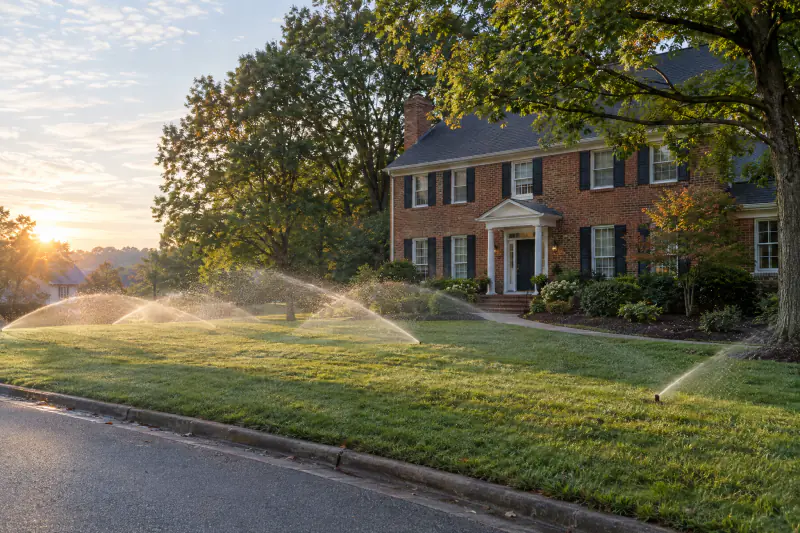
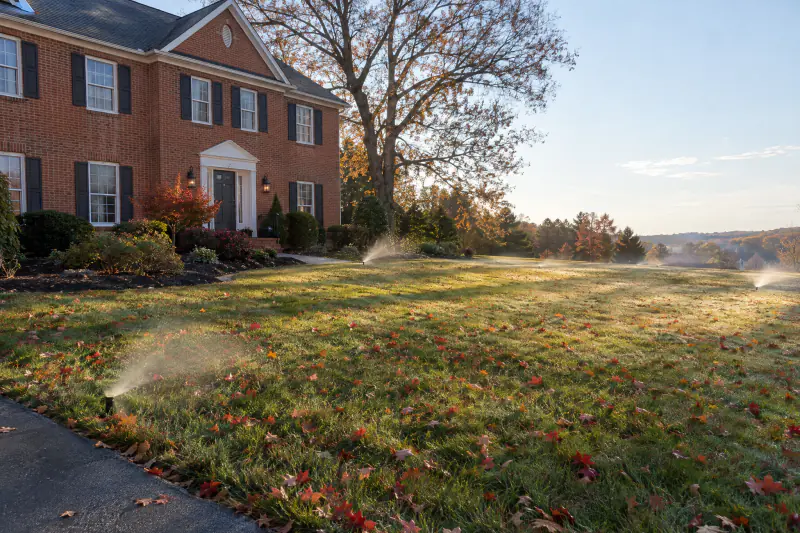
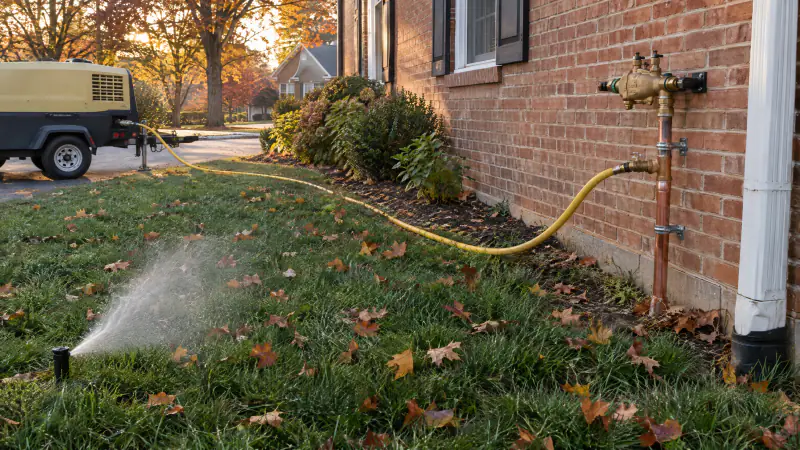
Sprinkler winterization blow-out releasing mist from spray heads on an autumn front lawn
Mist, not water, means a zone is nearly clear
Fall window
Mid-October into November
Spring window
April into May, after freezes
Visit length
Often under 2 hours
How it is booked
One visit at a time

Why does a sprinkler system need winterizing in Northern Virginia?

A sprinkler system needs winterizing because water left inside it expands as it freezes, and irrigation lines sit shallow enough for that to happen here. Lateral pipe is usually only inches below the lawn, and the backflow preventer often stands exposed beside the house. One hard January night can split a brass assembly, and the damage hides until spring.

Doing it right takes patience more than force. Each zone is cleared separately with a high volume of air at modest pressure, lower still on flexible poly pipe, and stopped once only mist comes out, because heads spun dry overheat and wear. In spring, water is let in slowly so the surge cannot burst fittings.

If start-up turns up worn heads or an old controller, irrigation upgrades are the next step. A lawn that stays soggy with the water off points to yard grading, not the sprinkler system.

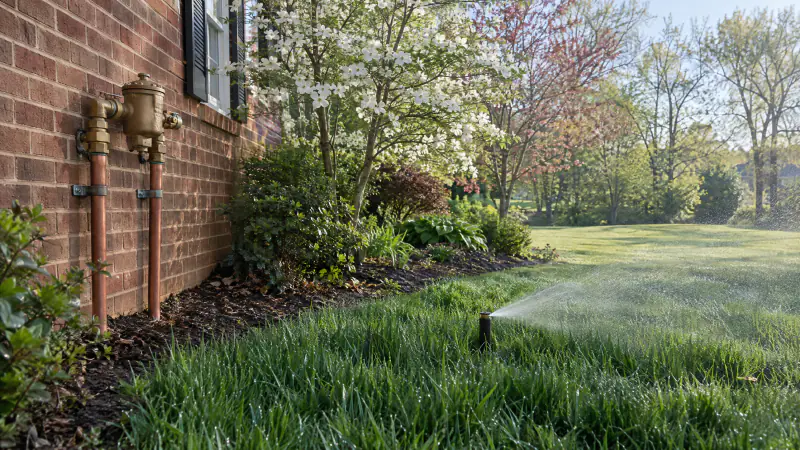
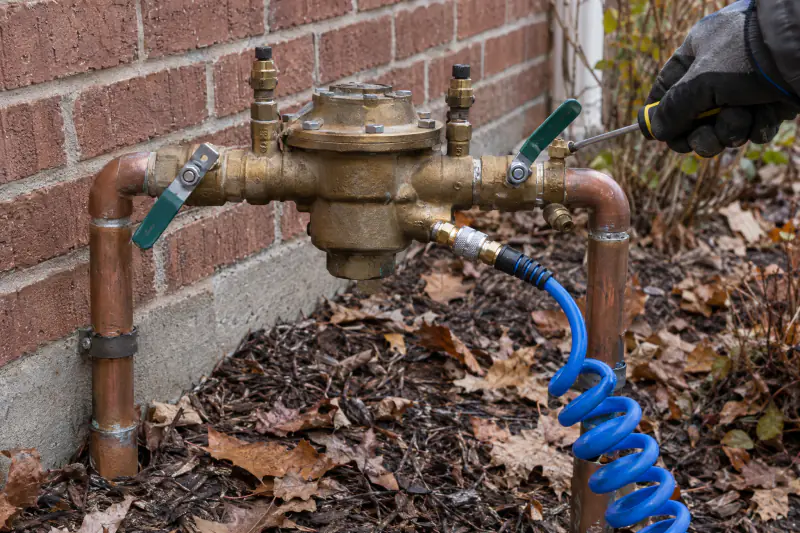
Backflow preventer test cock opened during sprinkler winterization, air hose attached
Test cock opened and valves set half-open for winter

What is included in sprinkler winterization and spring start-up?

Each season is its own visit, booked by you when the time comes.

  • Supply shutoff and drain

    We close the irrigation shutoff, often in the basement or crawlspace, and open its drain so the pipe between the house supply and the backflow preventer empties too.

  • Zone-by-zone blow-out

    Compressed air enters downstream of the backflow device and each zone runs in short cycles until heads release only mist. A second pass clears water that settles into low points.

  • Backflow preventer care

    Test cocks are opened and ball valves set partway so trapped water can drain and expand safely. An exposed assembly can get an insulated cover.

  • Spring refill and zone check

    Water returns a little at a time, then every zone runs while we look for broken heads, tilted rotors, clogged nozzles and weeping valves before setting a lighter spring schedule.

How does a winterization or start-up visit work?

Both visits follow the same careful order.

  1. Booking and system details

    You request the visit when the season turns. We ask about zone count, drip areas, where the shutoff and backflow sit, and what misbehaved last season.

  2. Isolate or inspect

    In fall we close the irrigation supply and drain the section near the house. In spring we first confirm the backflow preventer and valves survived winter.

  3. Air out or refill

    In fall the compressor connects below the backflow device and clears each zone at controlled pressure. In spring water returns slowly until the lines are full.

  4. Zone-by-zone check

    Each zone runs from the controller. In fall we watch for mist only; in spring we check heads, arcs, coverage and valve shutoff, and note any leak.

  5. Walkthrough and findings

    We show you the shutoff and backflow position, set the controller for the season and list any repairs found with prices, so you decide what gets fixed.

Air clearing a sprinkler zone on an autumn morning

A five-second clip of pop-up spray heads releasing fine mist during a fall sprinkler blow-out on a front lawn covered with scattered maple leaves.

Blow-out, drain valves or DIY: which winterization method works best?

Compressed air is the standard here, but technique decides whether it helps or harms.

Professional air blow-outDrain valves onlyDIY with a small compressor
How it worksHigh-volume air clears zone by zoneGravity drains water at low pointsGarage compressor through an adapter
Water removedNearly all, including heads and valvesLeaves water in dips, heads and valvesOften partial; small tanks run out fast
Main riskOverpressure if done carelesslyFreeze cracks where water remainsRaising pressure to make up for low volume
Backflow handlingDrained, valves set partway openMust still be drained by handOften missed or pressurized by mistake

Drip zones and poly pipe need lower air pressure than rigid PVC.

How much does sprinkler winterization cost in Northern Virginia?

As of 2026, typical Northern Virginia market ranges for a residential sprinkler blow-out run roughly $75 to $200 for a system of up to about eight zones, with spring start-up in a similar or slightly higher range of about $75 to $250. These are regional budget figures, not our prices, and each visit is priced on its own.

What moves the number:

  • Zone count and drip zones, since each needs its own air cycles.
  • Access to the indoor shutoff and the backflow assembly.
  • Repairs found at start-up, such as cracked heads, a leaking valve or a split backflow body, quoted separately.
  • Backflow testing where your utility requires it, usually a separate charge of roughly $60 to $150.

For a price on your own system, request an on-site estimate or call (571) 200-9600.

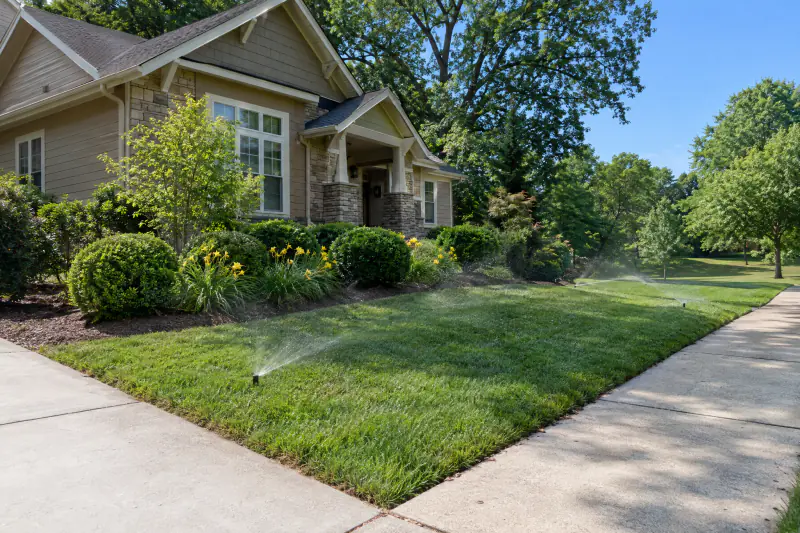
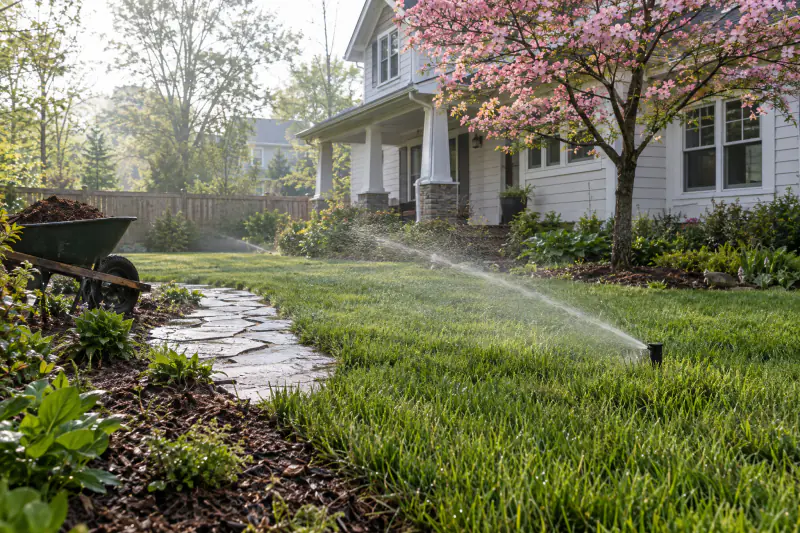
Rotor sprinkler zone running at spring start-up beside a flowering dogwood in a backyard
First spring run, checked zone by zone

What signs at spring start-up mean a sprinkler system needs repair?

Watch for these during the first runs.

  • A head that geysers, sputters or stays down while the rest of the zone rises.
  • A soggy patch or sunken strip that appears along a pipe route within days.
  • A zone that keeps running or dripping after the controller shuts it off.
  • Water spraying or dripping from the backflow preventer body or its test cocks.
  • Rotors stuck on one spot instead of turning through their set arc.

Not sure what you need?

Tell us what you are seeing. We will look at the site, explain the options in plain terms and give you a written estimate.

Winterization timing and backflow rules in Fairfax, Loudoun, Prince William and Arlington

First freezes arrive weeks apart across Northern Virginia. Dulles Airport's long-term average first freeze is in mid-October, while Arlington and Alexandria near the Potomac often stay above freezing until mid-November. Book a blow-out from mid-October in Loudoun and western Fairfax, and by early November closer in. The average last spring freeze at Dulles comes around the third week of April, so start-up usually fits mid-April into May.

Backflow rules come from your water utility and, in Fairfax County, the county itself. Fairfax County and Fairfax Water run a joint program that calls for testable assemblies on lawn irrigation to be tested annually by an approved tester, and Fairfax Water also serves the cities of Fairfax and Falls Church. Loudoun Water requires annual testing too. Towns such as Leesburg and Vienna, and Prince William, Arlington, Alexandria and Manassas, have other utilities with their own rules, so check with the one that bills you. Spring start-up, with the system under pressure, is a natural time for the test.

Frequently asked questions about sprinkler winterization & spring start-up

When should I winterize my sprinkler system in Northern Virginia?

Aim for mid-October through mid-November, earlier in Loudoun and western Fairfax, where the first freeze usually comes weeks sooner than near the Potomac. Earlier is safe, because a fescue lawn needs little irrigation once nights cool. Waiting until after a deep freeze risks cracked backflow parts and valves.

What air pressure is safe for a sprinkler blow-out?

Air volume matters more than pressure. Manufacturer guidance commonly caps it at about 50 psi for flexible poly pipe and 80 psi for rigid PVC, some makers advise 50 psi for any system, and no zone should exceed its lowest-rated part. High pressure with too little volume is what damages fittings, heads and valve diaphragms.

Can I just turn off the water instead of blowing out the lines?

Shutting off the supply stops new water entering, but water already in the pipes, valves and heads stays and can freeze. Drain valves release part of it, though dips in the line still hold water. Compressed air is the dependable way to empty a system.

When is it safe to turn sprinklers back on in spring?

Usually from mid-April into May, once overnight lows stay above freezing and the lawn is growing, a little earlier close to the Potomac. Fescue needs little irrigation in early spring, so there is no rush. Restoring water during a cold spell can refreeze the backflow assembly, which sits above ground outside many homes.

Does my backflow preventer have to be tested every year?

In much of Northern Virginia, yes. Fairfax County's program with Fairfax Water and Loudoun Water's program both call for testable backflow assemblies on irrigation systems to be tested annually by an approved tester. Towns and other utilities run their own programs, so check with the one that bills you for its schedule and forms.

Do I need to book winterization and start-up every year?

Yes, each season is a separate visit. myYardPros does not sell ongoing service packages, so you request the fall blow-out and the spring start-up yourself when the time comes. Many homeowners find it easiest to call when the leaves start falling and again when the dogwoods bloom.

From the field notes

Long-form guides on sprinkler winterization & spring start-up from the crew that does the work, with Northern Virginia costs, timing and permit detail.

Water Management

A pre-winter drainage walkthrough

Standing water beside a foundation in November becomes ice in January. Walk the house stop by stop, from gutters to low spots, with the measurements that matter and the fixes that can still be built this winter.

The myYardPros Crew

All guides in this category  ·  Planning guides  ·  Glossary  ·  FAQ

Ready to talk about your sprinkler winterization and spring start-up project?

Tell us about your property and what you want to fix or build. We will visit, measure and send a clear written estimate. We serve Fairfax, Loudoun, Prince William and Arlington counties.

Serving Fairfax, Loudoun, Prince William and Arlington counties and the cities inside them. Check your address. Military, veterans, first responders, healthcare workers and teachers: ask about the Heroes Discount.