Artificial Turf Installation in Northern Virginia
Artificial turf installation replaces soil and struggling grass with synthetic turf laid over a compacted, free-draining stone base. It suits Northern Virginia homeowners with deep shade, dog runs, play areas or small yards where tall fescue will not survive, and those who want a backyard putting green. myYardPros excavates, builds the base and installs the turf.
- Green in deep shade and heavy wear
- Compacted stone base that drains
- Honest about heat, cost and lifespan
- Licensed & insured in Virginia
- Based in Sterling, VA
- Residential projects only
- Typical timeline
- Often 2-5 days on site
- Typical base depth
- 3-4 in. compacted aggregate
- Expected lifespan
- Often 12-20 years, varies
- Permit
- Usually none, check HOA rules
Is artificial turf a good idea, and what makes an installation last?
Artificial turf is a good idea where natural grass has a fair reason to fail, and a poor one where fescue would grow well. Under dense oak shade, in a narrow side yard, across a dog run worn to mud or beneath a swing set, no amount of seed will hold a lawn. In an open, sunny yard the trade is harder: turf gets hot in summer sun, costs far more than sod and eventually wears out. We would rather tell you that before you spend the money.
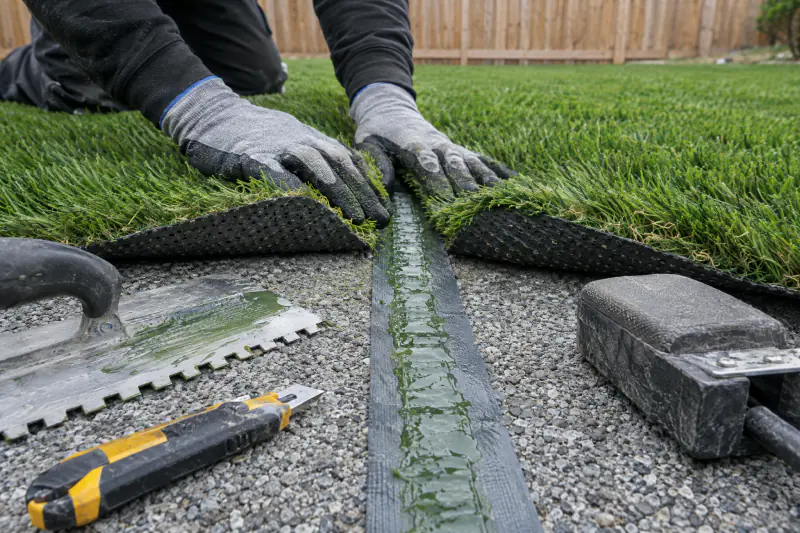
What makes an installation last is the base. Soil is excavated, the subgrade is shaped to drain, and a geotextile separates the clay from 3 to 4 in. of compacted aggregate. Turf is rolled out with the blades leaning one direction, seams are glued over seam tape rather than merely pinned, edges are fastened to a firm border, and infill is brushed in to hold the fibers upright.
What kinds of artificial turf do we install?
The product, base and infill change with how the area will be used.
Synthetic lawns for shade
Landscape turf with multi-toned blades and a tan thatch layer that reads as a mown lawn. Suited to shaded corners, courtyards and townhouse yards where fescue thins every year.
Pet runs and dog areas
Shorter, dense turf with a highly permeable backing over an open-graded base and odor-controlling infill. It rinses clean, ends muddy paws and withstands pacing along a fence.
Play areas
Soft, resilient turf around playsets, with a shock-absorbing pad beneath where equipment calls for one. It stays level and clean where mulch scatters and grass wears to dirt.
Backyard putting greens
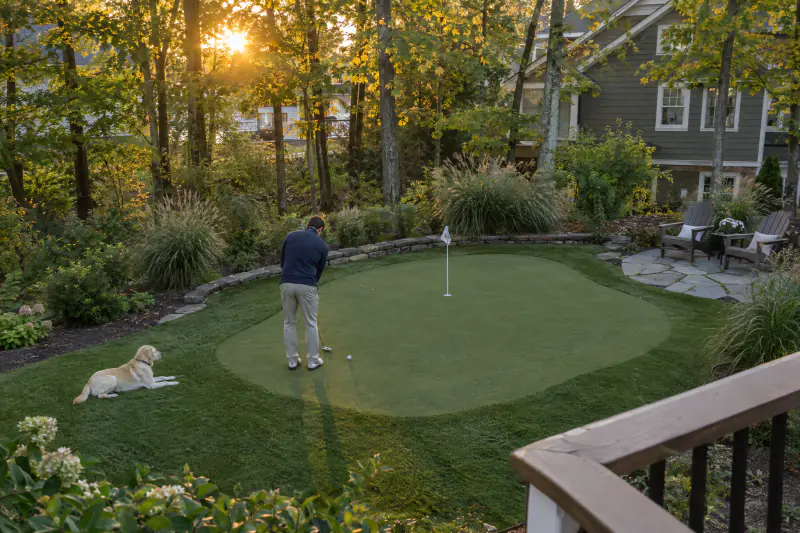
A short, dense putting surface over a finely graded, firmly compacted base with gentle contours and set cups, usually framed by a collar of longer fringe turf.
Edges and transitions
Turf is finished against a paver border, steel edging or a concealed nailer board, so the perimeter stays tight and trims neatly against beds, walks and patios.
How is artificial turf installed, step by step?
Most of the labor happens below the surface, before any turf is unrolled.
Site visit and candid assessment
We measure the area, check sun, drainage, access and nearby windows, and ask how it will be used. If natural grass would serve you better, we tell you.
Written scope and samples
You handle turf samples and receive a scope listing turf type, base depth, drainage, edging and infill. Virginia 811 marks utilities before excavation is scheduled.
Excavation and base
Sod and several inches of soil are removed and hauled away. Geotextile covers the shaped subgrade, then aggregate is placed, graded to drain and compacted in lifts.
Turf, seams and edges
Turf is laid with the grain consistent, trimmed to fit, and joined with seam tape and adhesive. The perimeter is fastened to the border at close spacing.
Infill, brushing and walkthrough
Infill is spread in passes and worked in with a power broom until blades stand upright. We check seams and edges with you and explain rinsing and brushing.
A backyard putting green in evening light
A short clip looking down on a synthetic putting green as a homeowner rolls a putt toward the cup, with a dog resting on the surrounding fringe turf.
Artificial turf or tall fescue sod: which is right for your yard?
An honest side-by-side for a typical Northern Virginia yard.
| Artificial turf | Tall fescue sod | |
|---|---|---|
| Upfront cost | High | Much lower |
| Ongoing work | Rinsing, brushing, leaf removal | Mowing, watering, feeding, overseeding |
| Deep shade and heavy wear | Unaffected | Thins or fails |
| Surface in summer sun | Can become too hot for bare feet | Stays cool |
| Rainwater | Drains through to the base | Soaks in and feeds soil life |
| Lifespan | Often 12-20 years, then replaced | Indefinite with care |
Many yards use both: turf in the problem area and living lawn where grass grows well.
How much does artificial turf cost in Northern Virginia?
Professionally installed artificial turf in Northern Virginia typically costs about $12 to $22 per sq ft for lawn, pet and play areas, and roughly $18 to $35 per sq ft for putting greens. A 500 sq ft lawn area therefore often falls between $6,000 and $11,000. These are general market ranges as of 2026, not myYardPros prices.
What moves the number:
- Access. Soil and stone often travel by wheelbarrow through a narrow gate.
- Excavation depth and clay to haul away.
- Drainage. Flat clay sites may need a piped outlet.
- Turf grade and infill type.
- Shape. Curves mean more seams and waste.
- Shock pads, borders and putting cups.
Turf costs several times what sod does and will need replacing one day. It earns its price where grass cannot grow. For a figure based on your yard, request an on-site estimate.
What should you ask any artificial turf installer before hiring?
Good answers here separate a surface that stays flat and clean from one that ripples, smells or floods.
- How deep will you excavate, and how thick is the compacted base?
- Where does water go once it passes through the turf on my clay soil?
- Are seams glued over seam tape, or only nailed?
- Which infill do you recommend for dogs, and why?
- How hot will this turf get in my yard in July?
- Could reflected sunlight from my windows damage the turf in this spot?
Not sure what you need?
Tell us what you are seeing. We will look at the site, explain the options in plain terms and give you a written estimate.
What should you know about artificial turf in Fairfax, Loudoun, Prince William and Arlington?
Artificial turf in Northern Virginia raises three local questions: HOA approval, heat and drainage. Many HOAs restrict or prohibit synthetic turf in front yards, and some review back yards as well, so apply before ordering. Some jurisdictions may count turf toward lot-coverage or impervious-surface limits, so check with your county.
Heat deserves plain talk. On a sunny July afternoon synthetic turf can run tens of degrees hotter than natural grass, too hot for bare feet and paws. Shade, cooling infill and a quick rinse help. Sunlight reflected from energy-efficient windows can also deform turf fibers, so we look at nearby glass during the site visit.
Water passes through turf quickly, but the clay beneath absorbs it slowly, so on wet sites we pair the base with yard drainage work. Turf is often framed by a paver walkway. If your lawn gets reasonable sun, compare sod installation first.
Frequently asked questions about artificial turf installation
Does artificial turf get hot in summer?
Yes. In direct summer sun, synthetic turf becomes much hotter than natural grass and can be uncomfortable or unsafe for bare feet and pets during the hottest hours. It cools quickly in shade or after a rinse, which is why turf suits shaded areas here.
How long does artificial turf last?
Quality turf on a proper base often lasts 12 to 20 years in residential use. Heavy traffic and full sun shorten that. The stone base usually outlasts the surface, so replacement later means new turf and infill rather than a full rebuild.
Is artificial turf good for dogs?
It works well when built for them. A permeable backing, an open-graded base and odor-controlling infill let urine drain through. Regular rinsing matters, with an enzyme cleaner when needed, or odor builds up in warm, humid weather.
Does artificial turf drain well on clay soil?
The turf and stone base drain quickly. The clay under them does not. On Northern Virginia soil the base must slope so water moves to lower ground, or connect to a drain. Otherwise the base can hold water after storms.
What maintenance does artificial turf need?
Far less than a lawn, but not none. Blow off leaves and debris, especially in fall, rinse occasionally, and brush high-traffic areas to stand the fibers up. Infill may need topping up after several years, and edge weeds are easily pulled.
Can I have a putting green in my backyard?
Yes, if you have a reasonably open area and a way to drain it. Residential greens are commonly a few hundred square feet with two to four cups and a fringe for chipping. The base is graded with subtle breaks. HOA approval may be required.
Related services

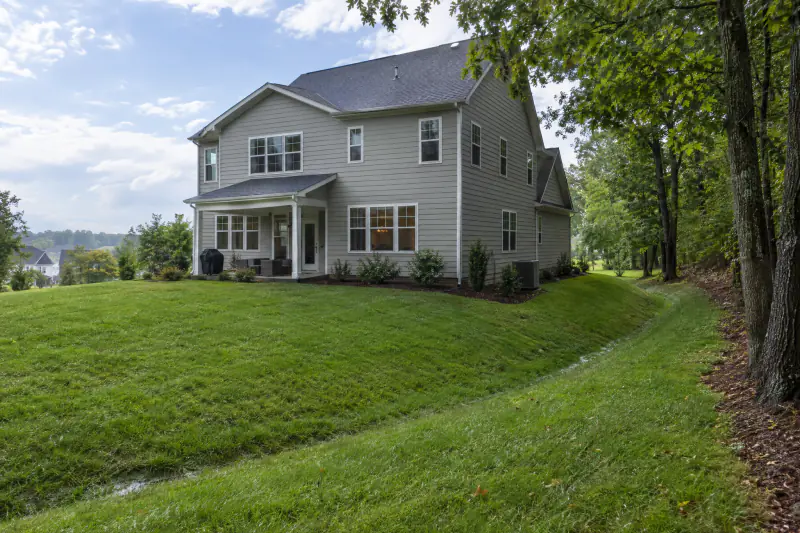
Sod Installation & Lawn Renovation
Sod installation replaces a failed lawn with mature tall fescue turf rolled out over graded, amended soil, giving a finished lawn in a day or two.
Learn more
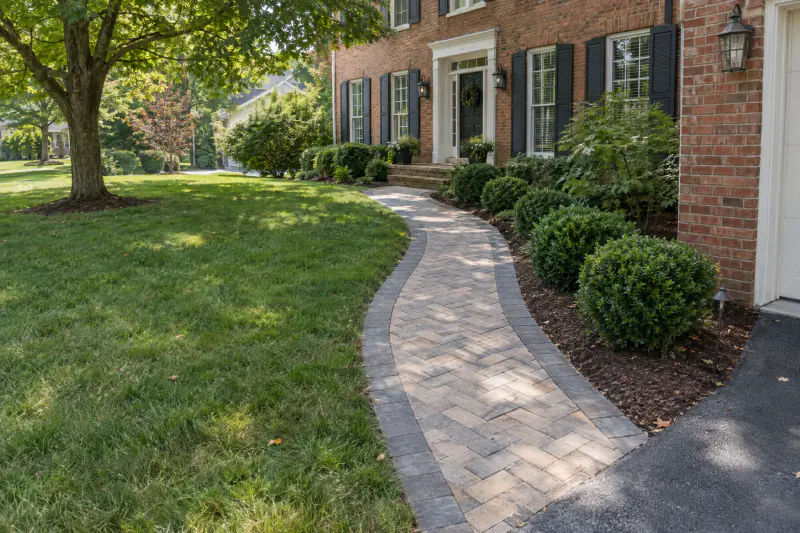
Yard & Foundation Drainage
Yard drainage solutions collect and redirect surface water with grading, swales, catch basins, channel drains and dry wells so rain leaves the lawn and moves away from the house.
Learn more
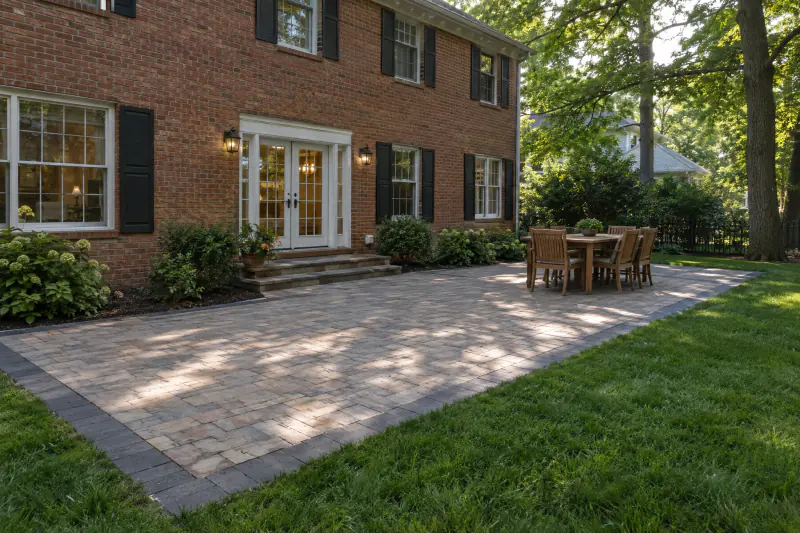
Walkways & Garden Paths
A walkway is a paved or stone route between the places people walk every day: driveway to front door, gate to patio, door to garden.
Learn more
Paver Patios
A paver patio is an outdoor floor of concrete, porcelain or natural-stone units laid over a compacted stone base instead of a poured slab.
Learn more
Ready to talk about your artificial turf installation project?
Tell us about your property and what you want to fix or build. We will visit, measure and send a clear written estimate. We serve Fairfax, Loudoun, Prince William and Arlington counties.
Page updated . Photos and video on this page are illustrative.