DIY French drain or hire it out in Northern Virginia
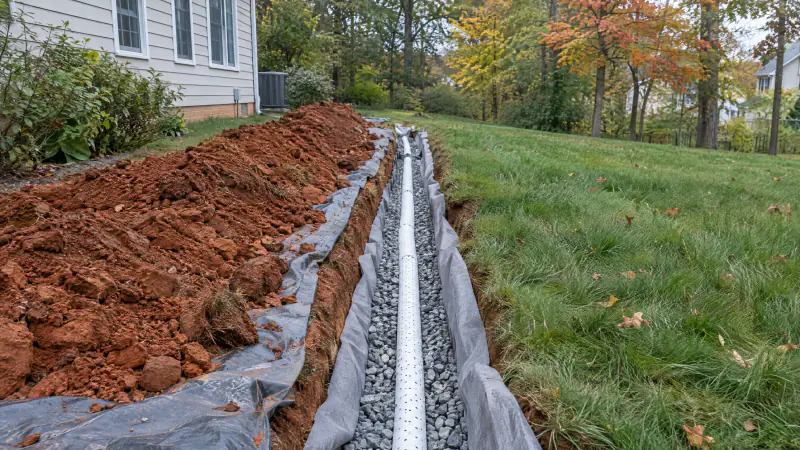
A French drain looks like a trench full of gravel, but the outlet, the slope and the fabric decide whether it works. See what a capable homeowner can do, where DIY stops and what it costs.
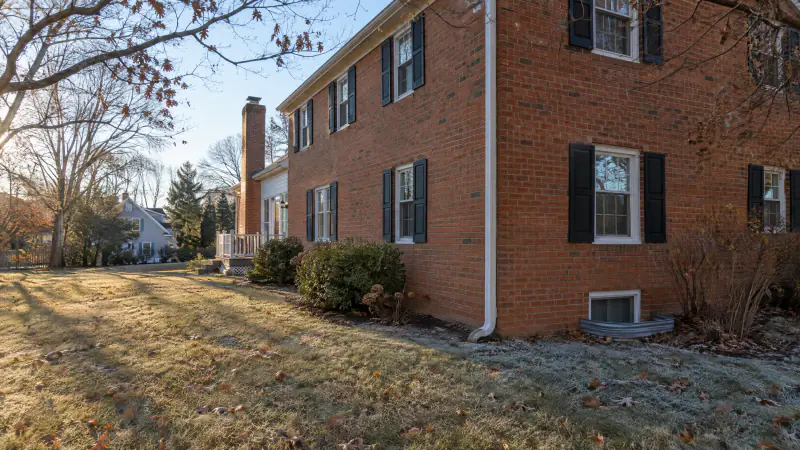
Yard grading reshapes the soil around a house so rain runs away from the foundation instead of toward it, using measured slopes, shallow grassed swales and compacted fill in low spots, finished with topsoil and new turf. Northern Virginia homeowners need it when settled backfill tilts the yard toward the house or a neighbor's runoff crosses the lot.

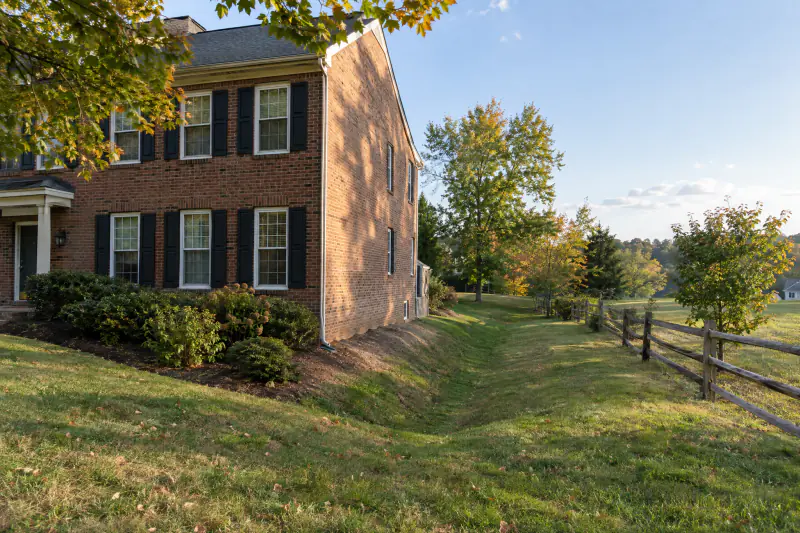
A yard needs re-grading when its surface sends water toward the house or traps it in hollows, usually because soil has moved since construction. Foundation backfill is loose, and over ten or twenty years it sinks into a shallow moat that fills in every storm.
Proper grading starts with measured elevations. For new homes, the Virginia Residential Code calls for the ground to fall at least 6 inches within the first 10 feet of the foundation, and we treat that as a minimum on any re-grade. Where a fence, wall or neighboring house sits too close for that fall, the code allows a swale or drain instead, and a swale sloped toward an exit carries the water.
Our yard drainage overview shows how grading fits with other methods. When a hollow has no surface exit at all, a catch basin or dry well takes over where slope alone cannot.

Each piece below is drawn and priced before any soil moves.
Soil along the house is rebuilt to slope outward while staying several inches below siding, weep holes and thresholds, so the fix never invites rot or termites.
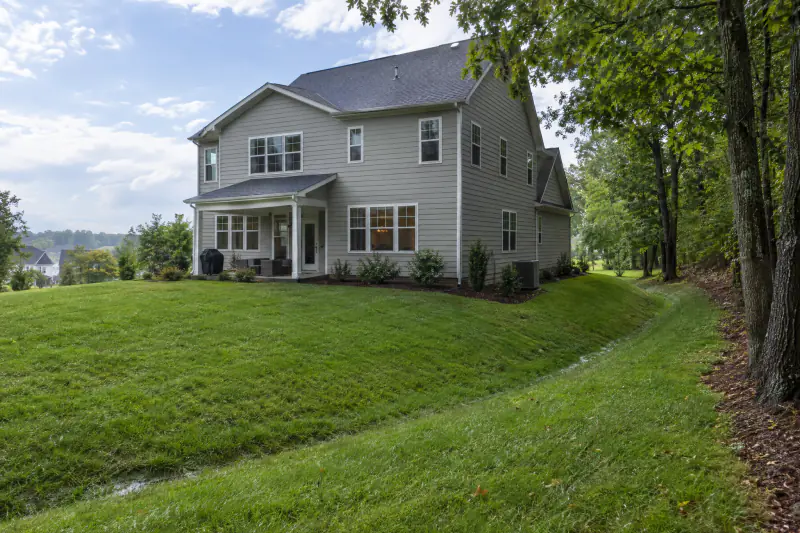
A swale is a wide, gentle dip that steers runoff around the house toward the front or rear of the lot. Gradual side slopes keep it easy to mow.
Hollows get clean fill compacted in thin layers, then a cap of screened topsoil. Fill holds the shape and topsoil grows grass; topsoil used for both settles.
Disturbed ground gets tall fescue seed under straw or an erosion blanket, or sod where the lawn must be usable soon or a slope would wash seed away.
Five steps take the job from a first walk to a lawn that drains.
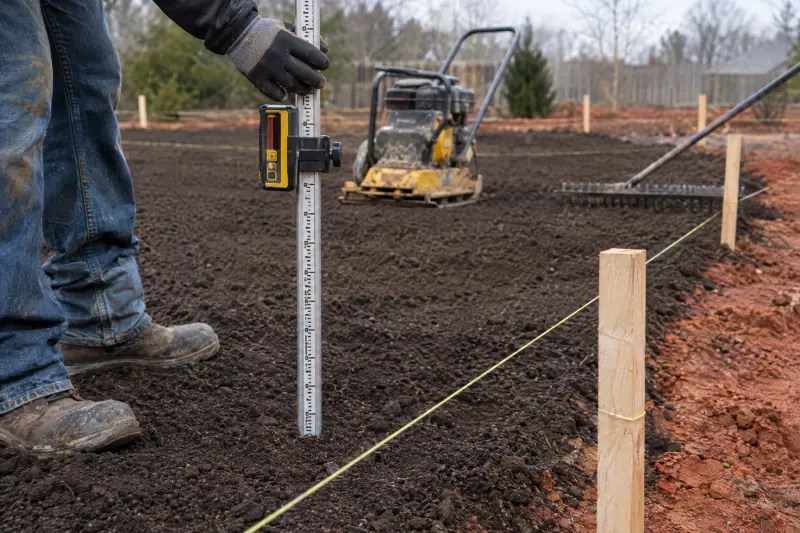
We walk the property with you, ask where water stands and where it enters, check downspouts and siding height, and take elevation readings at every key point.
You get a sketch of existing and proposed elevations, swale lines, soil to import or haul away and the turf finish, with a written price for that scope.
Virginia 811 marks public utilities before digging. We check your plat for drainage easements and flag whether county land disturbance rules or HOA review apply.
Turf and topsoil are set aside, the subgrade is cut or filled to the drawn elevations in compacted lifts, and topsoil returns at the finished slope.
A hose run across the new surface confirms water goes where the sketch says. Then we seed or sod and walk you through watering and first mowing.
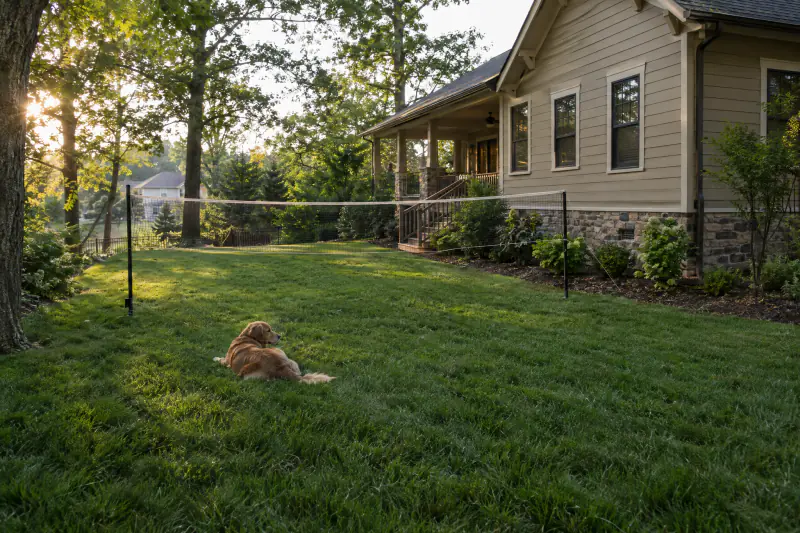
A five-second clip of a dry, even fescue lawn behind a craftsman home where a low spot was filled and re-graded, with a badminton net moving in the breeze.
The choice depends on the clearance between soil and siding.
| Build up at the house | Cut down farther out | Grassed swale | |
|---|---|---|---|
| Best when | Foundation shows well below the siding | Siding sits close to the soil | Lot is too narrow for full fall |
| Soil handling | Fill and topsoil brought in | Soil removed or moved downhill | Soil reshaped, little imported |
| Main limit | Must stay below siding | Can expose roots or undercut walks | Needs a downhill exit |
| Upkeep | Top up if it settles | Little once turf is in | Keep clear of mulch and debris |
As of 2026, typical Northern Virginia market ranges for yard grading run from about $1,000 for a short swale to $18,000 or more for a full backyard. These are regional budget figures, not our prices:
Soil volume moves the number most: cubic yards trucked in or hauled away, and whether it is fill, topsoil or both. Tight access that forces hand work, sod instead of seed, and fences or beds that must be reset all add cost. If irrigation crosses the area, its fall blow-out can be done first.
Request an on-site estimate for a figure based on your elevations.
Before you decide: French Drain vs. Catch Basin · All cost and pricing guides · How we price a project · How our estimates work · Yard Drainage Diagnostic · Pre-Winter Drainage Checklist

Check these after a soaking rain, or with a long level.
Tell us what you are seeing. We will look at the site, explain the options in plain terms and give you a written estimate.
Most single-lot grading needs no permit, but Northern Virginia counties and cities regulate land disturbance above a set area, and the threshold differs. Fairfax, Prince William and Arlington start review at about 2,500 square feet of disturbed ground, Loudoun's grading permit at about 5,000, with tighter rules near streams, and the cities set their own. The area counts the work zone and access path, not just the finished slope. Check with your county or city before a large regrade, and never push concentrated runoff onto a neighbor's lot.
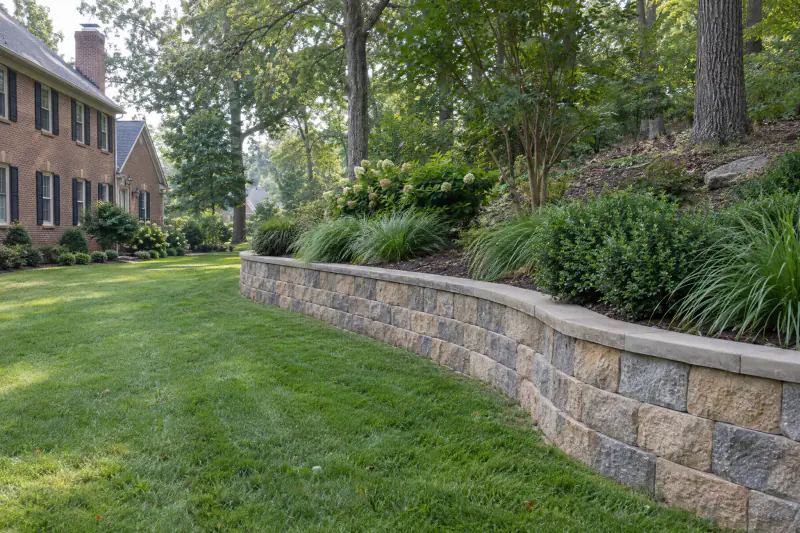
Dense clay sheds water fast and compacts hard, so we place fill in thin lifts. Newer communities in Ashburn, Gainesville and Haymarket often have drainage easements and HOA review for grade changes. Where a slope is too steep to grade gently, a retaining wall may fit better, and new turf can come from sod installation.
The usual target is at least 6 inches of drop across the first 10 feet from the foundation, about a 5 percent grade. That is the figure the Virginia Residential Code sets for new homes, and a sound goal for an older lot. Where a lot line or wall leaves too little room, a swale sloped toward an exit does the job.
Usually both. Deep fills use clean, low-organic fill compacted in layers, because topsoil is rich in organic matter that breaks down and settles. A few inches of topsoil then go on top for the grass. Topsoil alone in a deep hollow often sinks into a new dip.
A swale is a shallow, grassed channel shaped into the lawn to guide runoff. Built properly it is broad and gentle, often a few inches deep across several feet, so most people notice it only when it carries water. Narrow, steep channels are what look like ditches.
It often helps, since surface water collecting against foundation walls is a common cause of basement seepage, so grading is usually the first fix. It will not stop groundwater rising from below or leaks through wall cracks, which need separate attention.
Late summer into early fall, because tall fescue seeded from late August into mid-September gets cool nights and fall rain before winter. Grading itself can happen whenever the ground is not frozen or saturated, and spring work finished with sod is common too.
With sod, light foot traffic is usually fine after two to three weeks, once roots knit into the soil. Seeded areas need about six to eight weeks before regular use, and heavy play should wait until the new grass has been mowed several times.
Long-form guides on yard grading & swales from the crew that does the work, with Northern Virginia costs, timing and permit detail.
17 min readA French drain looks like a trench full of gravel, but the outlet, the slope and the fabric decide whether it works. See what a capable homeowner can do, where DIY stops and what it costs.
The myYardPros Crew
23 min readStanding water beside a foundation in November becomes ice in January. Walk the house stop by stop, from gutters to low spots, with the measurements that matter and the fixes that can still be built this winter.
The myYardPros Crew
19 min readA puddle at the corner, a bowl along the wall, a yard that slopes toward the house. Each one has a different cause and a different fix. Learn to read yours with a ten-minute walk in the rain.
The myYardPros Crew
All guides in this category · Planning guides · Glossary · FAQ

Catch basins are grated surface inlets that collect standing water and send it through solid pipe to a downhill outlet or an underground dry well.
Learn more
Yard drainage solutions collect and redirect surface water with grading, swales, catch basins, channel drains and dry wells so rain leaves the lawn and moves away from the house.
Learn more
Sod installation replaces a failed lawn with mature tall fescue turf rolled out over graded, amended soil, giving a finished lawn in a day or two.
Learn more
Tell us about your property and what you want to fix or build. We will visit, measure and send a clear written estimate. We serve Fairfax, Loudoun, Prince William and Arlington counties.
Serving Fairfax, Loudoun, Prince William and Arlington counties and the cities inside them. Check your address. Military, veterans, first responders, healthcare workers and teachers: ask about the Heroes Discount.