  • Serving the Northern Virginia area
Call (571) 200-9600 Get an Estimate
Water Management

Yard & Foundation Drainage Solutions in Northern Virginia

Yard drainage solutions collect and redirect surface water with grading, swales, catch basins, channel drains and dry wells so rain leaves the lawn and moves away from the house. Northern Virginia homeowners need them when clay soil sheds stormwater faster than it soaks in, leaving ponding, washed-out mulch or water standing against the foundation.

  • Soil sloped away from the foundation
  • Low spots drained to a real outlet
  • No more washed-out mulch and beds
  • Licensed & insured in Virginia
  • Based in Sterling, VA
  • Residential projects only
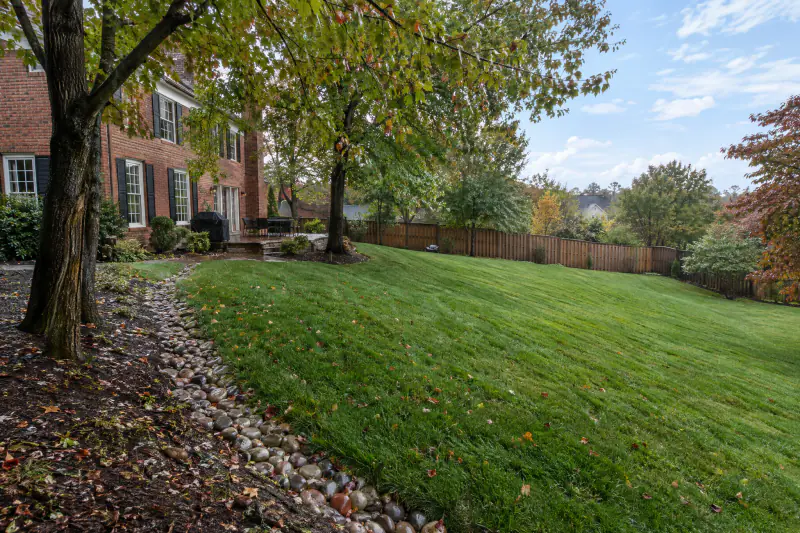
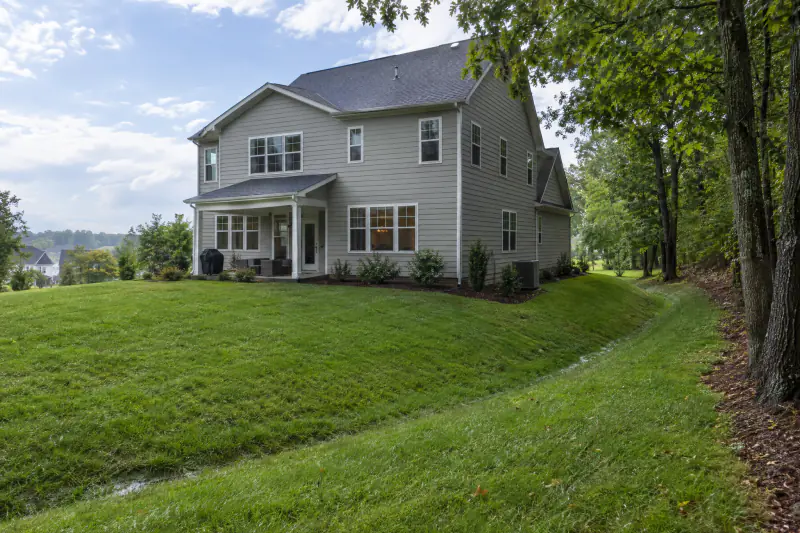
Re-graded lawn and grass swale carrying water away from a house, a yard drainage solution
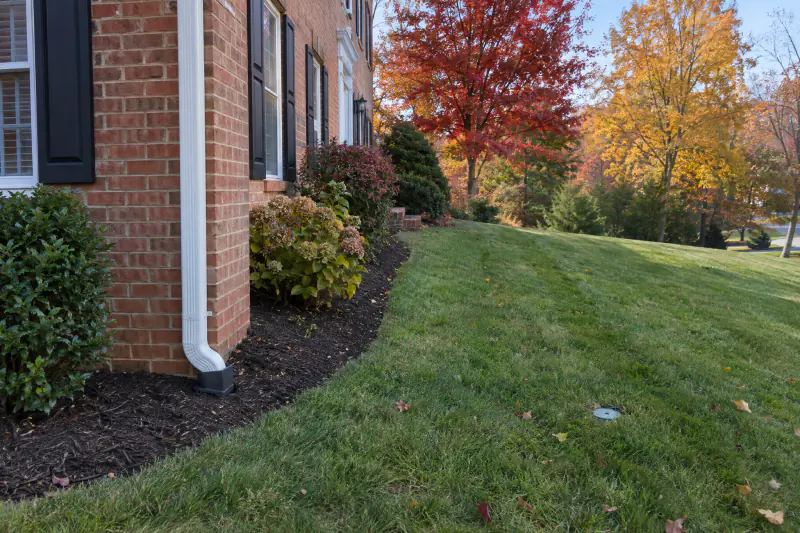
Lawn graded away from the foundation into a shallow swale
Typical timeline
1-5 days, by scope
Permit
Depends on area disturbed
Target grade at house
About 6 in. fall over 10 ft
Best season
Any time ground is workable

Why does water pool in Northern Virginia yards and against foundations?

Water pools because the ground no longer slopes the way it should, and clay will not absorb the difference. Builders backfill foundations with loose soil that settles over the years, so a yard that once shed water now tilts toward the house. Add a patio or a shed, and a summer thunderstorm has nowhere to go.

The standard to aim for is simple: soil should fall about 6 inches over the first 10 feet from the foundation, and every low spot needs a path out. Poor drainage work ignores that. A catch basin is set beside the puddle instead of at its lowest point, or mulch is heaped against siding to fake a slope.

We correct the surface first, because a properly shaped lawn cannot clog, and add pipe only where grade alone will not work. Water held below the surface is a different problem, solved with a French drain, and roof runoff needs its own buried downspout lines.

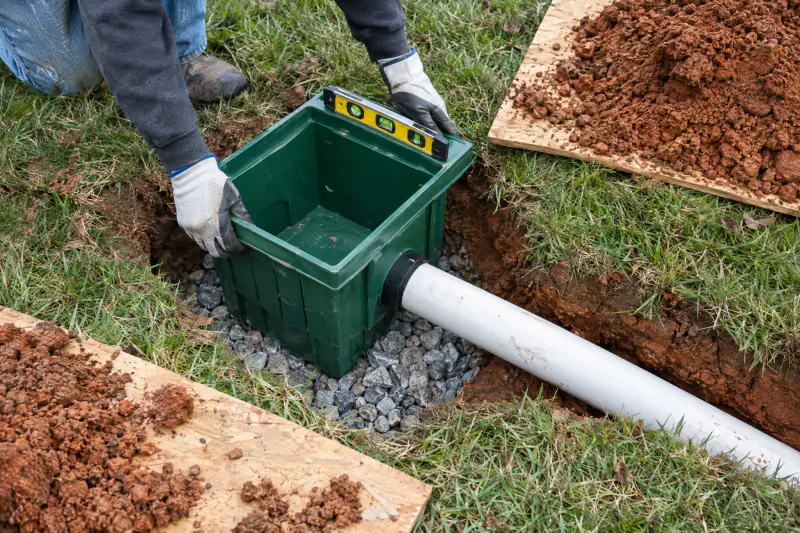
Catch basin being set and connected to solid pipe during yard drainage installation
Catch basin set at the low point, piped to an outlet

What yard drainage solutions do we install?

Most properties need two or three of these working together, not one product.

  • Re-grading

    We reshape soil so the surface falls away from the house and toward an outlet, rebuilding settled areas with compacted fill and topsoil while keeping soil clear of the siding.

  • Swales

    A swale is a broad, shallow, grassed channel that steers runoff around the house. Shaped gently, it mows like ordinary lawn and has no pipe to clog or grate to clean.

  • Catch basins

    A grated box set at the true low point collects ponding water and sends it through solid pipe to a discharge point. A sump below the pipe traps sediment for cleaning.

  • Channel drains

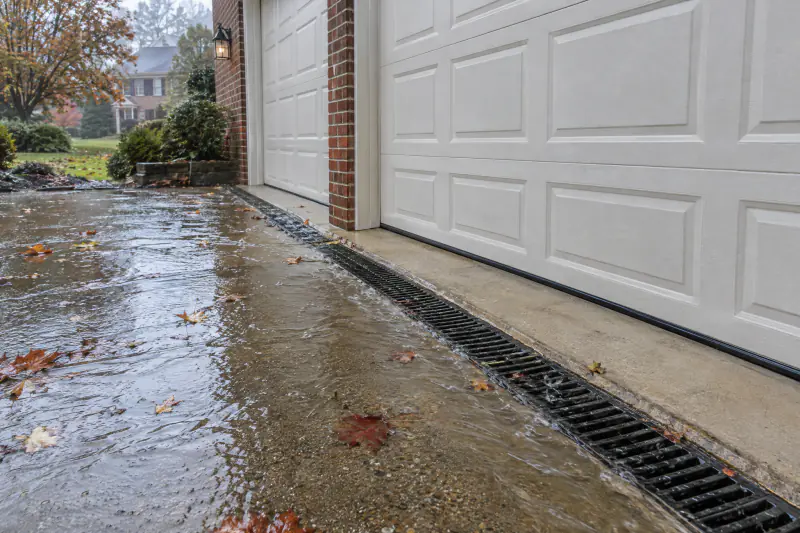
    A long, narrow grated trench set in concrete across a driveway, garage apron or patio edge intercepts sheet flow before it reaches a door, then pipes it away.

  • Dry wells

    A buried chamber surrounded by stone stores runoff and releases it slowly. In clay it empties slowly, so we size it conservatively and add an overflow.

How do we fix a yard drainage problem?

We follow the water from where it lands to where it can safely leave.

  1. Site visit and elevations

    We walk the yard, ask what happens in a heavy storm, and take elevation readings to map where water arrives from, where it stalls and where it could exit.

  2. Drainage plan and estimate

    You receive a plan showing new grades, any swales, basins, pipe routes and the discharge point, with a written price and the reasoning behind each piece.

  3. Marking and approvals

    Virginia 811 marks utilities before digging. We check for drainage easements on your plat and help with HOA or county submissions when the scope requires them.

  4. Grading and installation

    Soil is cut and filled to the planned elevations and compacted. Basins, channel drains and solid pipe go in on a measured slope before finish grading.

  5. Flow test and walkthrough

    We run water across the new grades and into each inlet, confirm it reaches the outlet, then restore disturbed areas with topsoil and seed or sod.

Channel drain catching driveway runoff in the rain

A short clip of rainwater flowing down a concrete driveway and dropping into a grated channel drain in front of garage doors, keeping the threshold dry.

Re-grading, catch basin or dry well: which fits your yard?

The right choice depends on whether the yard has natural fall to an outlet.

Re-grading or swaleCatch basin and pipeDry well
SolvesWater moving toward the housePonding in an enclosed low spotRunoff with no downhill outlet
Needs downhill outletYes, across the surfaceYes, at the pipe endNo, but needs an overflow
MaintenanceMowing onlyClear the grate and sumpKeep sediment out of the inlet
Performance in clayUnaffected by soil typeUnaffected by soil typeLimited; drains slowly

How much does yard drainage cost in Northern Virginia?

As of 2026, typical Northern Virginia market ranges for residential surface drainage work vary widely with scope. These are regional planning figures, not our prices:

  • Re-grading one or two sides of a house: roughly $1,500 to $6,000.
  • Catch basin with a piped run: roughly $1,500 to $5,000.
  • Channel drain across a driveway or patio: roughly $2,000 to $6,000.
  • Dry well: roughly $2,000 to $6,000.

Whole-yard projects that combine several of these can run from $5,000 to $20,000 or more. The number moves with the volume of soil moved, machine access, pipe length to the outlet, concrete or paver cutting, and lawn restoration.

Request an on-site estimate to have your yard measured.

Channel drain across a driveway catching rainwater before the garage, part of yard drainage solutions
Channel drain intercepting driveway runoff before the garage

What are the signs of a yard drainage problem?

Walk the yard during a steady rain and look for these.

  • Puddles remain on the lawn more than a day after rain.
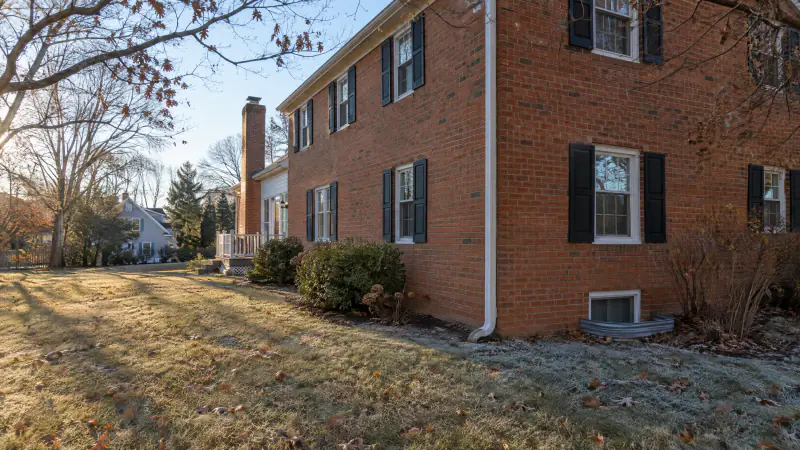
  • Soil along the foundation is flat or tilts toward the house.
  • Mulch and topsoil wash out of beds onto walks.
  • Water sheets across the driveway or patio toward a door.
  • Window wells fill, or a stain line marks the basement wall.
  • Soil or mulch sits at or above the bottom edge of the siding.

Not sure what you need?

Tell us what you are seeing. We will look at the site, explain the options in plain terms and give you a written estimate.

Grading and drainage rules in Fairfax, Loudoun, Prince William and Arlington

Whether a drainage project needs a permit depends mostly on how much ground it disturbs. Counties and cities in Northern Virginia regulate land disturbance above a set area, and the threshold differs by jurisdiction, so check with yours before large re-grading.

Two rules apply almost everywhere. You may not redirect runoff so that it damages a neighboring property, and recorded drainage easements, common along rear and side lot lines in newer communities such as Ashburn, South Riding and Bristow, must stay open. Many HOAs review grading changes, and sending water to a curb or public storm drain typically needs approval.

Older neighborhoods in Vienna, Annandale and Springfield tend to have decades of settled backfill. If a new paver patio is planned, settle the drainage before the base goes down.

Frequently asked questions about yard & foundation drainage

How do I fix standing water in my yard?

First find out why it stands. If the spot is lower than everything around it, fill and re-grade it or install a catch basin piped to an outlet. If water arrives from uphill, a swale can turn it aside. If soil stays saturated without puddles, a French drain is the tool.

How much slope should the ground have away from a house?

A widely used standard is about 6 inches of fall over the first 10 feet from the foundation, roughly a 5% slope. Where lot lines or walks make that impossible, a swale or drain placed closer to the house can carry water away instead.

Do dry wells work in clay soil?

Only within limits. A dry well relies on surrounding soil to absorb stored water, and Northern Virginia clay absorbs slowly, so it can stay full between storms. It suits modest volumes where no downhill outlet exists, and it should always have an overflow.

Can I just add soil against my foundation to fix the slope?

Sometimes, if enough foundation is exposed. Siding and wood framing should stay several inches above the soil, commonly about 6 inches, to avoid rot and insect entry. When there is no room to raise the soil, the grade farther out has to be lowered instead.

Is a catch basin better than a French drain?

They do different jobs. A catch basin takes water from the surface through an open grate and moves it quickly in solid pipe. A French drain collects water from within the soil through perforated pipe. Match the tool to the water.

Can yard drainage be piped to the street?

Sometimes, but not without checking. Cutting a curb or tying into a public storm drain typically requires approval from the county, city, VDOT or the HOA, depending on who maintains the street. Otherwise, a pop-up emitter in the lawn is the usual alternative.

From the field notes

Long-form guides on yard & foundation drainage from the crew that does the work, with Northern Virginia costs, timing and permit detail.

Water Management

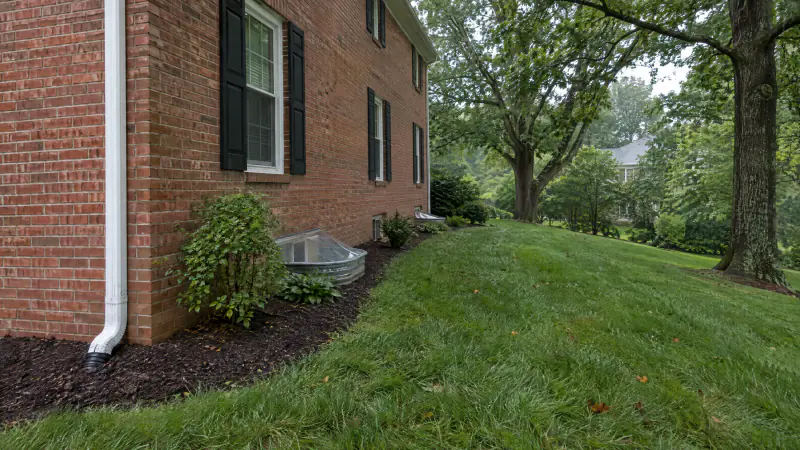
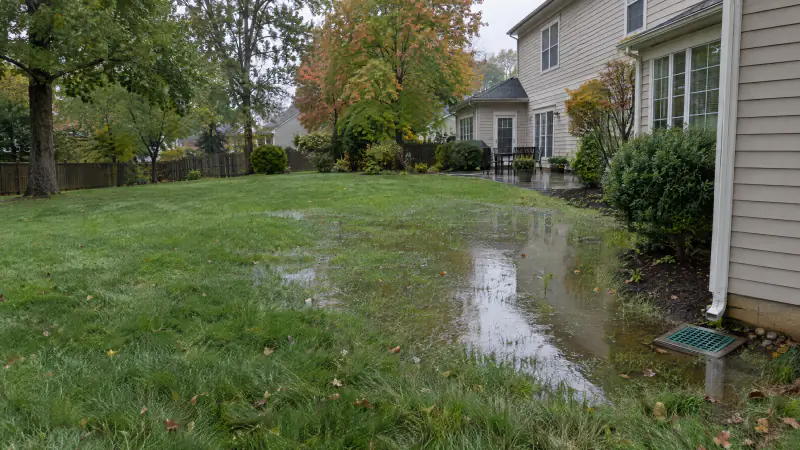
A pre-winter drainage walkthrough

Standing water beside a foundation in November becomes ice in January. Walk the house stop by stop, from gutters to low spots, with the measurements that matter and the fixes that can still be built this winter.
The myYardPros Crew

All guides in this category  ·  Planning guides  ·  Glossary  ·  FAQ

Ready to talk about your yard and foundation drainage project?

Tell us about your property and what you want to fix or build. We will visit, measure and send a clear written estimate. We serve Fairfax, Loudoun, Prince William and Arlington counties.

Serving Fairfax, Loudoun, Prince William and Arlington counties and the cities inside them. Check your address. Military, veterans, first responders, healthcare workers and teachers: ask about the Heroes Discount.