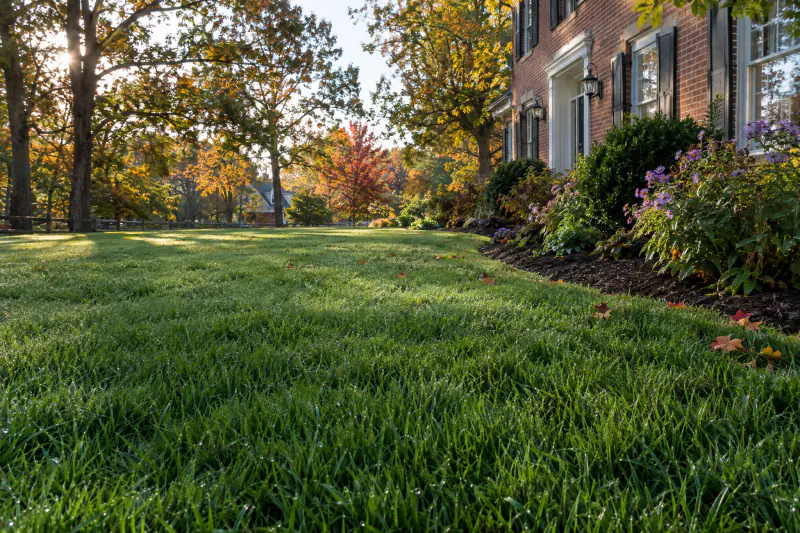
Sod Installation & Lawn Renovation in Northern Virginia
Sod installation replaces a failed lawn with mature tall fescue turf rolled out over graded, amended soil, giving a finished lawn in a day or two. Full renovation by seed is the lower-cost alternative. Both suit Northern Virginia homeowners whose lawn is mostly weeds, bare clay or construction damage. myYardPros handles removal, soil preparation and installation.
- Old lawn removed, soil graded and amended
- Tall fescue sod laid tight and rolled
- Written watering plan for the first month
- Licensed & insured in Virginia
- Based in Sterling, VA
- Residential projects only
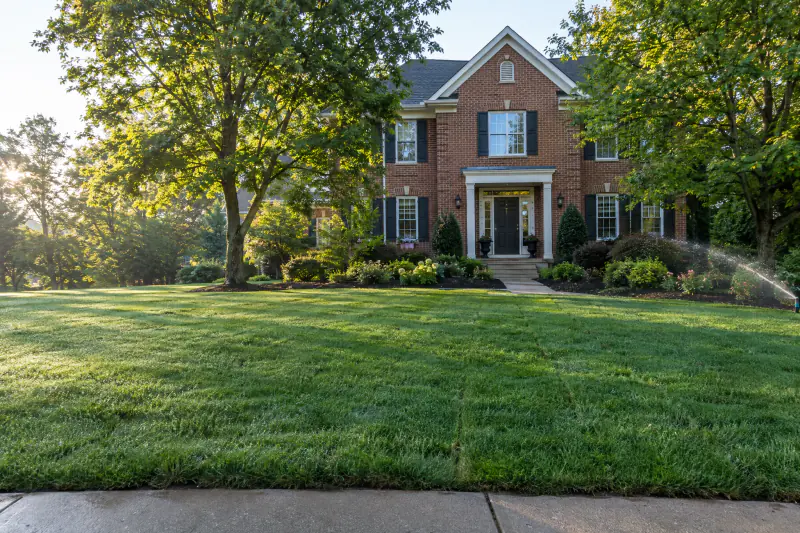
- Typical timeline
- Often 1-3 days on site
- Best season
- Fall and spring
- Usable lawn
- Light use in about 2-3 weeks
- Grass type
- Tall fescue, some bluegrass
Why does new sod fail, and how is a lawn installed properly?
New sod fails when it is laid over unprepared soil or dries out in its first two weeks. Sod rolled over hard clay looks perfect on day one, then roots only into its own thin layer. By the first hot spell the seams open, corners curl and sections lift like carpet. Poor grading does the rest: low spots drown and humps get scalped.
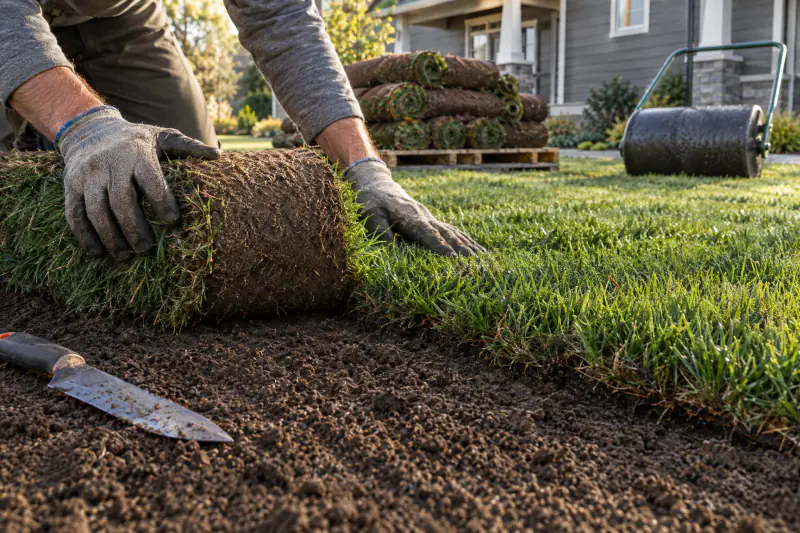
A proper installation is mostly preparation. The old lawn is stripped rather than buried. The clay is loosened, compost is worked into the top several inches, and lime or starter fertilizer is added where a soil test supports it. The surface is graded to drain away from the house, finishing about an inch below walks so the sod sits flush. Sod is laid the day it arrives, in staggered rows with tight joints, then rolled and watered immediately.
What does sod installation and lawn renovation include?
Every project is built from these parts, scaled to the condition of the yard.
Removal of the failed lawn
Existing turf and weeds are cut out with a sod cutter and hauled away, so the new lawn roots into prepared soil instead of a decaying layer of thatch.
Grading and soil preparation
Clay is loosened, compost is tilled in, and the surface is shaped to shed water and feel smooth underfoot. Low spots are corrected before turf arrives.
Tall fescue sod
Farm-grown turf-type tall fescue, usually with a little Kentucky bluegrass to help it knit. It is the dominant cool-season lawn grass in Northern Virginia.
Full renovation by seed
The same removal and soil work, finished with a tall fescue seed blend and starter fertilizer. It costs much less than sod but needs early fall timing and patience.
Partial lawns and repairs
Front yard only, a strip torn up by utility or pool construction, or the area around a new patio. New sod is cut in cleanly against existing lawn.
How does a sod installation project work?
The visible part takes a day, and the stages before it decide how the lawn performs.
Site visit and measurement
We measure the lawn, check slope, shade, drainage and how you will water, and discuss whether sod or seed suits your timing and budget.
Written scope and scheduling
You receive the square footage, soil amendments, grass type and watering needs in writing. Sod is ordered for a set delivery day, and Virginia 811 marks utilities.
Removal and soil work
The old lawn is stripped and hauled off. Sprinkler heads are flagged, clay is loosened, compost is incorporated, and the yard is graded and raked smooth.
Laying and rolling
Sod is laid in a brick pattern with joints butted tight, trimmed around beds and heads, and run across the fall on slopes. A roller presses it into the soil.
Watering in and walkthrough
The lawn is soaked right away. We walk it with you, show how to check moisture under the sod, and leave a written schedule for watering and first mowing.
New tall fescue sod being watered in the morning
A short clip moving across a freshly sodded front lawn in early light, with a sprinkler sweeping over the turf and dew shining on the new grass.
Sod or seed: which is better for a new lawn in Northern Virginia?
Both produce a tall fescue lawn, and they differ in cost, timing and how long you wait.
| Tall fescue sod | Renovation by seed | |
|---|---|---|
| Finished look | Green and complete the same day | Fills in over several weeks |
| When it can be done | Fall, spring, or summer with heavy irrigation | Late August to mid-October |
| Erosion on slopes | Holds soil immediately | Vulnerable until roots form |
| Weed pressure | Low, the turf is already dense | Higher in the first season |
| Time before normal use | About 3-4 weeks | Often 2-3 months |
| Relative cost | Several times the cost of seed | Lowest |
If the existing lawn is still mostly grass, aeration and overseeding is usually the better value.
How much does sod installation cost in Northern Virginia?
Professionally installed tall fescue sod in Northern Virginia typically costs about $2 to $4 per sq ft, including removal of the old lawn and soil preparation, so a 5,000 sq ft lawn often falls between $10,000 and $20,000. Full renovation by seed with the same preparation commonly runs $0.50 to $1.50 per sq ft. These are general market ranges as of 2026, not myYardPros prices.
What moves the number:
- Grading, and whether soil must be brought in or hauled out.
- The quantity of compost and amendments.
- Access. A narrow gate means smaller machines and more hand work.
- Slopes, tree roots and trimming around beds.
- Size. Small lawns cost more per square foot.
Irrigation and drainage are priced separately. For a number based on your lawn, request an on-site estimate.
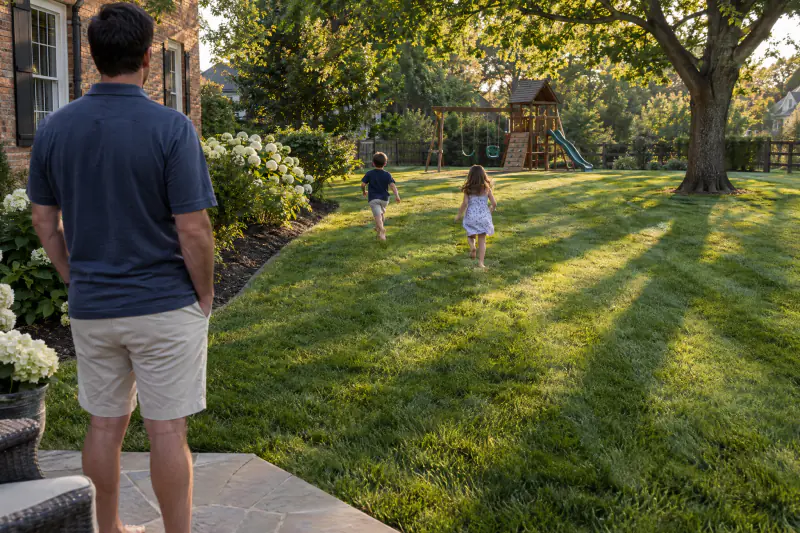
How do you know a lawn needs replacing rather than overseeding?
If several of these describe your yard, starting over usually costs less than years of patching.
- Less than about half of the lawn is desirable grass.
- Weeds such as crabgrass, nimblewill or wild violets dominate large areas.
- Bare clay shows after construction, utility work or heavy equipment.
- The surface is rutted or bumpy enough to scalp with a mower.
- Puddles stand in the same low spots after every rain.
- You are selling or hosting an event and need a finished lawn quickly.
Not sure what you need?
Tell us what you are seeing. We will look at the site, explain the options in plain terms and give you a written estimate.
What should you know about sod in Fairfax, Loudoun, Prince William and Arlington?
Sod in Northern Virginia succeeds or fails on timing and water. In the transition zone, tall fescue roots fastest in the mild weeks of fall and spring. Summer sod needs watering once or twice a day at first, and brown patch disease thrives on wet grass during warm, humid nights, so summer installs carry more risk. A sprinkler system makes the first month far more reliable.
Newer neighborhoods in Ashburn, Aldie, South Riding, Haymarket and Bristow often have a thin skin of topsoil over compacted subsoil, which is why builder lawns decline after a few years. If water stands on the lawn, drainage and re-grading should come first. Heavy shade under mature oaks in Vienna, McLean or Burke may never support fescue, and there artificial turf or a shade bed can be the more honest answer.
Frequently asked questions about sod installation & lawn renovation
When is the best time to lay sod in Northern Virginia?
September through November and March through May are the easiest times, because cool air and mild soil let roots grow with moderate watering. Summer installs work only with heavy irrigation. Winter installs are possible when the ground is not frozen, though rooting is slow.
How often should new sod be watered?
Keep the sod and the soil beneath it moist for the first two weeks, usually by watering once or twice a day. Lift a corner to check. Once the sod resists a gentle tug, water deeply every few days, then about an inch a week.
How soon can I walk on or mow new sod?
Stay off new sod for two to three weeks, apart from moving sprinklers. Mow once you cannot lift a corner, typically at two to three weeks, with a sharp blade set around 3.5 to 4 in. Normal play can usually resume after a month.
Can sod be laid over existing grass?
No. Sod laid over old turf roots poorly, because the dying layer underneath blocks contact with the soil and heats up as it decays. The old lawn should be removed and the soil loosened, amended and graded first.
Is tall fescue the only choice for sod here?
It is usually the right choice here. Tall fescue stays green most of the year and tolerates some shade. Zoysia and bermuda handle summer heat well but turn tan from fall to late spring, and bermuda can invade beds.
Will a sodded lawn still need overseeding later?
Usually, yes. Tall fescue grows in bunches and thins a little each summer from heat, disease and wear. Periodic aeration and overseeding in early fall keeps a sodded lawn dense, and a well-prepared base means less repair.
Related services

Aeration & Overseeding
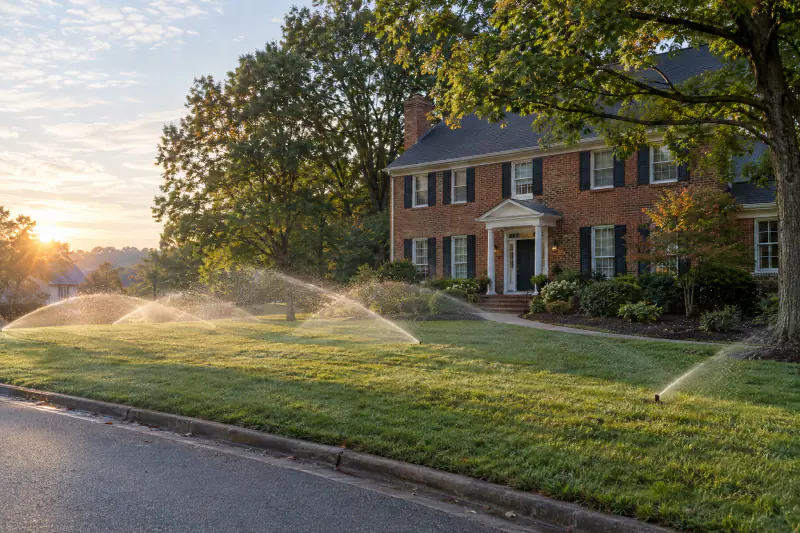
Aeration and overseeding is a seasonal lawn project: a machine pulls plugs of soil to relieve compaction, then new turf-type tall fescue seed is spread so it settles into the holes and thickens the lawn.
Learn more
Sprinkler System Installation
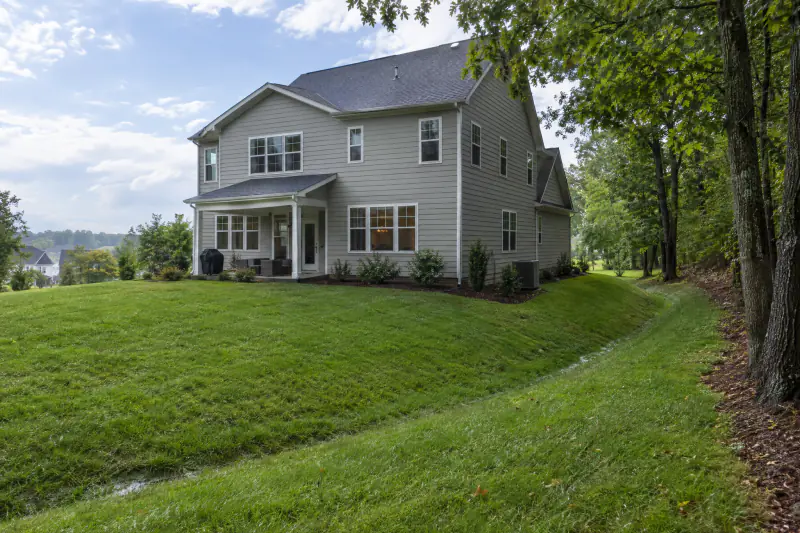
Sprinkler system installation is the design and burial of pipes, valves, heads and a controller that water a lawn and planting beds automatically.
Learn more
Yard & Foundation Drainage
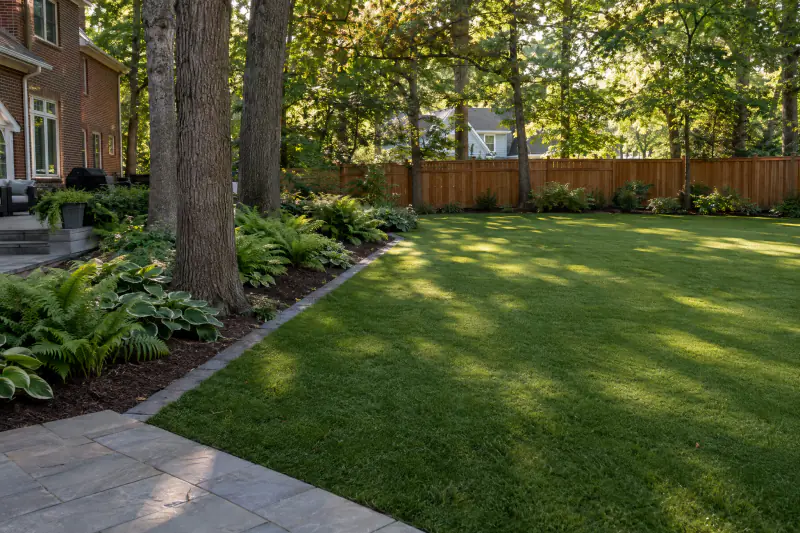
Yard drainage solutions collect and redirect surface water with grading, swales, catch basins, channel drains and dry wells so rain leaves the lawn and moves away from the house.
Learn more
Artificial Turf Installation
Artificial turf installation replaces soil and struggling grass with synthetic turf laid over a compacted, free-draining stone base.
Learn more
Ready to talk about your sod installation and lawn renovation project?
Tell us about your property and what you want to fix or build. We will visit, measure and send a clear written estimate. We serve Fairfax, Loudoun, Prince William and Arlington counties.
Page updated . Photos and video on this page are illustrative.