DIY paver patio or hire a crew in Northern Virginia
How many tons does a 16 by 20 foot patio move, what base does clay demand, which steps suit a capable homeowner, and when does hiring cost less than redoing it? The numbers, step by step.
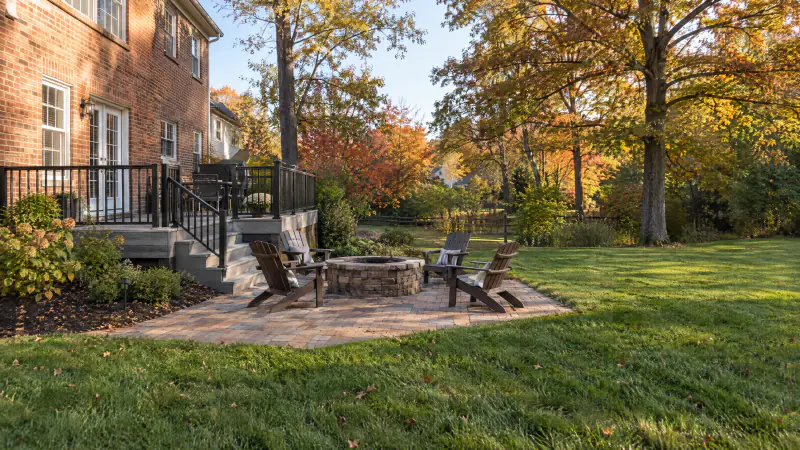
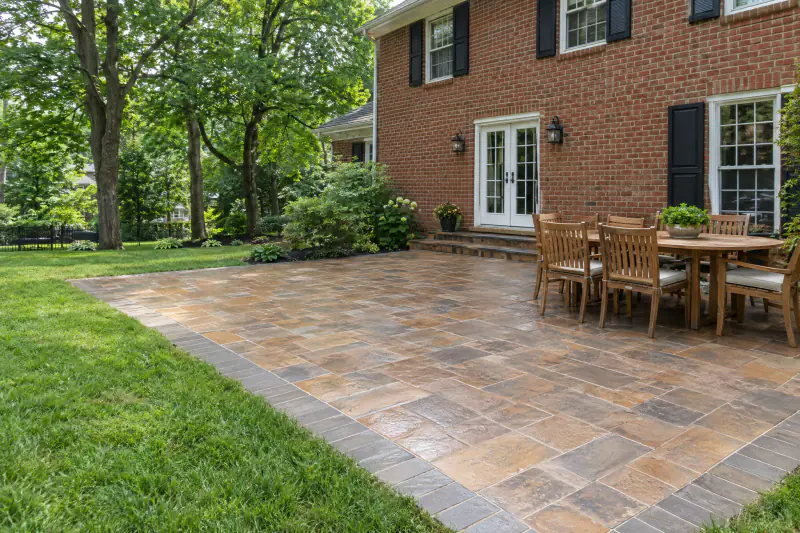
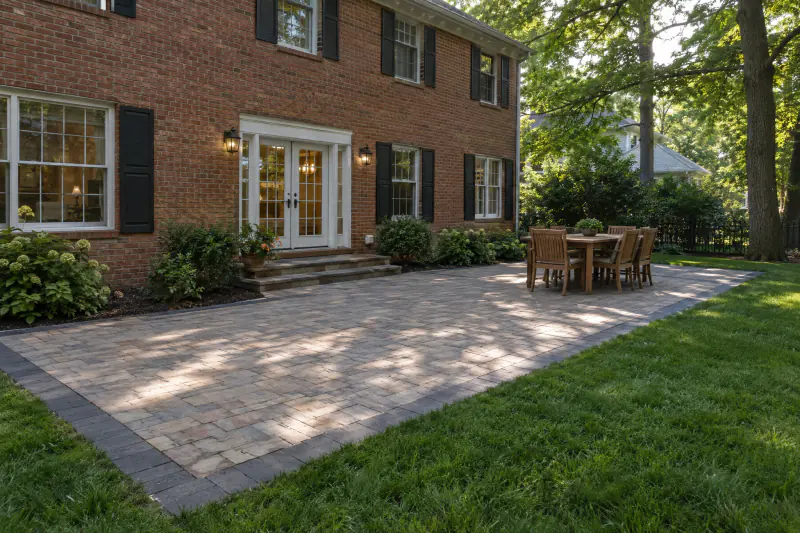
A paver patio is an outdoor floor of concrete, porcelain or natural-stone units laid over a compacted stone base instead of a poured slab. It suits Northern Virginia homeowners who want a level place to sit, dine and grill that tolerates clay soil and freeze-thaw movement without cracking. myYardPros designs, excavates and builds patios across the region.

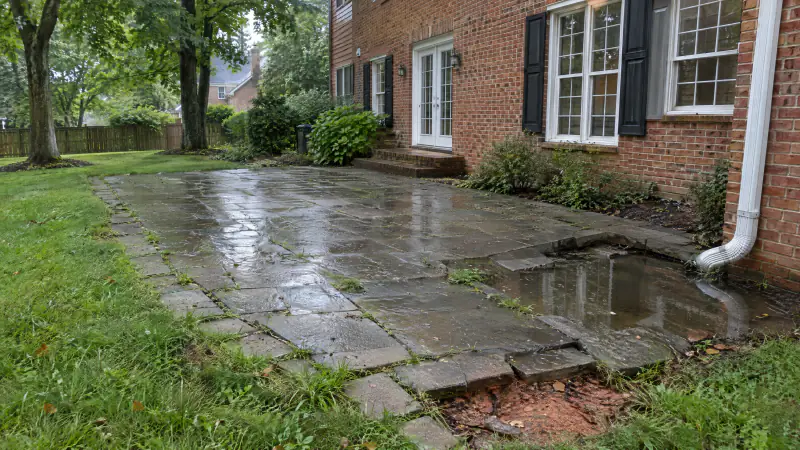
Paver patios sink or heave when the base under them is too thin, poorly compacted or sitting in water. In Northern Virginia clay that shows up within a few winters as dips that hold puddles, borders that drift outward and joints wide enough for weeds. The pavers are rarely the problem. The inches below them are.
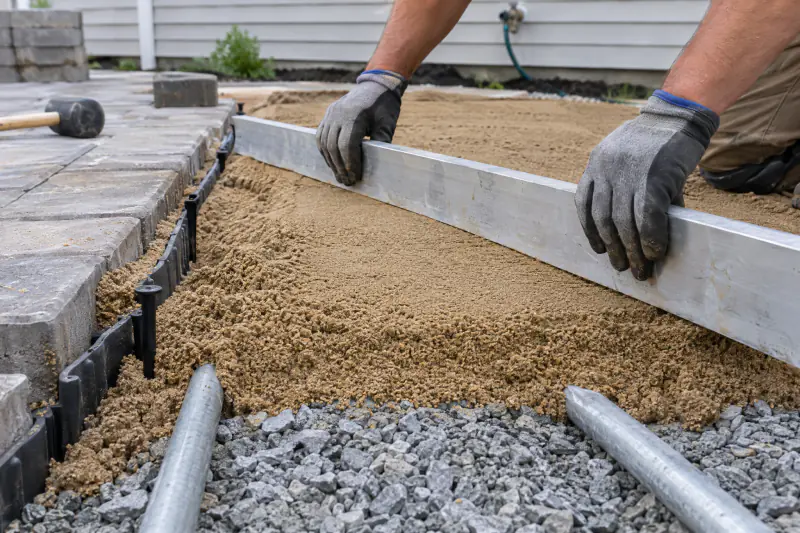
A properly built patio starts with excavation, typically 7 to 9 in. below finished grade, down to firm soil. Over that goes 4 to 6 in. of dense-graded aggregate, compacted in lifts and extended past the patio edge, then about 1 in. of screeded concrete sand as bedding. Pavers are laid, cut and held by edge restraint spiked into the base. Joint sand is swept in and the surface compacted so the units lock together. The whole field pitches away from the house at roughly 1/8 to 1/4 in. per foot.

Three surface families cover most patios, each finished with the details below.
The most common choice. Manufactured units in many shapes and color blends, typically 2 3/8 in. thick, with tight tolerances that give even joints and strong interlock.
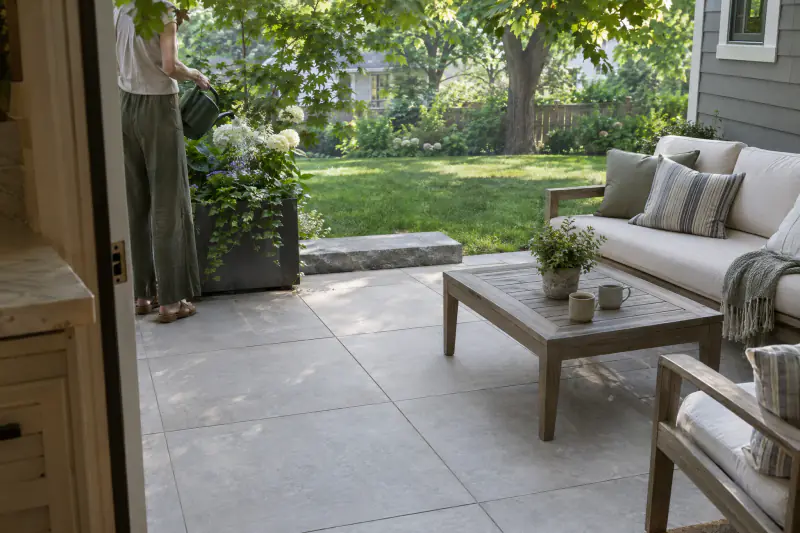
Dense 2 cm tiles made for outdoor use. They absorb almost no water, so they resist stains and algae, but they need very flat bedding and careful wet cutting.
Flagstone such as Pennsylvania bluestone, in a cut pattern or irregular shapes. Each piece varies in color and thickness, so setting takes longer and no two patios match.
A contrasting soldier course frames the field. Where the door sits above grade, we build a landing and steps with consistent riser heights in block or stone.
Downspouts that would empty onto the patio are piped under or around it before the base goes in, and low corners get a drain where pitch alone falls short.
Every patio follows the same five stages.
We measure the area, check door thresholds and existing grades, note where water runs now, and ask how you plan to use the space: seating, a grill, a dining table.
You receive a layout with dimensions, materials, base depth and drainage details. We request utility marking through Virginia 811 before any digging is put on the schedule.
Sod and clay are removed and hauled off. Geotextile covers the subgrade where the soil calls for it, then aggregate is placed and compacted in lifts to the designed pitch.
Bedding sand is screeded to a uniform thickness. Pavers are laid to string lines, borders are cut with a wet saw, and edge restraint is fastened along every open side.
Joint sand is swept in and the surface is compacted and cleaned. We walk the patio with you, check the pitch with a level and explain basic care.
A short clip moving across a completed porcelain paver patio toward the seating area, with tree shadows drifting over the even joints and a planter being watered nearby.
The three materials differ in look, upkeep and how forgiving they are to install.
| Concrete pavers | Porcelain pavers | Natural stone | |
|---|---|---|---|
| Look | Many shapes and blended colors | Crisp, uniform stone or wood looks | One-of-a-kind color and texture |
| Typical thickness | About 2 3/8 in. | About 3/4 in. (2 cm) | Varies, often 1 to 2 in. |
| Stains and algae | Porous, sealing optional | Very low absorption, easiest to clean | Varies by stone type |
| Freeze-thaw behavior | Made for it when rated for paving | Outdoor-rated tile handles it well | Dense stone does well, soft stone can flake |
| Relative cost | Lowest of the three | Mid to high | Mid to highest |
A professionally installed paver patio in Northern Virginia typically costs about $20 to $35 per sq ft for concrete pavers and roughly $30 to $55 or more for porcelain or natural stone. These are general market ranges as of 2026, not myYardPros prices. At those rates a 350 sq ft patio often lands between $7,000 and $19,000.
Several things move the number:
Small patios cost more per square foot. For a number that fits your yard, request an on-site estimate.
Before you decide: Pavers vs. Stamped Concrete · All cost and pricing guides · How we price a project · How our estimates work · Patio Planning Worksheet

These questions separate a patio built to last from one that only looks good on day one.
Tell us what you are seeing. We will look at the site, explain the options in plain terms and give you a written estimate.
In most Northern Virginia jurisdictions a patio built at grade does not need a building permit, but zoning rules still apply. Setbacks, easements, lot-coverage limits on smaller lots, floodplains and Chesapeake Bay Resource Protection Areas can all restrict where hard surface is allowed, so check with your county before finalizing a layout. HOAs from Ashburn and Leesburg to Centreville, Burke and Gainesville commonly require an application with a plan and material samples.
Soil matters as much as paperwork. Our clay drains slowly, so a patio must never trap water against the foundation. If the yard already stays wet, we often pair the patio with downspout drain lines or a French drain. Planning seating around a fire? See fire pits and outdoor living.
Most residential patios take about three to eight working days on site: a day or two for excavation and base, then laying, cutting and jointing. Rain stretches the schedule because base stone cannot be compacted over saturated clay, so we wait.
For foot traffic, 4 to 6 in. of compacted dense-graded aggregate is typical in Northern Virginia, under about 1 in. of bedding sand. Wet or soft areas may need more depth and a geotextile layer between the clay and the stone.
Sometimes. If the slab is sound, drains away from the house and leaves enough height at the door threshold, thin pavers or porcelain can go over it. A slab that is cracked, heaved or pitched toward the foundation should be removed first.
Weeds almost never come up through a properly built base. They sprout from seeds and dust that settle into the joints from above. Tight joints filled with polymeric sand resist this well, and sweeping the patio keeps growth to a minimum.
Each has a place. Stamped concrete is one rigid slab, so movement in clay soil tends to appear as cracks, and color repairs rarely match. Pavers are individual units on a flexible base, so a stained or settled area can be lifted and reset.
No. Sealing is optional and mostly a matter of appearance and stain resistance. Many homeowners wait through the first season, then decide. If you want richer color or easier cleanup, our paver cleaning and sealing service covers preparation and application.
Long-form guides on paver patios from the crew that does the work, with Northern Virginia costs, timing and permit detail.
18 min readHow many tons does a 16 by 20 foot patio move, what base does clay demand, which steps suit a capable homeowner, and when does hiring cost less than redoing it? The numbers, step by step.
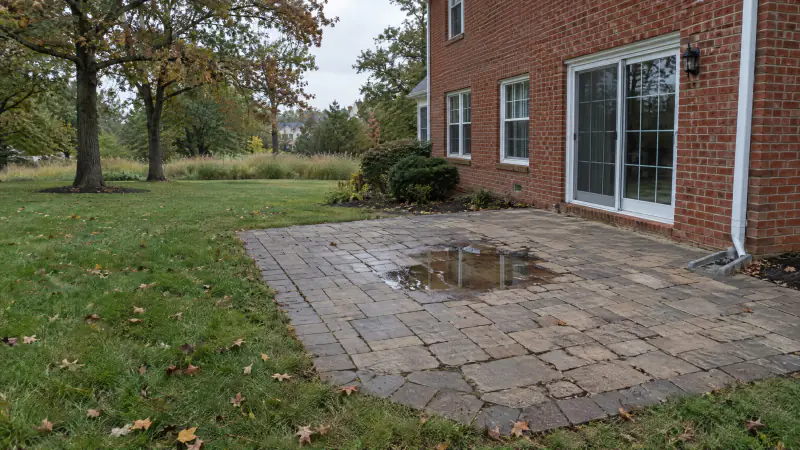
The myYardPros Crew
21 min readDoor height decides more than taste does. How a walk-out or step-down back door, clay drainage, county permits, 2026 cost ranges, summer heat and 15 years of upkeep point a Northern Virginia homeowner toward a deck, a patio or both.
The myYardPros Crew
17 min readA puddle by the sliding door, a corner that dropped an inch, a ridge that follows an oak root. Each sunken paver pattern has one cause and one right fix. Learn to read yours before anyone quotes a repair.
The myYardPros Crew
All guides in this category · Planning guides · Glossary · FAQ

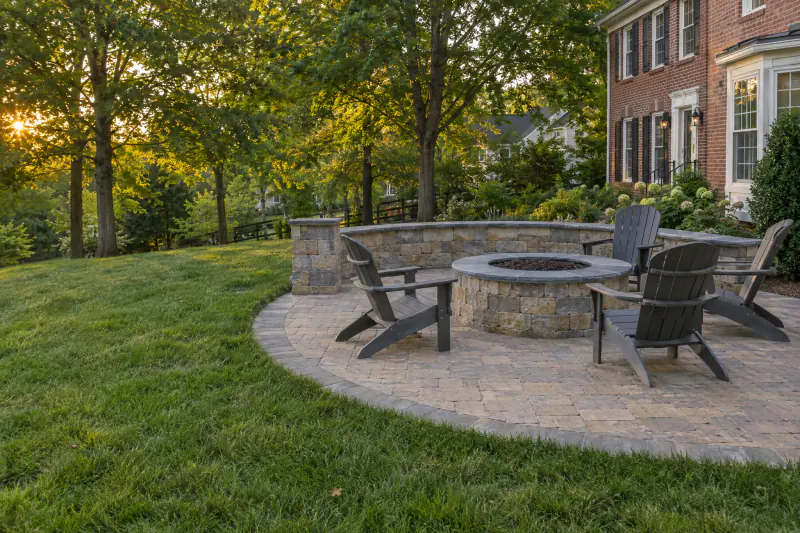
Outdoor living features are the built elements that give a patio a purpose: fire pits, seating walls and masonry bases for outdoor kitchens.
Learn more
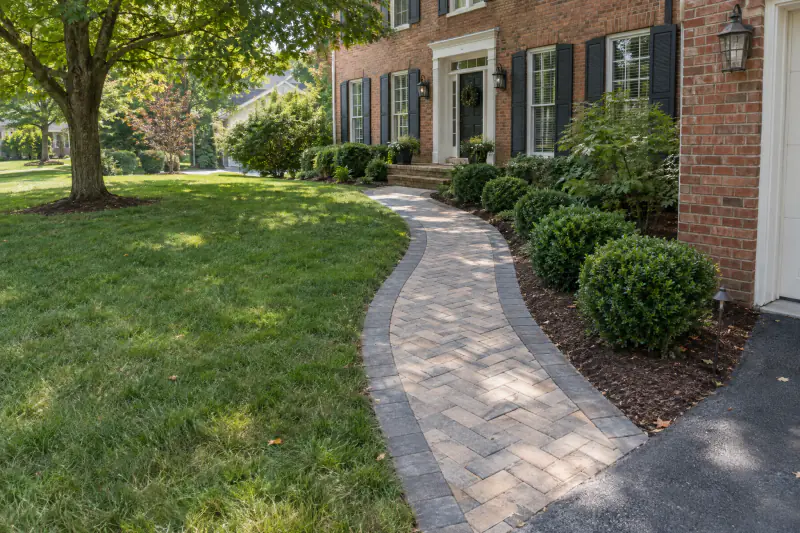
A walkway is a paved or stone route between the places people walk every day: driveway to front door, gate to patio, door to garden.
Learn more
Paver cleaning and sealing is a restoration service that deep cleans pavers, treats stains and white efflorescence haze, refills the joints with polymeric sand and applies a protective sealer.
Learn more
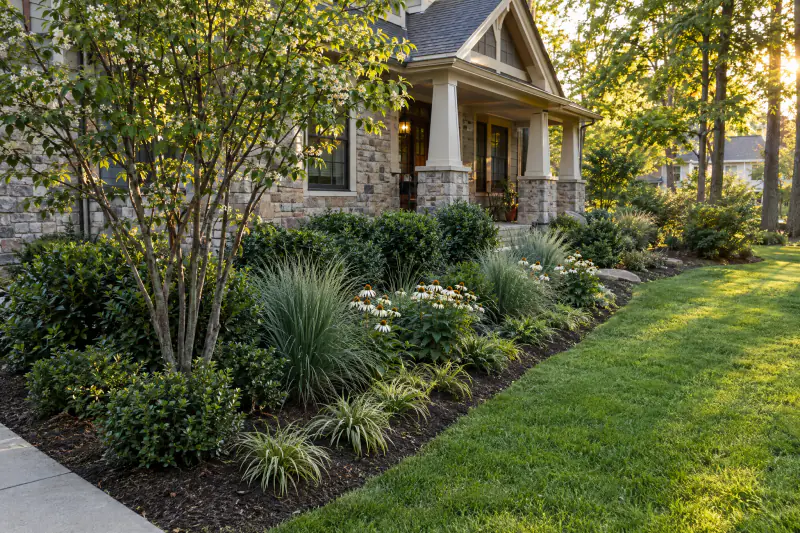
Landscape design and installation is the planning and planting of beds, trees, shrubs and screening around a home, with the soil preparation, edging and mulch that help them establish.
Learn moreTell us about your property and what you want to fix or build. We will visit, measure and send a clear written estimate. We serve Fairfax, Loudoun, Prince William and Arlington counties.
Serving Fairfax, Loudoun, Prince William and Arlington counties and the cities inside them. Check your address. Military, veterans, first responders, healthcare workers and teachers: ask about the Heroes Discount.