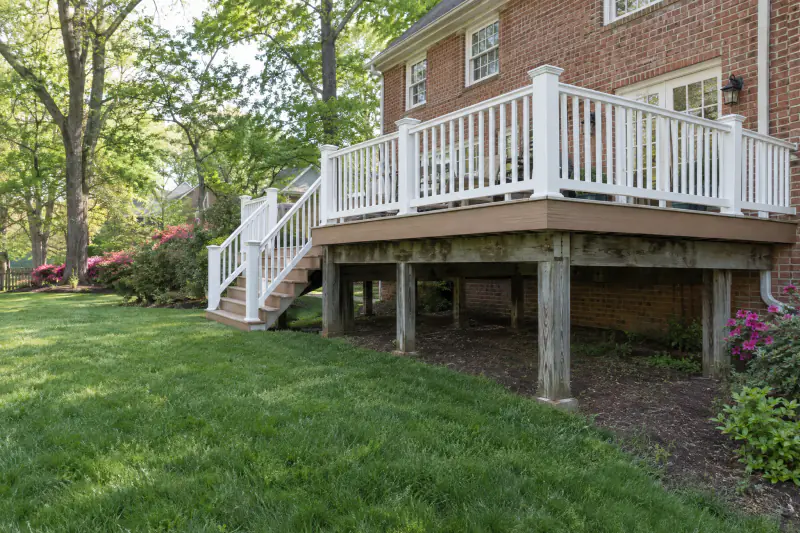
Deck and Fence Cleaning and Staining in Northern Virginia
Deck and fence cleaning and staining is the process of washing weathered wood with a wood cleaner at low pressure, brightening it, letting it dry, and applying a stain or sealer that sheds water and blocks sun. myYardPros provides it across Northern Virginia for gray, green or peeling wood decks and fences, and cleans composite decks without staining them.
- Low-pressure wash that protects wood grain
- Brightened and fully dry before stain
- Composite decks cleaned, never stained
- Licensed & insured in Virginia
- Based in Sterling, VA
- Residential projects only
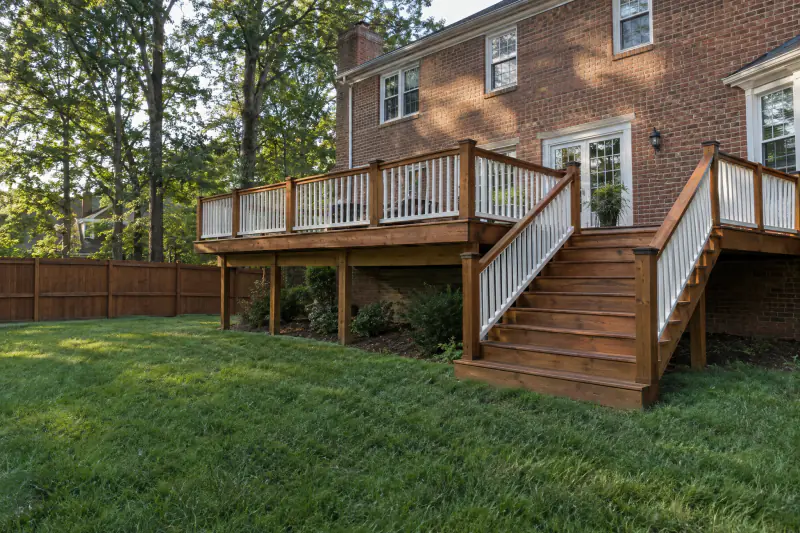
- Typical timeline
- 2-4 days including dry time
- Permit
- Not typically required
- Best season
- Late spring and early fall
- Recoat interval
- About 2-3 years on deck floors
Why does deck stain fail, and what does proper prep look like?
Deck stain usually fails because of what happened before the can was opened. Stain applied over gray, dead wood fibers, mildew or old finish cannot soak in, so it peels or wears off in a season. Stain applied to damp boards traps moisture and blisters. In Northern Virginia, humid summers, shade and spring pollen feed mildew on horizontal wood, and sun turns unprotected boards gray and splintery.
Cleaning can do harm too. A pressure washer held close gouges the soft grain and leaves a fuzzy surface with wand marks that show through the stain.
Proper prep is gentler: a wood cleaner, a low-pressure rinse, a brightener, then a day or two of drying before stain goes on. Soft or rotted boards are flagged first, since stain will not fix rot. That is a job for deck repair and resurfacing.
What deck and fence services are included?
The service covers wood that gets stained and composite that only gets cleaned.
Wood deck cleaning and staining
Pressure-treated pine, cedar and hardwood decks are washed, brightened, dried and stained, including floor boards, stairs, railings and balusters. Wood pergolas and privacy screens can be finished to match.
Fence cleaning and staining
Privacy, picket and board-on-board wood fences are cleaned and stained on the faces you choose. Vertical boards shed water, so fence finishes generally outlast deck floors.
Stripping failed finishes
Peeling solid stain or a patchy old sealer has to come off before a new coat goes on. We use a stain stripper, light sanding or both, depending on the product.
Composite and PVC deck cleaning
Composite and PVC boards are cleaned with a suitable cleaner, a soft brush and a low-pressure rinse following the board maker's care guidance. Capped boards are not stained or sealed, because coatings do not bond to the cap.
How does deck cleaning and staining work, step by step?
Expect two working days separated by drying time, weather permitting.
Site visit and wood check
We identify the wood and any existing finish, probe for soft boards, check fasteners and railings, measure the surfaces, and discuss stain type and color.
Clean at low pressure
A wood cleaner is applied, allowed to work, and rinsed with a wide fan tip at low pressure, following the grain so the boards are cleaned without being cut.
Brighten and rinse
An oxalic or citric acid based brightener is applied while the wood is still wet. It neutralizes the cleaner, lifts tannin stains and returns the wood to a lighter, even tone.
Dry and prepare
The wood dries, typically 24 to 48 hours in dry weather and longer in shade. We check moisture, sand raised fibers, set protruding fasteners and mask siding and hardware.
Stain and walkthrough
Stain is applied to full board lengths and brushed in for even absorption. We review the result with you and explain when furniture can return, usually after one to three days.
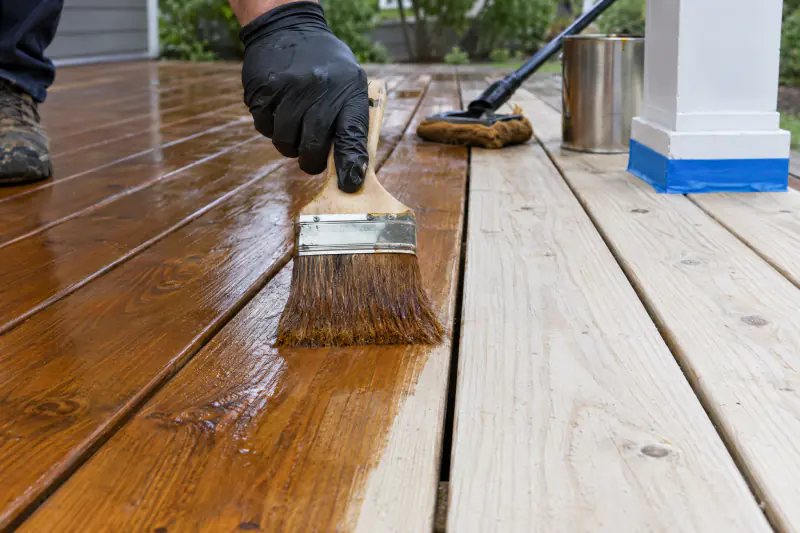
Brushing stain into a cleaned wood deck board
A brush works semi-transparent stain along a clean deck board, the wood darkening as the stain soaks into the grain beside pale boards not yet coated.
Which is better for a deck: clear sealer, semi-transparent or solid stain?
More pigment means more sun protection but less visible wood grain.
| Clear sealer or toner | Semi-transparent stain | Solid color stain | |
|---|---|---|---|
| Look | Natural wood, slight tint with toner | Color with grain showing through | Opaque color that hides grain |
| Typical life on deck floors | About 1 year | About 2 to 3 years | About 3 to 5 years |
| How it wears | Fades evenly | Fades in traffic areas, recoats easily | Can peel and need stripping |
| Suits | New cedar or hardwood in good shape | Most decks and fences in sound condition | Older, weathered or mismatched boards |
What are the signs a deck or fence needs cleaning and staining?
A few quick checks tell you whether the finish is still doing its job.
- Water sprinkled on the boards soaks in within minutes instead of beading.
- Boards have turned gray, especially in the sunniest sections.
- Green algae or black mildew spots make the deck slippery after rain.
- Old stain is peeling, flaking or worn through along the main walking paths.
- Splinters, raised grain or small surface cracks are appearing on boards and handrails.
Not sure what you need?
Tell us what you are seeing. We will look at the site, explain the options in plain terms and give you a written estimate.
How much does deck cleaning and staining cost in Northern Virginia?
Cleaning and staining a wood deck in Northern Virginia typically costs about $2 to $5 per square foot of surface as of 2026, which puts many decks between roughly $1,000 and $3,000. Fence cleaning and staining commonly runs $1.50 to $4 per square foot of fence face, and cleaning a composite deck often falls between $200 and $500. These are market planning ranges, not myYardPros quotes.
Railings are the biggest variable, because balusters take more time than open floor. Other factors include the height of the deck and number of stairs, whether an old finish must be stripped, the stain type and number of coats, and whether fence boards are stained on one side or both.
We measure and inspect the wood before pricing. Request an on-site estimate or call (571) 200-9600.
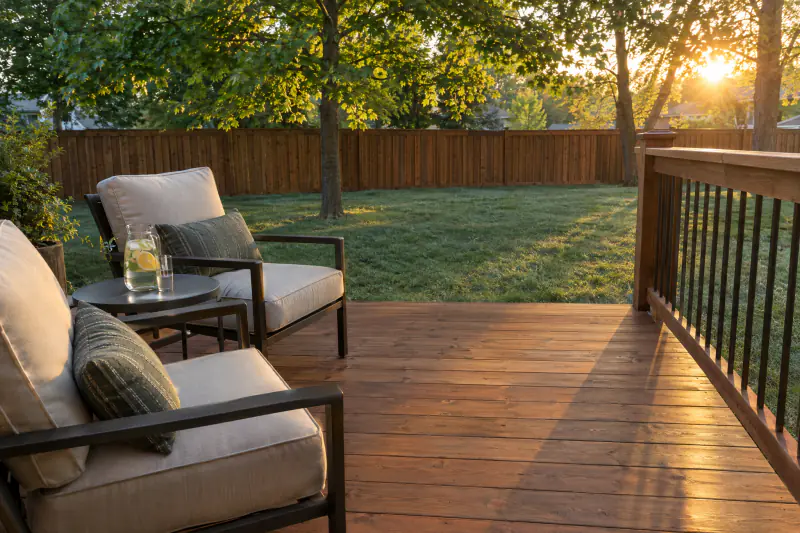
Deck and fence staining in Fairfax, Loudoun, Prince William and Arlington
We clean and stain decks and fences throughout Fairfax, Loudoun, Prince William and Arlington counties, including Sterling, McLean, Annandale, Burke and Gainesville. Staining an existing deck or fence does not typically need a permit. Many HOAs publish approved stain colors and require an application before a color change, so check your guidelines first.
The local weather sets the calendar. Most stains need mild temperatures, commonly between about 50 and 90 degrees, dry wood and no rain for a day or two. Late spring after the heavy pollen has dropped, and early fall, tend to offer the most reliable windows.
If your boards are past saving, replacing them with composite or PVC decking removes staining from the routine altogether.
Frequently asked questions about deck & fence cleaning & staining
How long does a deck need to dry before staining?
Most decks need 24 to 48 hours of dry weather after washing, and shaded or humid sites can take longer. The reliable check is a moisture meter: most stain makers call for wood moisture of roughly 15 percent or less. Staining sooner traps water and leads to peeling.
How often should a deck be stained in Northern Virginia?
Deck floors here typically need a maintenance coat every two to three years sooner in full sun. Railings and fences often go three to five years because water runs off vertical boards. If sprinkled water soaks in, plan to recoat.
Can a composite deck be stained or sealed?
Capped composite and PVC boards should not be stained or sealed, since coatings do not bond to the outer shell and tend to peel. They need periodic cleaning with a suitable cleaner and a low-pressure rinse. Some older uncapped composites can accept certain coatings, so check with the board manufacturer.
Is it safe to pressure wash a wood deck?
Only at low pressure with a wide tip, and with a cleaner doing most of the work. High pressure or a narrow tip tears soft wood fibers, leaves lap marks and raises splinters. We keep pressure low, rinse along the grain and sand raised fibers once the wood dries.
When can a new pressure-treated deck be stained?
New pressure-treated lumber usually arrives wet from treatment and needs to dry first, commonly a few weeks to a few months. Lumber sold as kiln-dried after treatment can be stained sooner. When sprinkled water absorbs instead of beading, the wood is ready.
Should I choose oil-based or water-based deck stain?
Both can perform well. Oil-based stains penetrate deeply, are forgiving to apply and recoat easily, but dry slowly and can feed mildew in damp shade. Water-based stains dry faster, hold color well and clean up with water, but demand thorough prep to bond.
Related services

Deck Repair & Resurfacing
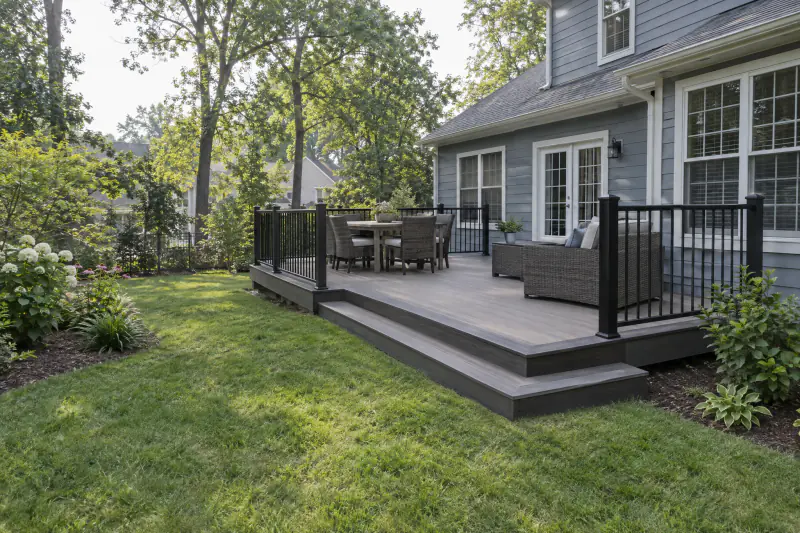
Deck repair and resurfacing fixes or renews an existing deck instead of rebuilding it.
Learn more
Composite & PVC Decks
A composite or PVC deck uses manufactured boards in place of wood decking, fastened to a pressure-treated frame.
Learn more
Soft Washing
Soft washing is a low-pressure cleaning method that applies a detergent solution to kill algae, mold, mildew and lichen, then rinses it away gently.
Learn more
Custom Deck Building
Custom deck building is the design and construction of a new pressure-treated wood or composite deck sized to your house and yard.
Learn more
Ready to talk about your deck and fence cleaning and staining project?
Tell us about your property and what you want to fix or build. We will visit, measure and send a clear written estimate. We serve Fairfax, Loudoun, Prince William and Arlington counties.
Page updated . Photos and video on this page are illustrative.