DIY paver patio or hire a crew in Northern Virginia
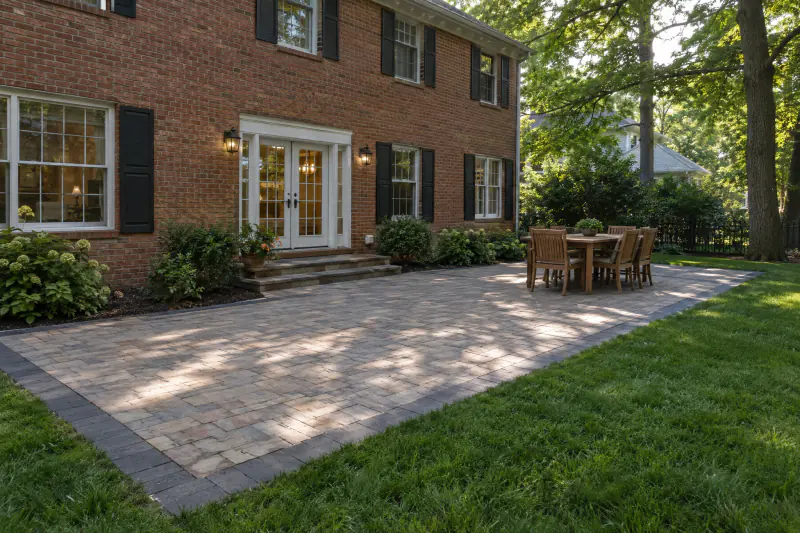
How many tons does a 16 by 20 foot patio move, what base does clay demand, which steps suit a capable homeowner, and when does hiring cost less than redoing it? The numbers, step by step.
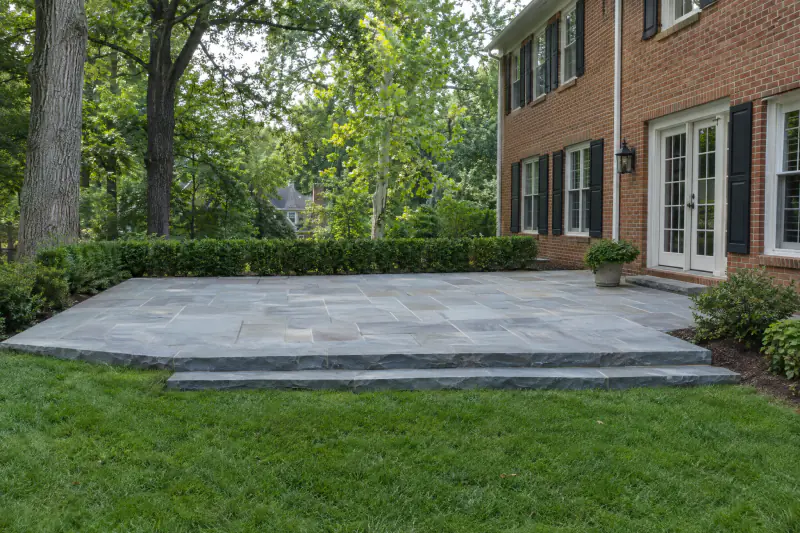
A flagstone patio is an outdoor floor of quarried stone, such as Pennsylvania bluestone, laid either dry on a compacted aggregate base or in mortar on a concrete slab. It fits Northern Virginia homeowners drawn to the color, texture and permanence of real stone who will plan for freeze-thaw, drainage and a slower, more careful installation.

A flagstone patio is built from quarried stone that varies piece to piece in color, thickness and edge, so the method is chosen around the stone rather than a manufactured system. Units on a paver patio share one thickness and lock together. Flagstone does not interlock, so every piece depends on full support beneath it.
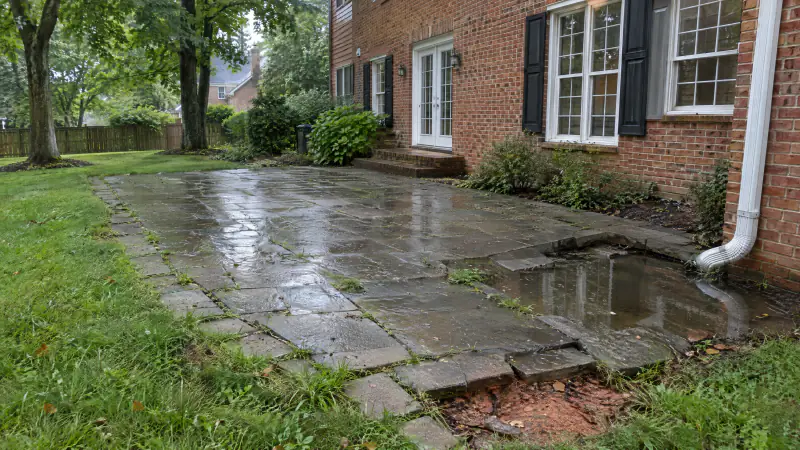
Without that support, failures are predictable. Thin flags dry-laid on loose sand rock and crack. Stone set on dabs of mortar leaves hollows that break under a chair leg. Mortar joints over a cracking slab open, water gets under the stone, freezes and pops pieces loose.
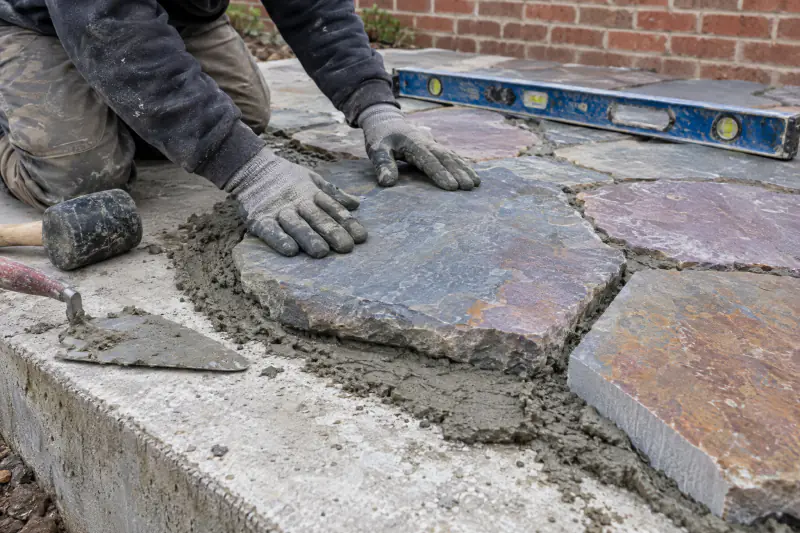
Done well, the method is decided first. Dry-laid stone uses thicker flags tamped one at a time onto fine bedding over compacted aggregate. Mortar-set stone bonds in a full mortar bed over a sound, jointed concrete slab. Either way, the surface pitches away from the house.

Stone choice sets the look, the setting method and the budget.
Pennsylvania bluestone sawn to dimensional sizes and flamed for an even, lightly textured face. Consistent thickness suits formal patterns and mortar setting, and color stays close to blue-gray.
Stone split along its natural layers, leaving a gently uneven face and a wider range of blues, lilacs and rust tones. Thickness varies more, so setting takes longer.
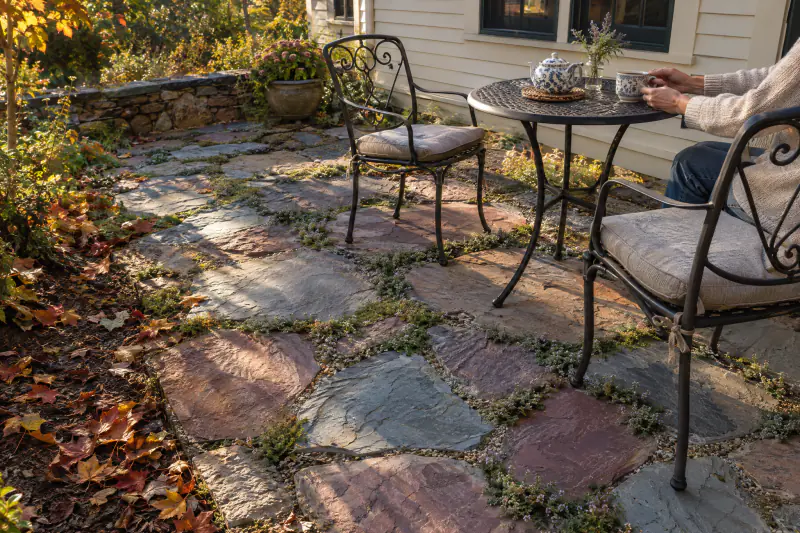
Random shapes fitted by hand, with joints of stone dust, mortar or low plantings. It reads relaxed and natural, and the slow fitting shows an installer's care.
Fieldstone, quartzite and other dense flagging suit some homes. We steer away from stone that absorbs a lot of water or splits in layers, because freeze-thaw finds those weaknesses.
Full-thickness stone treads, door landings and seating wall caps carry one stone through the yard, with even riser heights and treads pitched slightly to shed rain.
Most of the quality is decided before the first stone is cut.
We check grades, door thresholds, drainage and access, then bring samples so you can compare thermal and natural cleft finishes in your own light.
You receive a layout with pattern, setting method, base or slab design, stone thickness and drainage details, and we request Virginia 811 utility marking ahead of any digging.
Soil is dug out and hauled off, aggregate is compacted layer by layer to the planned slope, and for mortar-set work a concrete slab, typically reinforced and jointed, is poured and cured.
Pieces are laid out dry first to balance color and joint width, cut with a diamond blade, then set one at a time with full bedding and checked against string lines.
Joints are filled with stone dust, polymeric sand or mortar to suit the method, and the stone is washed down. Together we review the finished surface, sealing, de-icing and care.
A short clip easing down toward a small table on a hand-fitted irregular flagstone patio, with thyme in the joints, steam from a teacup and autumn light across the stone.
Both last when built correctly; they differ in feel, upkeep and response to movement.
| Dry-laid on compacted base | Mortar-set on concrete slab | |
|---|---|---|
| Foundation | Compacted aggregate plus fine bedding | Concrete slab on compacted base |
| Stone thickness | Usually about 1.5-2 in. | Often about 1-1.5 in. |
| Joints | Stone dust, polymeric sand or plantings | Mortar |
| Freeze-thaw response | Flexes; single stones can be reset | Rigid; cracks let water under stone |
| Look and upkeep | Softer, more natural; joints need topping up | Crisp and weed-free; repairs mean cutting mortar |
| Relative cost | Lower | Higher |
Flagstone patios in Northern Virginia typically cost about $30 to $55 per sq ft dry-laid and roughly $45 to $80 or more per sq ft mortar-set on a concrete slab. These are typical Northern Virginia market ranges as of 2026, not myYardPros prices. A 300 sq ft patio often falls between $9,000 and $24,000.
The factors that move it:
A sound existing slab can sometimes serve as the base. For a number built around your yard and stone, request an on-site estimate.
Before you decide: Pavers vs. Stamped Concrete · All cost and pricing guides · How we price a project · How our estimates work · Patio Planning Worksheet · HOA Design Guidelines

Stone is unforgiving, so these answers matter more than the sample board.
Tell us what you are seeing. We will look at the site, explain the options in plain terms and give you a written estimate.
Most at-grade flagstone patios in Northern Virginia do not require a building permit, but zoning limits on setbacks, easements, impervious area and Resource Protection Areas can still apply, and Prince William requires zoning approval for patios, so confirm with your county before settling a layout. HOAs in places like Great Falls, McLean, Leesburg and Clifton commonly review stone color and pattern.
Climate shapes the details. Repeated freezes and thaws punish stone that holds water and mortar over a moving slab, so we favor dense bluestone, full bedding and steady pitch. Repeated use of rock salt and other deicers can wear stone surfaces as salts recrystallize in the pores, and can break down mortar joints; sand for traction, or a melt labeled safe for natural stone, is gentler. Planning a grill area on stone? See outdoor kitchens and grill islands. For settled stone or pavers, see sunken paver and patio repair.
Pennsylvania bluestone is a dense sandstone that generally handles freeze-thaw cycles well when it is thick enough for the setting method, fully supported and pitched to drain. Most problems come from installation: thin stone on a soft bed, voids under mortar-set pieces or water trapped beneath the stone.
Thermal bluestone is sawn to set sizes and its face is flamed, giving a flat, lightly textured, fairly uniform surface. Natural cleft is split along the stone's layers, so the surface undulates and colors vary more. Thermal suits formal patterns; natural cleft suits relaxed designs.
Sometimes. A slab that is sound, free of heaving and active cracks, pitched away from the house and low enough to leave room at the door threshold can serve as the base for mortar-set stone. A cracked or settled slab passes its movement into the stone and should usually come out.
Sealing is optional. A breathable penetrating sealer can reduce staining from grease, leaves and rust and may deepen color, while film-forming coatings can trap moisture and turn cloudy or peel. Let new mortar cure fully, and test the sealer on a spare piece first.
Thermal bluestone has a lightly textured face that most people find secure when wet. Natural cleft varies, with some smoother spots. Any stone can turn slick with algae in shaded, damp areas on the north side of a house, so periodic cleaning matters as much as finish.
Most residential flagstone patios take about one to three weeks. Irregular patterns take longer than dimensional ones because each piece is fitted and cut by hand, and mortar-set work adds curing time for the slab. Wet weather can pause base work on clay.
Long-form guides on flagstone & natural stone patios from the crew that does the work, with Northern Virginia costs, timing and permit detail.
18 min readHow many tons does a 16 by 20 foot patio move, what base does clay demand, which steps suit a capable homeowner, and when does hiring cost less than redoing it? The numbers, step by step.
The myYardPros Crew
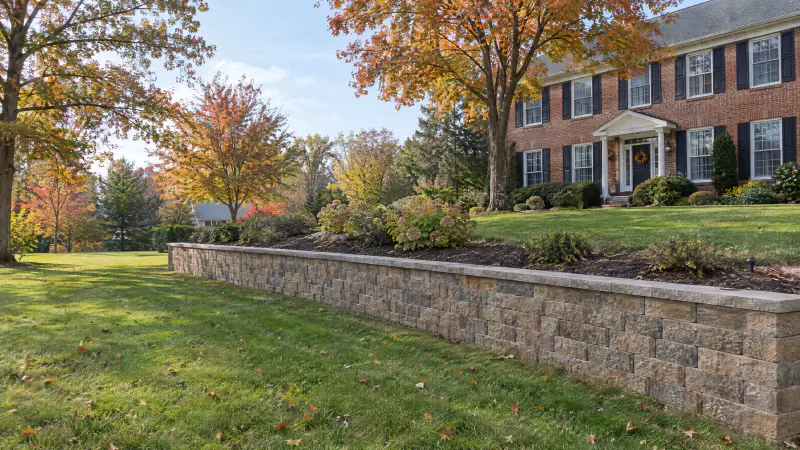
19 min readMost Northern Virginia retaining walls land between about $35 and $90 per face square foot installed as of 2026, before engineering and permits. Here is what moves a wall across that range, and what a cheap wall leaves out.
The myYardPros Crew
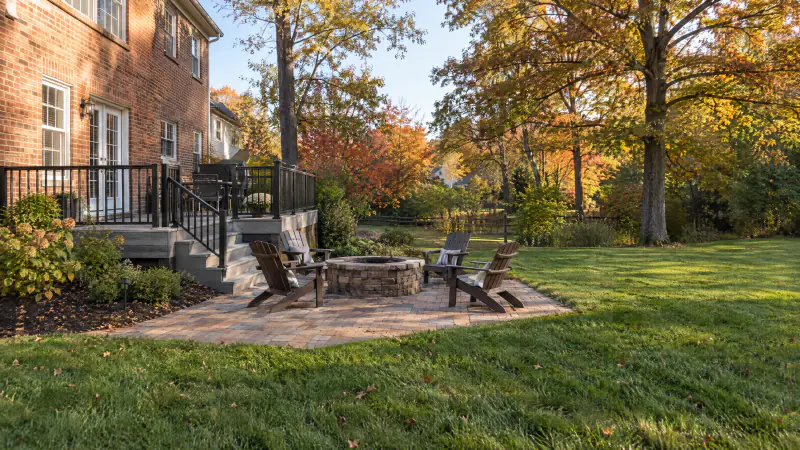
21 min readDoor height decides more than taste does. How a walk-out or step-down back door, clay drainage, county permits, 2026 cost ranges, summer heat and 15 years of upkeep point a Northern Virginia homeowner toward a deck, a patio or both.
The myYardPros Crew
All guides in this category · Planning guides · Glossary · FAQ

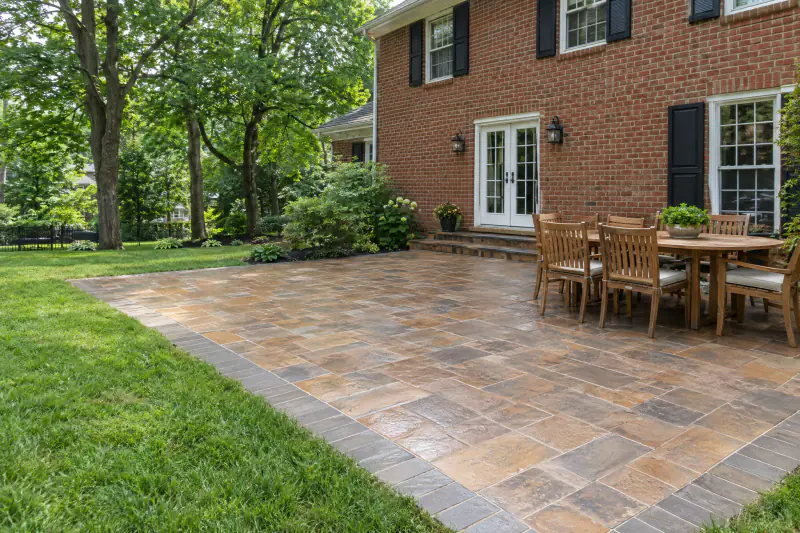
A paver patio is an outdoor floor of concrete, porcelain or natural-stone units laid over a compacted stone base instead of a poured slab.
Learn more
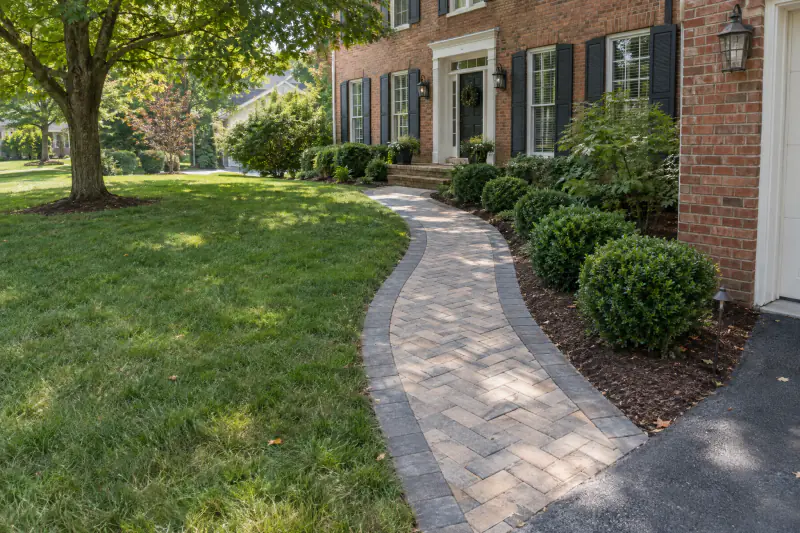
A walkway is a paved or stone route between the places people walk every day: driveway to front door, gate to patio, door to garden.
Learn more
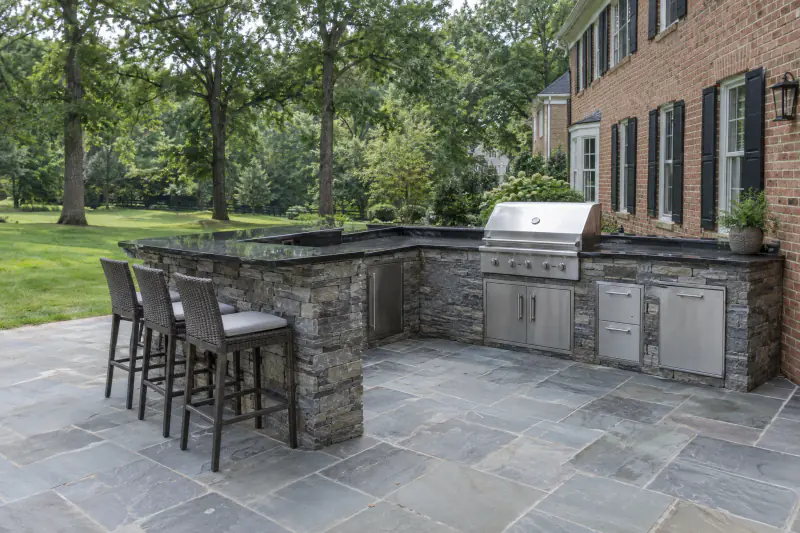
An outdoor kitchen is a permanent cooking area built around a grill: a masonry or veneered island on its own foundation, weather-rated counters, and often seating, a sink or a refrigerator.
Learn more
Paver cleaning and sealing is a restoration service that deep cleans pavers, treats stains and white efflorescence haze, refills the joints with polymeric sand and applies a protective sealer.
Learn moreTell us about your property and what you want to fix or build. We will visit, measure and send a clear written estimate. We serve Fairfax, Loudoun, Prince William and Arlington counties.
Serving Fairfax, Loudoun, Prince William and Arlington counties and the cities inside them. Check your address. Military, veterans, first responders, healthcare workers and teachers: ask about the Heroes Discount.