  • Serving the Northern Virginia area
Call (571) 200-9600 Get an Estimate
Water Management

Sprinkler System Installation in Northern Virginia

Sprinkler system installation is the design and burial of pipes, valves, heads and a controller that water a lawn and planting beds automatically. In Northern Virginia it suits homeowners whose fescue lawns thin out in July and August heat, and it should include a backflow preventer, zones matched to sun and slope, and run times set for clay soil.

  • Head-to-head coverage with no dry corners
  • Zones matched to sun, shade and slope
  • Backflow protection and weather-based control
  • Licensed & insured in Virginia
  • Based in Sterling, VA
  • Residential projects only
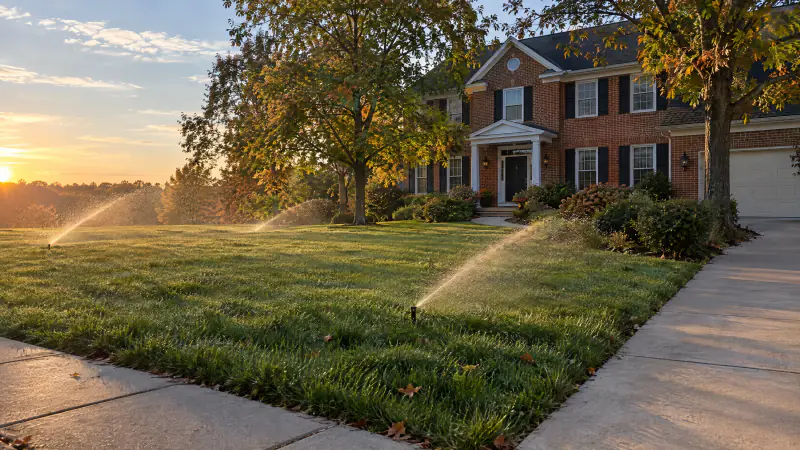
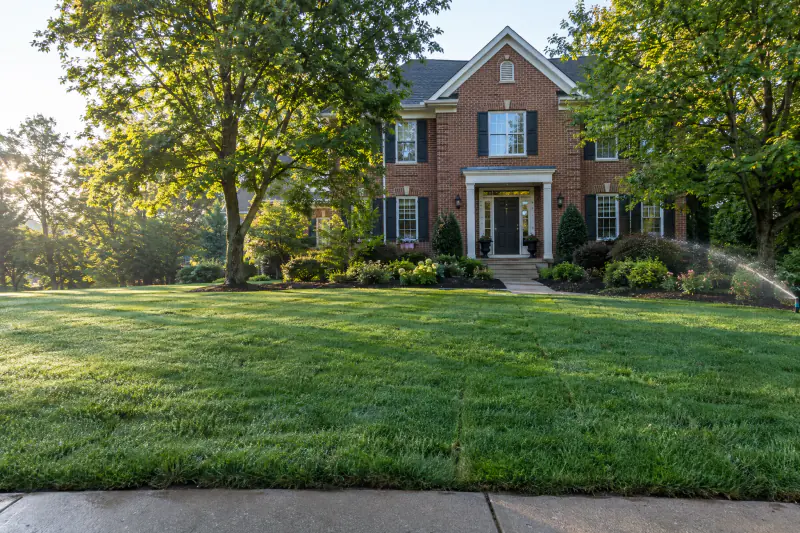
In-ground sprinkler system installation watering a fescue front lawn at a brick colonial home
Rotor heads overlapping for even coverage across the lawn
Typical timeline
1-3 days for most yards
Permit
Often needed for backflow
Best season
Spring or early fall
Seasonal care
Blow-out every fall

Why do Northern Virginia lawns need a properly designed sprinkler system?

Most lawns here are tall fescue, a cool-season grass that struggles in July and August, and the clay underneath absorbs water so slowly that hose watering mostly runs off. A common guideline for cool-season turf is about an inch to an inch and a half of water a week in summer, rain included.

A poorly planned system misses that target in predictable ways. Heads spaced too far apart leave brown arcs. Sprays and rotors share a valve, so one corner floods while another stays dry. Proper work starts with measured pressure and flow, then head-to-head coverage and separate zones for sun, shade, slope and beds. If you already own a system that underperforms, see our irrigation upgrades. If part of the yard stays soggy with no watering at all, that calls for yard drainage, not sprinklers.

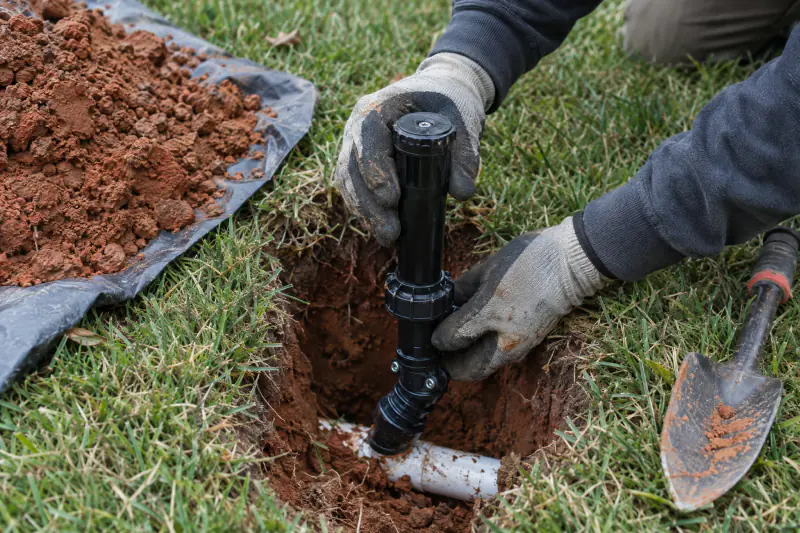
Gloved hands setting a rotor head on a swing joint during sprinkler system installation
Rotor head set on a swing joint at finished grade

What is included in a sprinkler system installation?

Every system has the same five parts, sized to your water supply and yard.

  • Pressure and flow test

    We measure static pressure and available flow before drawing anything. Those two numbers decide how many heads each zone can run, and guessing them causes weak, sputtering systems.

  • Backflow preventer

    A backflow assembly keeps irrigation water from being drawn back into your drinking water. It is installed where it can be reached for testing and drained for winter.

  • Zone valves and buried pipe

    Valves sit in accessible boxes, pipe is typically buried about 8 to 12 inches deep, and sleeves are placed wherever lines must cross under walks or driveways.

  • Heads matched to each area

    Gear-driven rotors cover open lawn, sprays or rotary nozzles handle narrow strips, and drip tubing waters beds at the roots. Different head types never share a zone.

  • Controller and rain sensor

    A weather-based controller adjusts run times through the season, and a rain sensor pauses watering after storms. We program cycle-and-soak schedules so clay can absorb each pass.

How is a sprinkler system installed?

Installation follows five steps, from measuring your yard to handing over the controller.

  1. Site visit and measurements

    We walk the property, measure lawn and bed areas, note sun, shade and slopes, locate the water supply, and test pressure and flow at the source.

  2. Design and written estimate

    You receive a zone-by-zone layout showing head types, valve locations, the backflow assembly and the controller position, with a written price for the whole scope.

  3. Utility marking and permits

    We request Virginia 811 marking before digging, flag private lines such as pet fences and lighting with your help, and handle the plumbing permit where your county requires one.

  4. Pipe, valves and heads

    Where soil and access allow, pipe is pulled in with a vibratory plow that leaves a narrow slit instead of an open trench. Valves, wiring and heads follow.

  5. Testing and walkthrough

    We run every zone, adjust each arc and radius, and program the controller. Then we walk the yard with you and show the shutoff, drain points and seasonal settings.

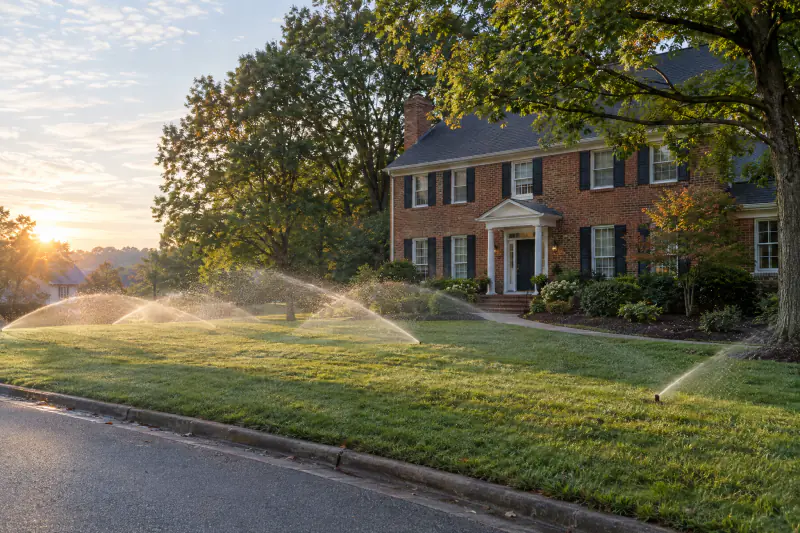
In-ground sprinklers watering a front lawn at sunrise

A five-second clip of rotor sprinkler heads sweeping across a fescue front lawn in early morning light, showing overlapping arcs and even coverage with no overspray on the walk.

Which sprinkler heads work best on clay soil?

Each head type suits a different area, and most yards use at least two of them on separate zones.

Fixed spray headsRotary nozzlesGear-driven rotors
Best forSmall or narrow stripsSmall to mid-size areas, slopesLarge open lawn
Typical throwAbout 5 to 15 ftAbout 8 to 30 ftAbout 20 to 45 ft
Application rateHighLowModerate
Fit for clay soilNeeds short, repeated cyclesGood, soaks in as it landsGood with cycle-and-soak

Ranges are typical for residential products and vary by model and operating pressure.

How much does a sprinkler system cost in Northern Virginia?

As of 2026, typical Northern Virginia market ranges for a professionally installed residential sprinkler system run roughly $3,500 to $8,000 for a suburban lot with four to seven zones, and $8,000 to $15,000 or more for large or complex properties. These are regional planning figures, not a quote.

The factors that move the number:

  • Zone count, set by lawn area and how much flow your supply delivers.
  • Backflow assembly type and distance from the connection to the yard.
  • Drip zones and crossings under walks or driveways.
  • Obstacles: tree roots, fences, steep grades and rock.

Plan for yearly costs too: winterization, spring start-up, any backflow test your utility requires, and the water itself. For a number based on your property, request an on-site estimate.

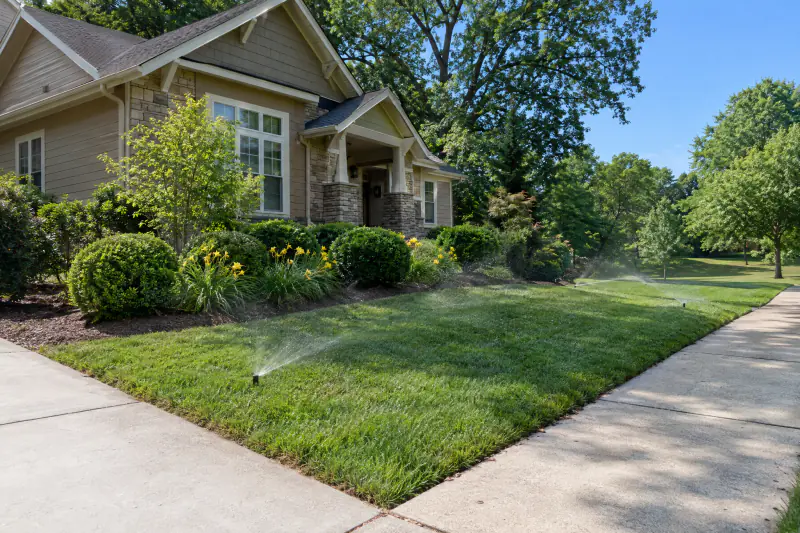
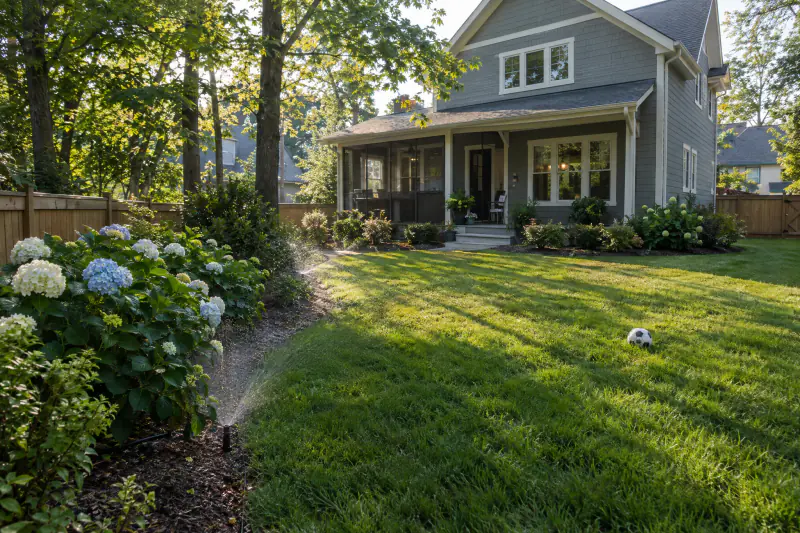
Backyard lawn watered by a newly installed sprinkler system zone beside planting beds
One zone running along a bed edge in late afternoon

What should you check before hiring a sprinkler installer?

Ask any contractor these questions, including us, before you sign.

  • Do they measure water pressure and flow before deciding the zone count?
  • Is a backflow preventer, and its permit where required, written into the scope?
  • Are sprays, rotors and drip kept on separate zones in the design?
  • Does the plan show head-to-head coverage, each head reaching the next?
  • Does the price include controller programming, a rain sensor and a walkthrough?
  • Who winterizes the system in fall, and what does that visit cost?

Not sure what you need?

Tell us what you are seeing. We will look at the site, explain the options in plain terms and give you a written estimate.

Sprinkler installation rules in Fairfax, Loudoun, Prince William and Arlington

Any irrigation system connected to drinking water in Northern Virginia needs a backflow preventer, and local water utilities commonly require it to be tested on a regular schedule, often yearly. A plumbing permit is frequently required for the connection. Requirements differ between counties and utilities, so check with yours or ask us during the site visit.

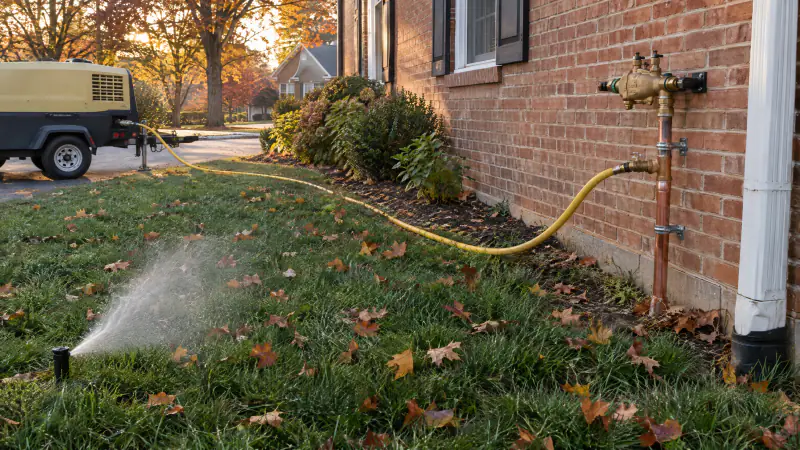
Climate sets the calendar: systems here are blown out with compressed air before hard freezes, typically from late October through November, and restarted in spring.

Some homes in Great Falls, Clifton and western Loudoun are on private wells, where pump output limits zone size. In HOA communities from Ashburn and South Riding to Gainesville and Bristow, check whether visible equipment needs architectural approval. Our service areas page lists the communities we cover.

Frequently asked questions about sprinkler system installation

How long does it take to install a sprinkler system?

Most residential systems in Northern Virginia take one to three working days once utilities are marked and any permit is in hand. Large lots, rocky soil or crossings under pavement add time. Marking and permitting often take longer than the installation itself.

Will installing sprinklers tear up my lawn?

Less than most people expect. Where conditions allow, pipe is pulled underground with a vibratory plow that leaves a narrow slit, and open trenching is limited to valve boxes and the main connection. In the growing season those slits typically knit back within a few weeks.

Do I need a backflow preventer for a lawn sprinkler system in Virginia?

Yes. An irrigation system connected to a drinking water supply needs a backflow preventer so water sitting in the pipes, along with fertilizer or soil bacteria, cannot be drawn back into the house or public main. Utilities commonly require periodic testing by an approved tester.

How often should sprinklers run on clay soil?

Water deeply and infrequently. For established fescue, two or three watering days a week in summer is a common starting point, with each zone split into several short cycles so the clay absorbs one pass before the next. Early morning is the right time, because less evaporates.

When should a sprinkler system be winterized in Northern Virginia?

Before the first hard freeze, usually late October through November. Winterizing shuts off the irrigation supply, drains the backflow assembly, and blows water out of each zone with compressed air so pipes, valves and heads do not crack. The system is refilled in spring.

How many zones does my yard need?

It depends on your water supply and layout, not only lot size. Available flow limits how many heads run at once, and areas with different sun, slope or plants need their own valves. Many suburban lots here end up with four to eight zones.

From the field notes

Long-form guides on sprinkler system installation from the crew that does the work, with Northern Virginia costs, timing and permit detail.

Water Management

A pre-winter drainage walkthrough

Standing water beside a foundation in November becomes ice in January. Walk the house stop by stop, from gutters to low spots, with the measurements that matter and the fixes that can still be built this winter.

The myYardPros Crew

All guides in this category  ·  Planning guides  ·  Glossary  ·  FAQ

Ready to talk about your sprinkler system installation project?

Tell us about your property and what you want to fix or build. We will visit, measure and send a clear written estimate. We serve Fairfax, Loudoun, Prince William and Arlington counties.

Serving Fairfax, Loudoun, Prince William and Arlington counties and the cities inside them. Check your address. Military, veterans, first responders, healthcare workers and teachers: ask about the Heroes Discount.