  • Serving the Northern Virginia area
Call (571) 200-9600 Get an Estimate
Decks & Porches

Fence Installation in Northern Virginia

Fence installation is building a new wood, vinyl, aluminum or composite fence on a residential lot. In Northern Virginia that means a located property line, posts set in concrete below the roughly 24 inch frost depth, panels that follow the slope, and a design that meets county zoning and HOA rules. It suits homeowners replacing a leaning fence or enclosing a yard.

  • Posts set in concrete below frost depth
  • Property line, zoning and HOA checked first
  • Wood, vinyl, aluminum and composite
  • Licensed & insured in Virginia
  • Based in Sterling, VA
  • Residential projects only
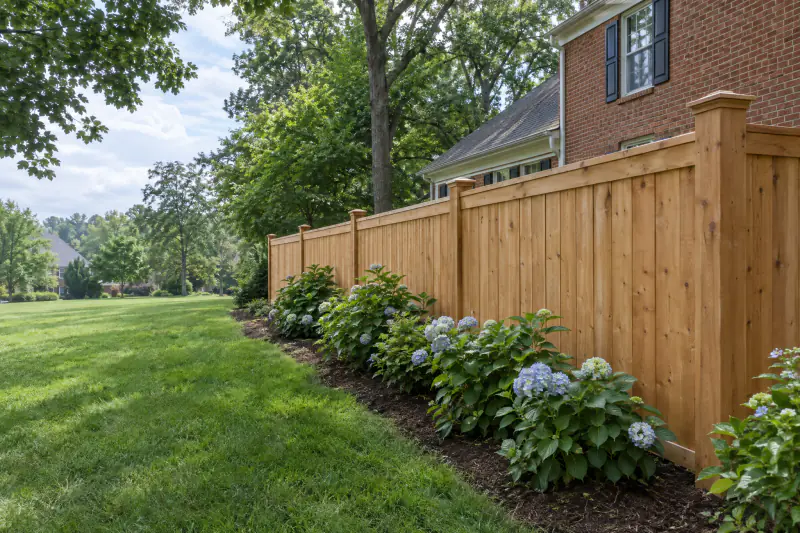
New cedar privacy fence installation along the side yard of a brick colonial home
Six foot cedar privacy fence with capped posts along a side yard
Time on site
Often 2-5 days for a backyard
Building permit
Usually not, except pool fences
Post depth
Typically 24 in. or deeper
Zoning height
Front yards 3.5-4 ft typical

Why do fences in Northern Virginia lean, and what prevents it?

Fences lean because posts move, and posts move when set too shallow, in holes with no drainage, or in clay that heaves every winter. A post that stops above the frost line, roughly 24 inches down, heaves until gates drag and panels pull loose. Wood posts also rot at grade when flat-finished concrete holds water against them.

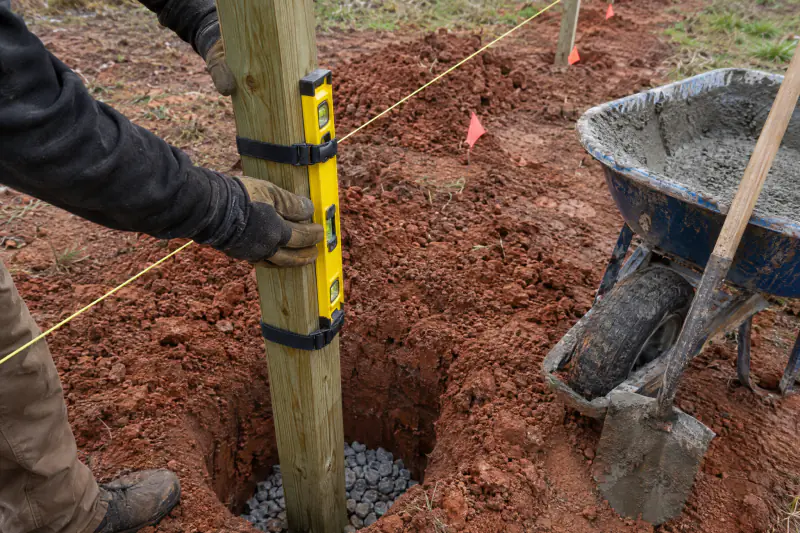
We dig every hole below frost depth, typically 24 to 30 inches for a 6 foot fence, with gravel under the post for drainage. Concrete is crowned above grade to shed rain. Posts are plumbed to a string line before panels go on, finished side out where the HOA requires it, as on our deck building.

Fence post being set plumb in a red clay hole with gravel and concrete
Post plumbed to the string line before concrete goes in

What types of fences do we install?

Material follows the job: privacy, pool barrier or front yard accent.

  • Pressure-treated pine privacy

    Six foot board fences in treated pine, dog-ear or flat top, on 4x4 posts and three 2x4 rails. The most affordable solid fence; stain it after the first season.

  • Cedar privacy and picket

    Western red cedar resists rot and insects and weathers to silver gray. Privacy, picket and horizontal styles, with stainless or coated fasteners so boards do not streak.

  • Vinyl privacy and picket

    PVC panels and posts in white, tan or gray that never need paint. Gate and corner posts get steel or wood inserts, since hollow vinyl flexes under a gate.

  • Aluminum ornamental

    Powder-coated pickets 4 to 6 feet tall for front yards, pool enclosures and open views. Panels rack to follow slopes; pool-barrier styles use tighter spacing and self-closing gates.

  • Composite and board-on-board

    Composite fencing such as Trex for a long-lived privacy screen, and board-on-board wood whose overlapping boards leave no gaps as they shrink. Both look finished from both sides.

  • Gates, removal and repair

    Walk and double drive gates with adjustable hinges and a drop rod, removal and haul away of the old fence, and resetting leaning posts when panels are still sound.

How does the fence installation process work?

Five stages, from the first walk along the line to the last gate.

  1. Site visit and property line

    We walk the line with you, find pins or your survey plat, note grade, trees, utilities and gate locations, and settle height, style and which side faces out.

  2. Design, zoning and HOA

    You receive a written scope with footage, heights, materials and gate sizes, plus the fence drawn on your plat for HOA review and for county zoning approval where it is required.

  3. Utility marking and layout

    Virginia 811 marks buried utility lines, with at least three working days of notice before we dig. We string the line and mark post centers, usually 8 feet apart.

  4. Posts set and cured

    Holes go below frost depth, gravel goes in the bottom, and posts are plumbed to the string and set in crowned concrete, which cures before panels load the posts.

  5. Panels, gates and walkthrough

    Rails, boards or panels go on, stepped or racked to the slope. Gates are hung to latch cleanly, old fencing is hauled away, and we walk the line with you.

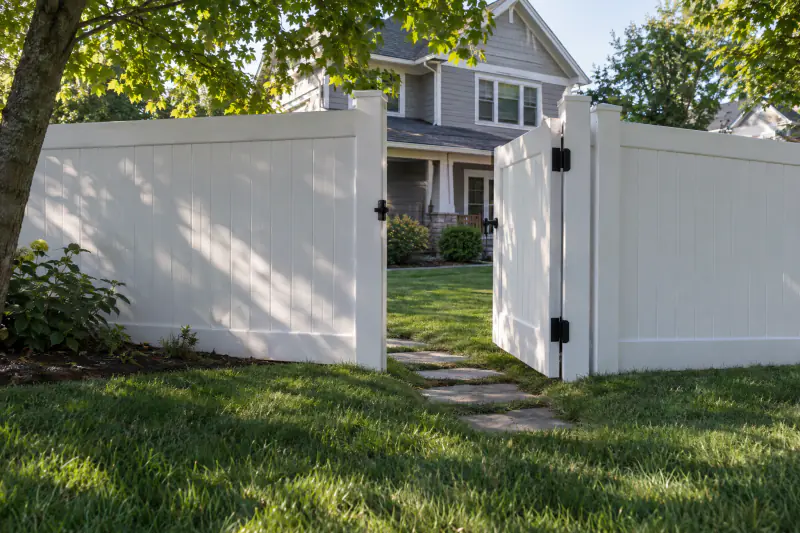
A finished vinyl privacy fence and gate in a backyard

A short clip moving toward an open vinyl fence gate as it swings closed, with a breeze in the maples and afternoon light moving across the lawn and panels.

Wood, vinyl or aluminum: which fence material fits your yard?

The three common materials differ in upkeep, privacy and slope handling.

Wood (pine or cedar)VinylAluminum
PrivacyFull in privacy stylesFull with solid panelsNone, open pickets
UpkeepClean and stain every few yearsRinse onlyRinse, touch up chips
Typical service lifePine 10-15 years, cedar longerOften 20-30 yearsOften 30 years or more
SlopesStepped or racked, cut on siteStepped, limited rackingRacks to most grades
GatesHeavy, needs a stout postNeeds a reinforced postLight, stays square
Relative installed costLowest to midMidMid to high

How much does fence installation cost in Northern Virginia?

As of 2026, a new fence in Northern Virginia typically runs $30 to $55 per linear foot installed for a 6 foot pressure-treated pine privacy fence, $40 to $75 for cedar, $40 to $80 for vinyl privacy, $45 to $90 for ornamental aluminum and $60 to $120 or more for composite. These are market planning ranges, not our quote.

What moves the number:

  • Height, which drives board count and post length
  • Gates: each walk gate adds several hundred dollars, drive gates more
  • Slope, rock and roots, which slow post setting
  • Removal of an old fence, especially concrete-set posts

For your lot, request an on-site estimate and we will measure the line and price it in a written scope.

Finished white vinyl privacy fence with walk gate open onto a backyard lawn
Vinyl privacy fence with a reinforced gate post and self-closing hinges

What should you check before hiring a fence contractor?

Ask every bidder these questions and compare the answers.

  • How deep will posts go, and is gravel placed under them for drainage?
  • Will concrete be crowned above grade so water runs away from each post?
  • Who locates the property line, and who files the zoning or HOA paperwork?
  • Which side faces the neighbor, and does the scope name the material grade?
  • Are fasteners hot-dip galvanized or stainless, and is old fence removal included?

Not sure what you need?

Tell us what you are seeing. We will look at the site, explain the options in plain terms and give you a written estimate.

Do you need a fence permit in Fairfax, Loudoun, Prince William and Arlington?

Usually not a building permit, but often a zoning approval. Virginia's statewide building code exempts "fences of any height" from a building permit unless required for pedestrian safety or "used for the barrier for a swimming pool." Fairfax County, as published, caps front yard fences at 4 feet and side or rear yard fences at 7 feet, and a corner lot has two front yards. Loudoun County's zoning ordinance limits residential front yard fences to 3 1/2 feet and other residential fences to 8 feet, and exempts most fences from a zoning permit outside overlay districts. Prince William County requires zoning approval for any fence, drawn on your survey plat: 42 inches in front yards and on a corner lot's street side, generally 6 feet in side and rear yards. Arlington County requires a permit for any new or replacement fence, filed in Permit Arlington with a plat, and publishes height limits as a zoning diagram. Alexandria lists fences over 6 feet as needing a permit. Confirm with your county or city first.

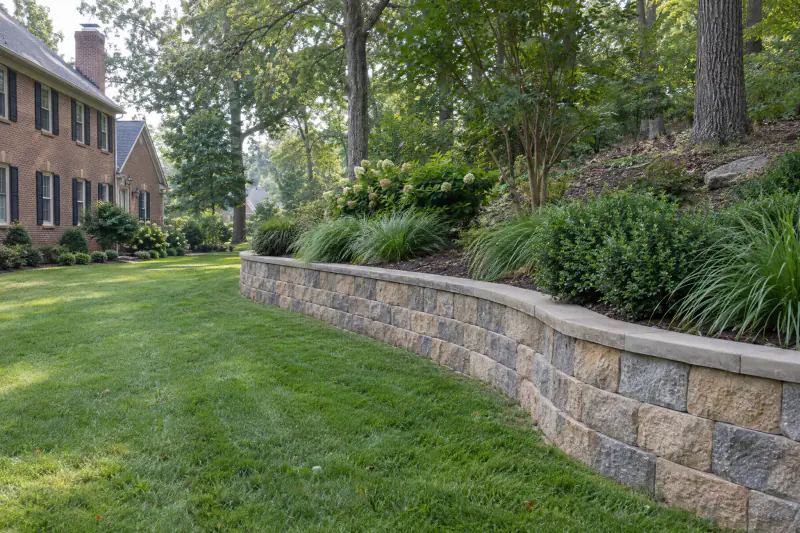
HOAs in Ashburn and South Riding typically set height, style, color and which side faces out, and approve before any county filing; see our guide to HOA approval for exterior projects. In Great Falls and Clifton a fence often tops a retaining wall, and we work across our Northern Virginia service area.

Frequently asked questions about fence installation

How deep should fence posts be set in Northern Virginia?

Below frost depth, roughly 24 inches here, so a 6 foot privacy fence post typically sits 24 to 30 inches deep in a hole about three times the post width. Shallower posts heave in clay and the fence leans.

Do I need a permit to build a fence in Fairfax County?

Generally not a building permit. Fairfax County publishes that building permits are not typically required for fences of any height, unless the fence is a pool barrier or required for pedestrian safety. Zoning still applies, as published: 4 feet in front yards, 7 feet in side or rear yards.

Can a fence go right on the property line?

Often yes, once you know where the line is. We work from your survey plat and pins, and on an uncertain line we recommend a surveyor rather than a guess. Many HOAs expect the fence just inside the line.

Should my fence step down a slope or follow it?

Both work. Racked panels follow the grade with no gap underneath; wood and aluminum rack well, vinyl less so. Stepped panels stay level and drop at each post, suiting steep grades but leaving gaps we close with a kickboard.

How long does a wood fence last in Northern Virginia?

Pressure-treated pine fences commonly last 10 to 15 years here and cedar longer, posts failing first. Keep soil and mulch off the bottom rail, keep sprinklers off the boards, and have it cleaned and stained every few years.

Which side of the fence faces the neighbor?

In many Northern Virginia HOAs the finished side, the one without exposed rails and posts, must face the street and neighbors, so the rails end up on your side. Board-on-board and shadowbox styles look the same from both sides.

From the field notes

Long-form guides on fence installation from the crew that does the work, with Northern Virginia costs, timing and permit detail.

Decks & Porches

Deck permits in Fairfax County

A Fairfax County deck permit runs through PLUS, needs a sealed plat and either drawings or the county's Typical Deck Details, and ends with footing, framing and final inspections. What to prepare, what it costs and what gets plans sent back.

The myYardPros Crew

Decks & Porches

Deck permits in Loudoun County

Every deck in Loudoun County needs a building permit and a zoning permit, filed through LandMARC with a marked plat and either drawings or the county's Typical Deck Detail. What the county publishes on fees, setbacks, review times and inspections.

The myYardPros Crew

All guides in this category  ·  Planning guides  ·  Glossary  ·  FAQ

Ready to talk about your fence installation project?

Tell us about your property and what you want to fix or build. We will visit, measure and send a clear written estimate. We serve Fairfax, Loudoun, Prince William and Arlington counties.

Serving Fairfax, Loudoun, Prince William and Arlington counties and the cities inside them. Check your address. Military, veterans, first responders, healthcare workers and teachers: ask about the Heroes Discount.