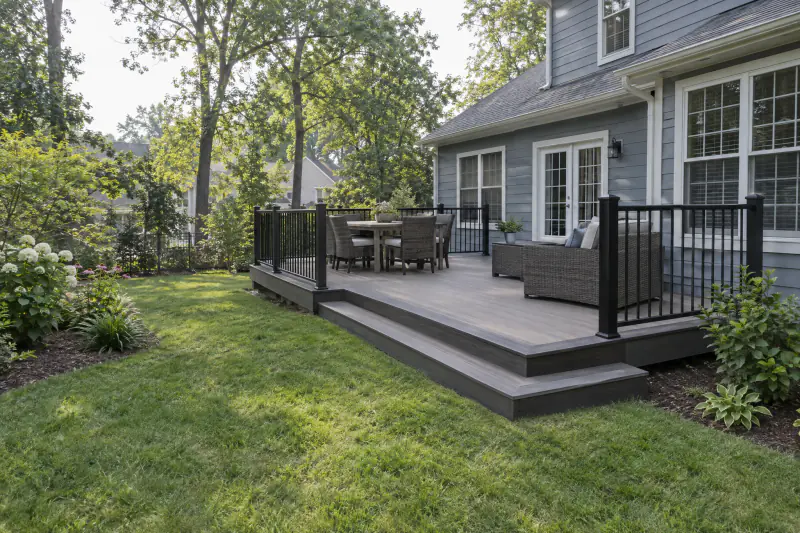
Deck Repair and Resurfacing in Northern Virginia
Deck repair and resurfacing fixes or renews an existing deck instead of rebuilding it. Resurfacing replaces the decking, railings and stairs on a frame that has been checked and found sound. Repairs address ledgers, posts, joists and loose guards. In Northern Virginia it suits homeowners with a worn, splintering or wobbly deck whose structure may still have years left.
- Frame evaluated before any new boards
- New decking, railings and stairs
- Straight advice on repair versus replacement
- Licensed & insured in Virginia
- Based in Sterling, VA
- Residential projects only
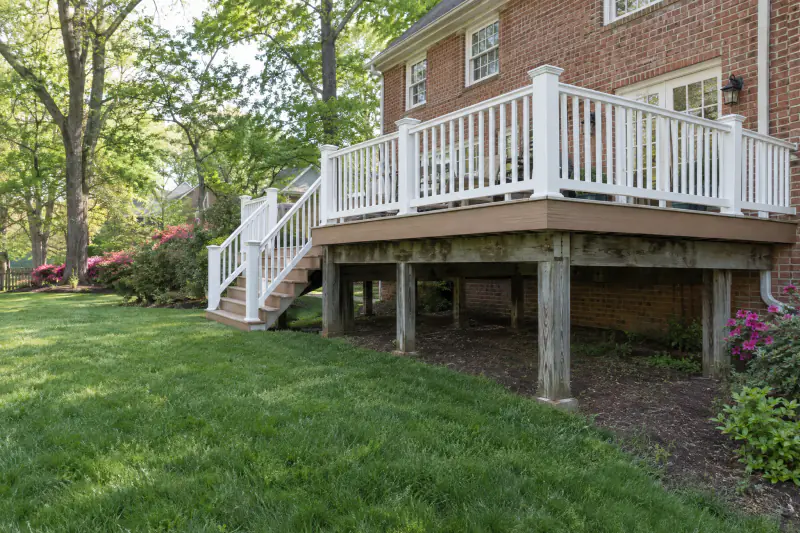
- First step
- Structural evaluation
- Permit
- Depends on scope and county
- Time on site
- Often 2-7 days, by scope
- Wood deck lifespan
- About 15-20 years with care
Can an old deck be repaired, or does it need replacing?
An old deck can be repaired or resurfaced when its frame, footings and attachment to the house are sound, and it should be replaced when they are not. The boards and rails take the weather and wear out first, often while the joists and beams beneath are still solid. Putting new decking on that frame saves the cost of demolition, footings and framing.
The risk is covering a bad structure with good boards. Before recommending anything we probe the ledger, joist tops, beam ends and post bases for rot, look for flashing behind the ledger, check hangers and bolts for corrosion, and measure joist spacing and spans. If the frame fails that check, new decking would only hide the problem, and we will tell you a new deck is the right call.
What deck repairs and resurfacing work do you do?
Most projects combine two or three of these, decided by what the evaluation finds.
Re-decking a sound frame
Old boards come off, joists are inspected from above, repaired and taped, and new pressure-treated, composite or PVC decking goes down. Composite needs joists at 16 inches or closer, so we add framing where spacing is wider.
Railing replacement
Loose or outdated railings are replaced with wood, composite or aluminum systems. Posts are bolted and blocked to the frame, and height and baluster spacing are brought up to current code.
Stair rebuilds
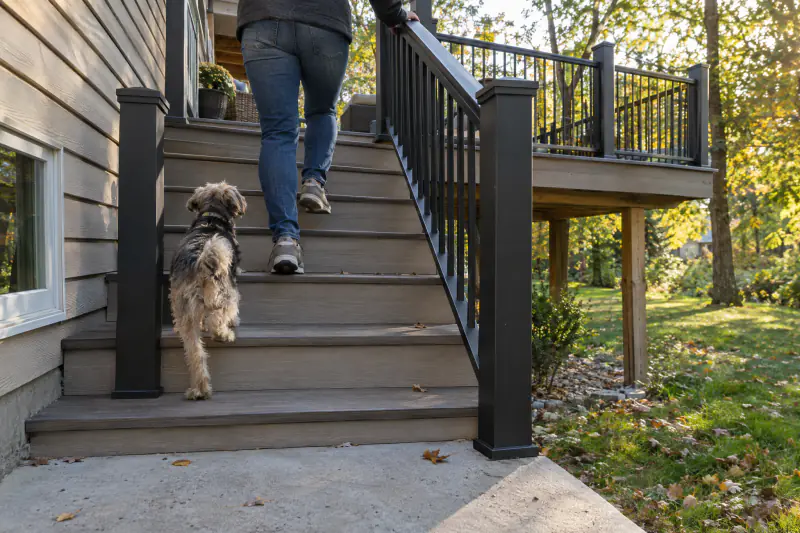
Cracked stringers, uneven risers and stairs sinking into the lawn are rebuilt with consistent rise and run, a graspable handrail and a solid landing pad at the bottom.
Ledger and flashing repair
Where a ledger is nailed on or unflashed, we open the siding, replace decayed wood, add structural fasteners and lateral connectors, and install flashing so water stays out of the house wall.
Post, beam and footing repair
Rotted post bases, split beams and undersized or shifted footings are replaced while the deck is temporarily shored. Posts go back on proper footings with hardware instead of being buried in soil.
How does a deck resurfacing project work?
The evaluation comes first, and the scope is confirmed once the old boards are off.
On-site structural evaluation
We inspect the deck from above and below: ledger, flashing, joists, beams, posts, footings where visible, hardware, guards and stairs. You hear what is sound, what is not and why.
Written scope and options
You receive a scope listing each repair and the resurfacing materials, with replacement priced alongside when the choice is close. We check with the county whether the work needs a permit.
Tear-off and frame repairs
Decking and rails are removed and hauled away. With joist tops exposed we recheck everything, replace or sister damaged members, correct hardware and show you anything unexpected before continuing.
New decking, railings and stairs
Joists are taped and leveled, then the new boards, fascia, guard posts, rails and stair parts are installed to the manufacturer's instructions and current code dimensions.
Inspection and walkthrough
Where a permit applies, the county inspects. We then walk the deck with you, point out what was replaced underneath and explain care for the new surface.
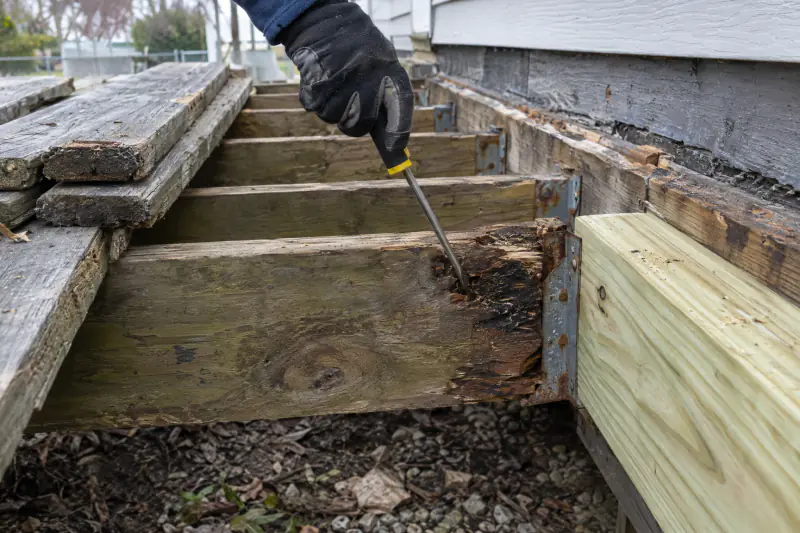
Checking deck joists for rot before resurfacing
A close clip of a joist end being probed with a screwdriver after the old boards are removed, showing why the frame is checked before new decking.
Repair vs resurface vs replace: which does your deck need?
The condition of the frame decides, not the appearance of the boards.
| Repair | Resurface | Replace | |
|---|---|---|---|
| Frame condition | Sound, isolated defects | Sound throughout | Rot, undersized or badly attached |
| What changes | Specific boards, rails, posts or stairs | All decking, rails and stairs | Everything, including footings |
| Layout | Unchanged | Unchanged | Can be redesigned |
| Relative cost | Lowest | Moderate | Highest |
| Makes sense when | The deck is fairly young | Boards are worn, frame has life left | The frame is near the end of its life |
New composite boards will usually outlast an aging wood frame, so frame age matters.
How much does deck repair or resurfacing cost in Northern Virginia?
Resurfacing a sound deck frame in Northern Virginia typically costs $35 to $70 per square foot with new railings, as a market planning range as of 2026. Individual repairs vary widely: a stair rebuild commonly runs $1,500 to $6,000, railing replacement $60 to $150 per linear foot, and ledger or post repairs from several hundred to several thousand dollars. These are regional ranges for budgeting, not our prices.
What moves the number:
- Decking and railing material chosen
- How much framing must be repaired or added
- Deck height and access for shoring and tear-off
- Disposal of the old material
- Whether a permit and drawings are needed
When repairs approach the cost of a new deck, we say so. An on-site estimate starts with the evaluation.
What are the signs a deck needs repair?
Any one of these is reason to have the structure looked at before the next gathering.
- The railing moves when you push on it at the top.
- A screwdriver sinks easily into a post base, joist or ledger.
- A gap has opened between the deck and the house wall.
- Stairs bounce, lean or have risers of different heights.
- Hangers, bolts or nails show heavy rust or are missing.
- Boards are cupped, splintered or soft underfoot.
- Posts sit directly in soil or lean out of plumb.
Not sure what you need?
Tell us what you are seeing. We will look at the site, explain the options in plain terms and give you a written estimate.
Do deck repairs need a permit in Fairfax, Loudoun, Prince William and Arlington?
It depends on the scope. Northern Virginia jurisdictions commonly treat replacing deck boards with similar material as ordinary repair, while structural work such as new joists, beams, posts, footings, ledgers or a full rebuild generally requires a permit and inspections. Rules on railings and stairs differ, so your county confirms what applies before we start.
Many decks in Reston, Burke, Herndon, Centreville and Woodbridge were built decades ago under older codes, attached with nails and no flashing, and shaded, humid lots keep those ledgers damp. If the frame and boards are sound and the deck is only gray and mildewed, deck cleaning and staining is the cheaper fix. If you are resurfacing, see composite and PVC decks for board choices.
Frequently asked questions about deck repair & resurfacing
Can I put new decking on my old deck frame?
Yes, when the frame passes a structural check: no rot in the ledger, joists, beams or posts, proper attachment to the house, and joist spacing suited to the new boards. Expect some framing repairs once the old decking is off.
How do I know if my deck is unsafe?
Warning signs include a railing that moves, a gap between the deck and house, soft wood at the ledger or post bases, rusted hardware and bouncing stairs. Decks can fail suddenly at the ledger, so keep people off until it has been evaluated.
Is it cheaper to repair or replace a deck?
Repair or resurfacing is cheaper when the frame is sound, because footings and framing are a large share of a new deck's cost. Once repairs include the ledger, several joists and posts, the gap narrows quickly and a new deck is often better value.
Can you replace just the railings or stairs?
Yes. Railings and stairs are common standalone repairs, provided the frame they attach to is solid. New guard posts are bolted through blocking, and stairs are rebuilt with even risers and a proper landing. We still look over the rest of the deck.
How long does a pressure-treated deck last in Northern Virginia?
With regular cleaning and sealing, pressure-treated decking commonly lasts 15 to 20 years, and a well-flashed frame can outlast its boards. Neglect, constant shade, poor drainage and missing flashing shorten that considerably. Age alone does not condemn a deck.
What happens if you find rot after removing the old boards?
We stop, show you the damage and explain the options before going further. Isolated rot in a joist or two can be cut out and replaced. Widespread decay in the ledger, beams or many joists changes the scope, and we reprice it openly.
Related services

Composite & PVC Decks
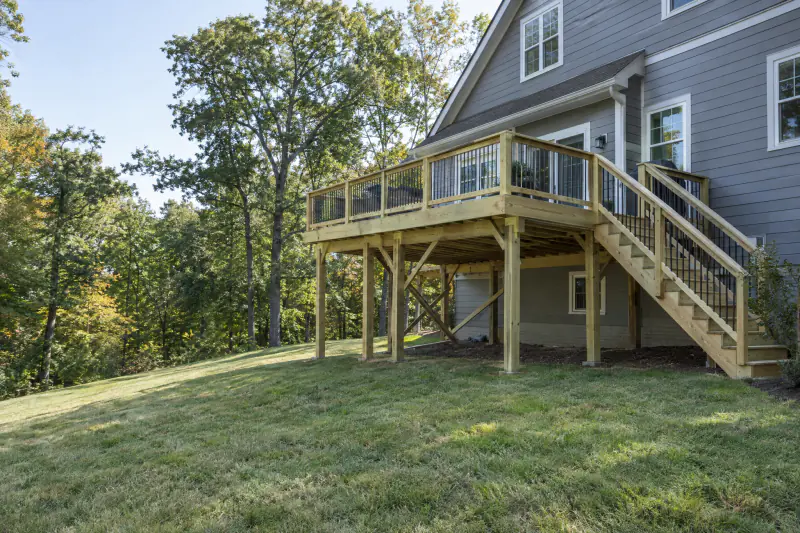
A composite or PVC deck uses manufactured boards in place of wood decking, fastened to a pressure-treated frame.
Learn more
Custom Deck Building
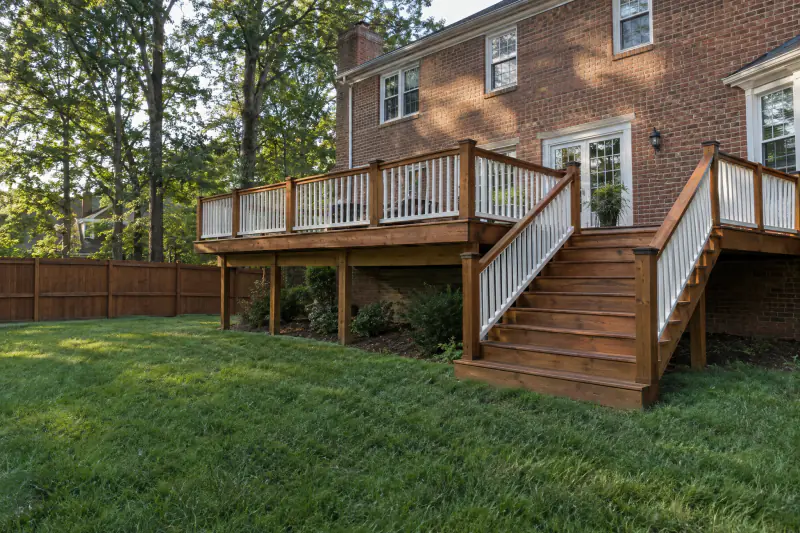
Custom deck building is the design and construction of a new pressure-treated wood or composite deck sized to your house and yard.
Learn more
Deck & Fence Cleaning & Staining
Deck and fence cleaning and staining is the process of washing weathered wood with a wood cleaner at low pressure, brightening it, letting it dry, and applying a stain or sealer that sheds water and blocks sun.
Learn more
Pressure Washing
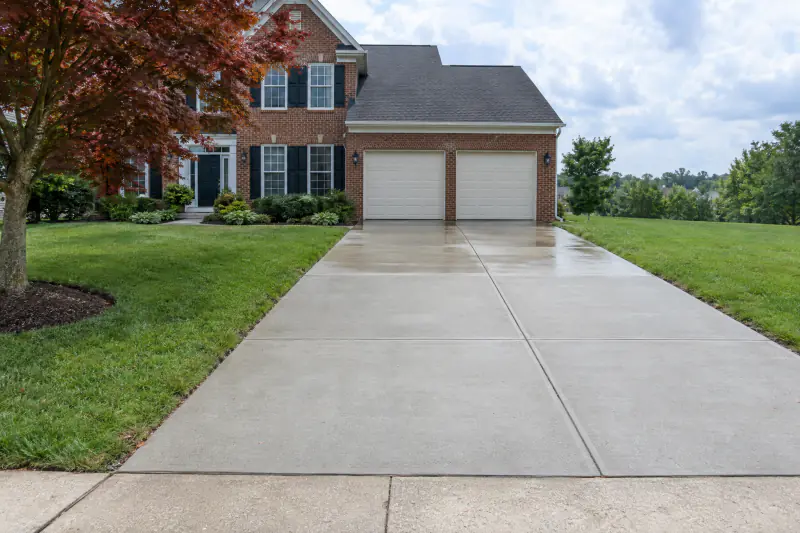
Pressure washing uses pressurized water, usually through a rotating surface cleaner, to lift algae, mildew, dirt and stains from hard flatwork such as concrete driveways, sidewalks, patios and pool decks.
Learn more
Ready to talk about your deck repair and resurfacing project?
Tell us about your property and what you want to fix or build. We will visit, measure and send a clear written estimate. We serve Fairfax, Loudoun, Prince William and Arlington counties.
Page updated . Photos and video on this page are illustrative.