  • Serving the Northern Virginia area
Call (571) 200-9600 Get an Estimate
Exterior Cleaning

Pressure Washing in Northern Virginia

Pressure washing uses pressurized water, usually through a rotating surface cleaner, to lift algae, mildew, dirt and stains from hard flatwork such as concrete driveways, sidewalks, patios and pool decks. myYardPros provides it for Northern Virginia homeowners whose concrete has turned dark, blotchy or slippery, adjusting pressure to each surface and treating stains water alone will not remove.

  • Even results with no wand stripes
  • Pressure set for each surface
  • Post-treatment that slows algae regrowth
  • Licensed & insured in Virginia
  • Based in Sterling, VA
  • Residential projects only
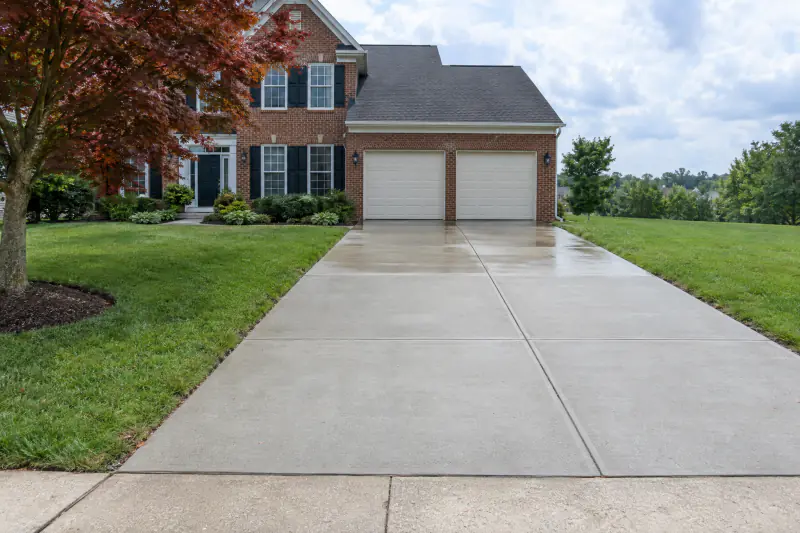
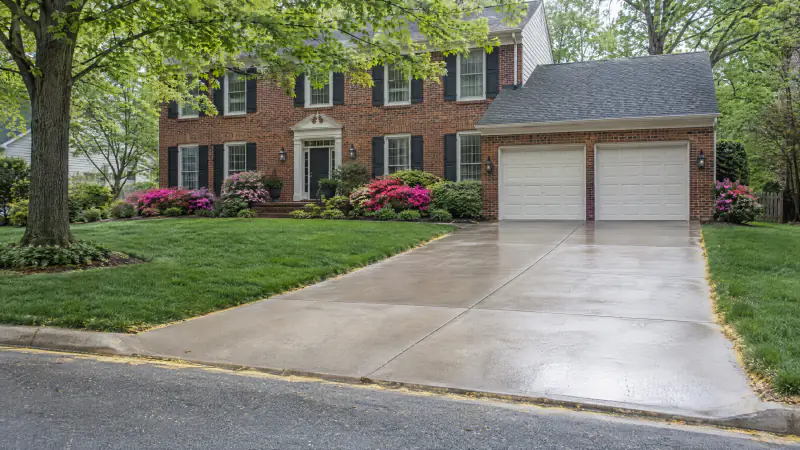
Clean concrete driveway at a suburban brick colonial after pressure washing
Uniform color from apron to garage, no wand stripes
Typical timeline
2-5 hours for most homes
Permit
Not typically required
Best season
Spring through fall
Stays clean
Often 1-2 years, less in shade

Why does concrete turn black, and what does proper pressure washing look like?

Concrete turns dark mostly because it is porous and stays damp, which lets algae, mildew and lichen grow in the surface. In Northern Virginia's humid summers a shaded driveway or north-side walk can go from light gray to blotchy black in a couple of seasons, and the film makes steps and pool decks slick.

Bad pressure washing leaves its own marks. A narrow tip held close etches lines, a hand-swept wand leaves zebra stripes, and water alone leaves the roots of the growth in the pores, so the dark color returns within months.

Done properly, the job uses a rotating surface cleaner for an even finish, a pre-treatment that loosens growth and stains, pressure matched to the material, and a mild post-treatment that kills what remains. Siding and roofs are handled by soft washing instead.

Surface cleaner pressure washing a dark concrete walkway, showing clean and dirty sides
A surface cleaner keeps nozzles at one even height

What surfaces can be pressure washed?

We pressure wash the hard, horizontal surfaces around a home.

  • Concrete driveways

    Broom-finished concrete is cleaned with a surface cleaner for uniform color from apron to garage. Oil drips, tire marks and rust or clay stains are pre-treated with cleaners made for each stain.

  • Sidewalks, stoops and steps

    Front walks collect the heaviest algae because they sit in the shade of the house. Edges and risers are cleaned with a wand at reduced pressure so the whole entry matches.

  • Patios

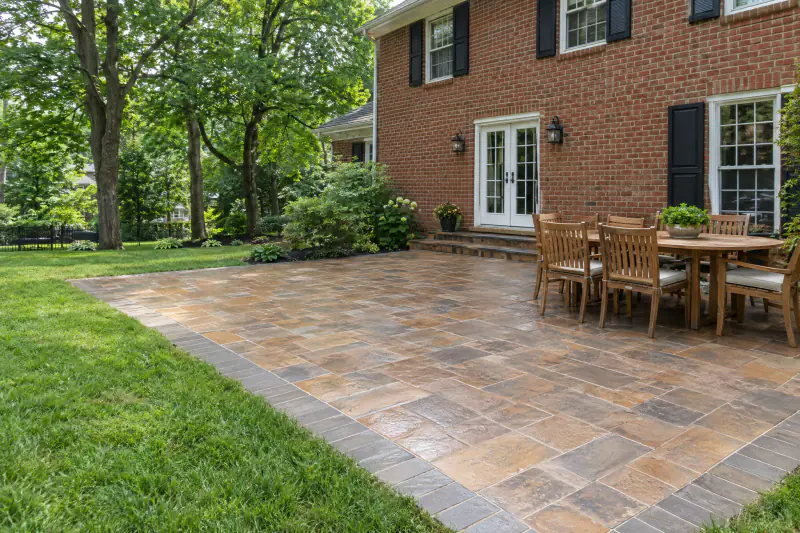
    Concrete, stamped concrete and stone patios are cleaned at pressures suited to the finish. Stamped and colored concrete gets a gentler pass to protect its sealer, and flagstone joints are not blasted out.

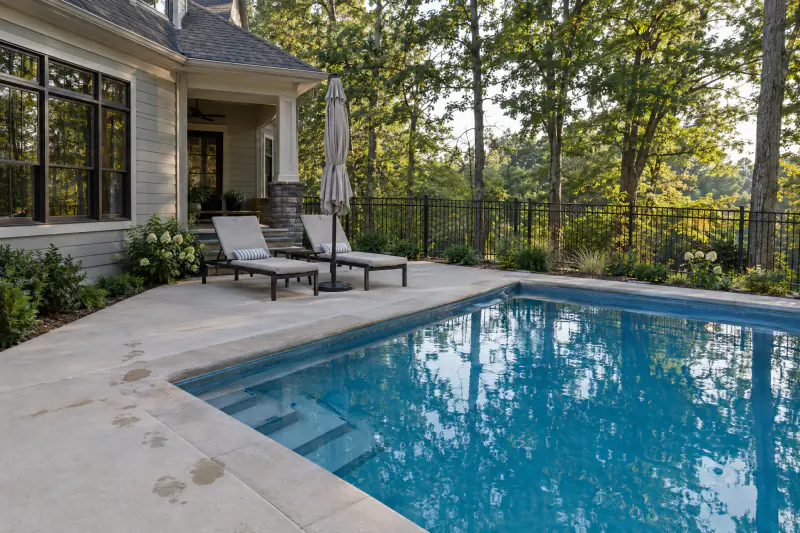
  • Pool decks

    Pool decks are cleaned for traction as much as looks. We keep debris and cleaning solution out of the water as far as practical and rinse toward deck drains or lawn.

  • Walls and curbing

    Block retaining walls, stone steps and concrete curbing are cleaned with a wide fan tip at moderate pressure, keeping the spray off loose mortar and the soil behind the wall.

How much pressure is safe for each surface?

The right pressure depends on how hard the material is and what holds it together.

SurfaceTypical approachWhat to watch for
Broom-finished concreteSurface cleaner, commonly around 2,500 to 3,500 psiNew or flaking concrete needs less pressure.
Stamped or exposed-aggregate concreteLower pressure, wide fan tip, more reliance on cleanerSealer and color can lift, and stones can loosen.
Concrete pavers and brickModerate pressure, angled to spare the jointsWashed-out joint sand lets pavers shift.
Flagstone and natural stoneLow to moderate pressure after a test spotSoft or layered stone can flake.
Asphalt drivewaysLow-pressure rinse with cleaner onlyHigh pressure loosens the binder and aggregate.

Figures are typical starting points, adjusted on site after a test area.

How does a pressure washing visit work?

Every job follows the same five steps.

  1. Site visit and estimate

    We measure the flatwork, note each material and its condition, identify stains, locate a water spigot and check where rinse water will drain. You get a written scope.

  2. Preparation

    We move light furniture and planters, sweep loose debris, avoid outlets and low-voltage lights, wet nearby plants, and check where water could reach a garage or basement door.

  3. Pre-treatment

    A cleaning solution is applied to algae and mildew and given time to work. Oil, rust and clay stains each get a cleaner chosen for that stain.

  4. Surface cleaning and rinse

    We clean in overlapping passes with a surface cleaner, detail edges and steps with a wand, then rinse loosened dirt off the slab and away from the house.

  5. Post-treatment and walkthrough

    A light treatment kills remaining spores and evens the color as the concrete dries. We rinse plants again, reset furniture and walk the surfaces with you.

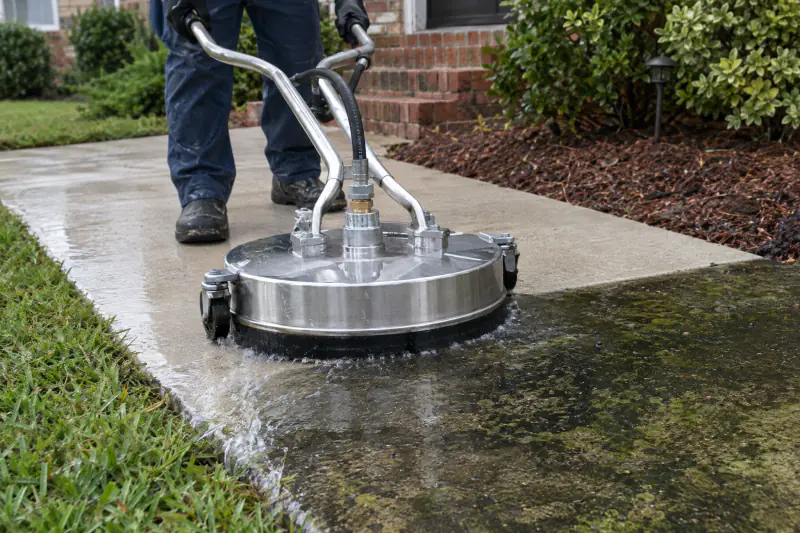
Surface cleaner pressure washing a concrete walkway

A rotating surface cleaner moves steadily along a mildew-darkened concrete walkway, leaving an even, bright path behind it while rinse water runs off into the lawn.

What should not be pressure washed?

These surfaces are damaged by high pressure and need a different method.

  • Asphalt shingle roofs, which lose their protective granules under pressure.
  • Vinyl, aluminum and wood siding, where water is forced behind the panels.
  • Stucco and synthetic stucco, which can pit, crack or trap water.
  • Old brick with soft or crumbling mortar joints.
  • Wood decks and fences, unless pressure is kept very low.
  • Windows, screens, light fixtures, outlets, meters and air conditioning units.
  • Peeling paint on older homes, which may contain lead.

Not sure what you need?

Tell us what you are seeing. We will look at the site, explain the options in plain terms and give you a written estimate.

How much does pressure washing cost in Northern Virginia?

Pressure washing a typical two-car concrete driveway in Northern Virginia commonly costs about $150 to $400 as of 2026. Adding a front walk, stoop and patio often brings a visit to roughly $300 to $800. These are market planning ranges, not myYardPros quotes.

The main factors are total square footage, how heavy the growth is, and stain treatment, because oil, rust, clay and leaf tannin stains take separate products and time. Access matters too: long hose runs, steep driveways, many steps and tight pool enclosures slow the work. Bundling the driveway with a house wash usually costs less than separate visits.

We price after seeing the surfaces in person. Request an on-site estimate or call (571) 200-9600.

Residential concrete pool deck cleaned by pressure washing, with lounge chairs
Pool deck cleaned for traction as well as looks

Pressure washing in Fairfax, Loudoun, Prince William and Arlington

We pressure wash residential driveways, walks, patios and pool decks across Fairfax, Loudoun, Prince William and Arlington counties, including Sterling, Ashburn, Herndon, Vienna, Centreville, Springfield and Woodbridge. No permit is typically needed.

Local conditions shape the work. Red clay washed onto concrete leaves orange staining that needs a specific cleaner, and de-icing salt combined with freeze-thaw cycles can leave driveway surfaces flaking, which calls for lower pressure. Storm drains here generally flow to streams untreated, so we direct rinse water toward lawn where we can.

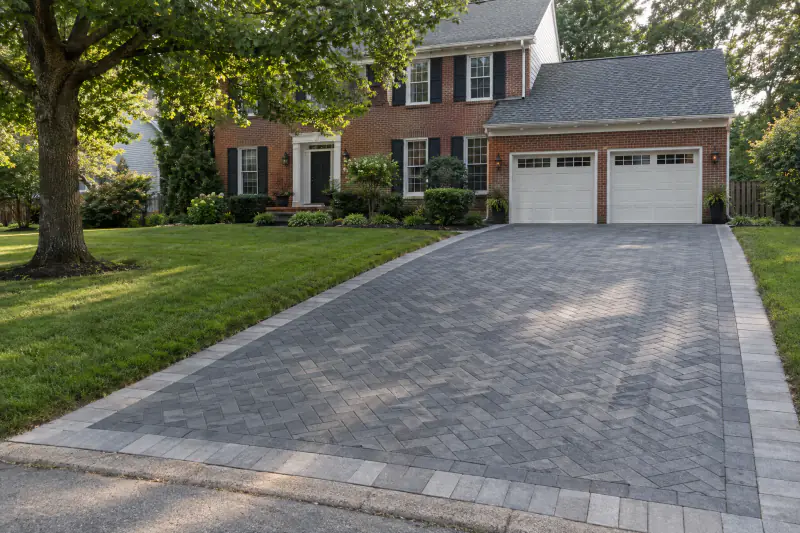
If a slab stays green because water sits on it, cleaning is a temporary fix. A yard drainage solution or a downspout discharge line addresses the cause. For pavers, see paver cleaning and sealing.

Frequently asked questions about pressure washing

Will pressure washing damage my concrete driveway?

Sound, cured concrete handles pressure washing well when a surface cleaner and a suitable pressure are used. Damage comes from narrow tips held too close, which etch visible lines, and from high pressure on new, weak or flaking concrete. We test a small area first.

How long does a driveway stay clean after pressure washing?

Most driveways in Northern Virginia stay clean for one to two years. Shaded, damp and north-facing concrete darkens sooner, and sunny slabs last longer. A post-treatment that kills remaining algae spores helps, as does fixing downspouts or low spots that keep the concrete wet.

Can pressure washing remove oil and rust stains?

Often they can be lightened considerably, but not always removed. Fresh oil responds well to a degreaser and hot water. Old oil that has soaked deep, rust from fertilizer or irrigation water, and battery stains each need a specific cleaner, and some leave a faint shadow.

How soon can new concrete be pressure washed?

Concrete gains most of its strength in about the first month, but the surface stays vulnerable for longer. We generally avoid aggressive cleaning in the first year and use low pressure with a mild cleaner if it must be washed. Ask your installer about any sealer applied.

Should I seal my concrete after pressure washing?

Sealing is optional for plain concrete. A penetrating sealer can reduce water and salt absorption, which helps against freeze-thaw surface damage and makes later cleaning easier. The slab must be clean and dry first. Sealer matters more for pavers, where it also protects joint sand.

How should I prepare for a pressure washing appointment?

Move vehicles off the driveway, close windows and doors, and bring in doormats, toys and cushions. Make sure an outdoor spigot is turned on and working, leave gates open, and keep pets inside. Tell us about any cracks, loose pavers or leaks into the garage.

From the field notes

Long-form guides on pressure washing from the crew that does the work, with Northern Virginia costs, timing and permit detail.

All guides in this category  ·  Planning guides  ·  Glossary  ·  FAQ

Ready to talk about your pressure washing project?

Tell us about your property and what you want to fix or build. We will visit, measure and send a clear written estimate. We serve Fairfax, Loudoun, Prince William and Arlington counties.

Serving Fairfax, Loudoun, Prince William and Arlington counties and the cities inside them. Check your address. Military, veterans, first responders, healthcare workers and teachers: ask about the Heroes Discount.