
Comparison guide
Composite vs. wood decking: which is worth it?
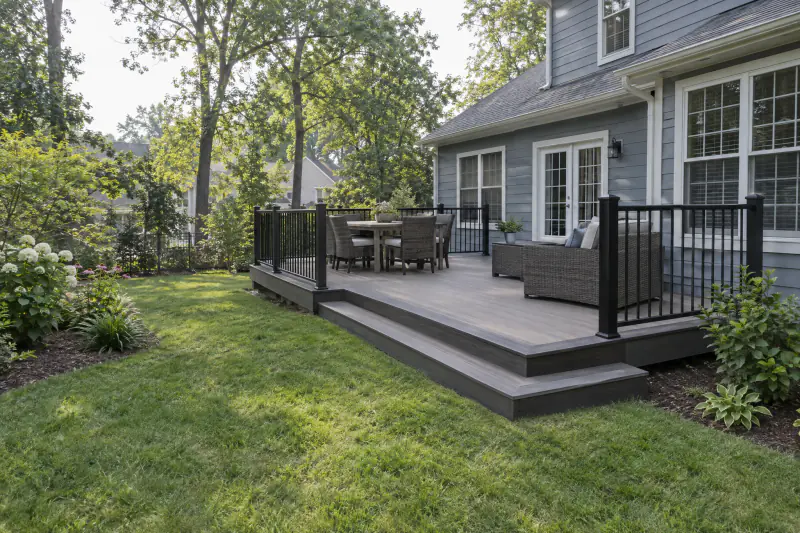
Composite is worth it if you expect to stay in the house about ten years or longer and would rather wash a deck than stain it. Pressure-treated wood is worth it if the up-front budget matters most and you will keep up with cleaning and staining. In Northern Virginia humidity, the upkeep you will really do should decide it.
Is composite decking really worth the extra money?
For many Northern Virginia homeowners it is, but not for everyone. The honest way to decide is to picture the deck in year eight. A wood deck that has been cleaned and stained every few years still looks good and feels solid. A wood deck that was stained once and forgotten is gray, cupped and rough on bare feet. Composite looks much the same in year eight as in year one, whether you were diligent or not.
That is what the higher price buys: not a stronger deck, but one that forgives neglect. The structure underneath is identical. Both sit on a pressure-treated frame with the same footings, ledger flashing, hardware and county permit, all covered on our custom deck building page. Only the boards you walk on and the railings you touch change. Details on board types are on our composite and PVC decks page.
Composite vs. wood decking compared
Pressure-treated pine is the usual wood choice here, so that is the comparison below.
| Pressure-treated wood | Capped composite | |
|---|---|---|
| Installed cost per sq ft | $45 to $80 | $75 to $140 |
| Routine upkeep | Clean and re-stain every few years | Wash once or twice a year |
| Typical board life | 15 to 20 years with care | Often 25 years or more |
| Splinters | Yes, as it ages | No |
| Heat in full sun | Warm | Hot in dark colors |
| Scratches | Can be sanded and re-stained | Cannot be sanded out |
| Color | Any stain, changeable later | Fixed when you buy it |
| Rot and moisture | Can check, cup and decay | Cap resists moisture |
Costs are typical Northern Virginia market planning ranges as of 2026, including frame, railings and stairs, not myYardPros prices. Lifespans are typical expectations, not promises.
When should you choose composite, and when wood?
Choose composite if
you plan to stay ten years or more, the deck sits in shade where wood stays damp, children or pets use it barefoot, or you know that staining is a chore you will put off.
Choose wood if
the budget is fixed, you may move within several years, you like the look and feel of real lumber, or you enjoy maintaining it. A cared-for wood deck is a perfectly sound choice.
Consider PVC if
the deck is beside a pool or in deep shade. Cellular PVC has no wood fiber to take on water and often runs slightly cooler in pale colors. It usually costs the most.
Consider resurfacing if
you already have a wood deck with a sound frame. New composite boards and railings can sometimes go on the existing structure, provided joists are close enough together and free of rot.
How much more does composite cost than wood?
Composite typically costs roughly one and a half to two times as much as wood to install. As Northern Virginia market planning ranges as of 2026, a new deck runs $45 to $80 per square foot in pressure-treated wood and $75 to $140 per square foot in composite or PVC, and a mid-sized deck with railings and one stair commonly lands between $15,000 and $50,000. These are regional budgeting figures, not our prices.
The gap narrows once upkeep is counted. Cleaning and staining a wood deck typically costs about $2 to $5 per square foot of surface, which puts many decks between roughly $1,000 and $3,000 each time, and deck floors here usually need it every two to three years. Cleaning a composite deck often falls between $200 and $500. Over fifteen years, a wood deck may go through five or more staining cycles. Whether that closes the gap depends on your deck's size and whether you do the staining yourself.
Railing choice, deck height, borders and stairs move both numbers. For a side-by-side figure on your design, request an on-site estimate.
What mistakes do homeowners make when choosing decking?
- Picking a dark composite for a south or west-facing deck with no shade.
- Choosing a color from a small indoor sample instead of a full board in the sun.
- Assuming composite needs no cleaning at all. Pollen and leaves still feed mildew.
- Putting composite on old joists spaced wider than the manufacturer allows.
- Staining new pressure-treated wood before it has dried enough to absorb the stain.
- Comparing decking prices and forgetting that railings can rival the boards in cost.
- Expecting new boards of any kind to fix a frame with rot or a loose ledger.
Our recommendation: how to decide in five minutes
Answer three questions. How long will you live here? If the answer is ten years or more, composite has time to earn its price back in skipped staining. Will you truly maintain a wood deck? If the last one went gray, be honest about the next one. How much sun does the deck get? Full afternoon sun argues for a light color in any material, or for shade from a pergola or roof.
If two of the three point to composite, choose composite. If the budget simply does not reach, build a well-detailed wood deck and stain it on schedule. That is a better outcome than a smaller or poorly framed composite one. And if you already own a tired wood deck, start with an evaluation through our deck repair and resurfacing service before deciding to replace anything.
Common questions
Does composite decking look fake?
Less than it used to. Current capped boards have varied grain patterns and color streaking, and from a few steps away many read as stained wood. Up close you can tell. The best test is to look at full-length boards outdoors, in sun and in shade, before choosing.
Is a composite deck stronger than a wood deck?
No. The strength of any deck is in its footings, posts, beams, joists and ledger connection, and those are pressure-treated lumber under both. Composite boards are in fact less stiff than wood boards, which is why they need joists at 16 inches on center or closer.
How long does a pressure-treated wood deck last?
With regular cleaning and staining, the decking typically lasts about 15 to 20 years in our climate, and the frame can outlast the boards. Neglected decks fail sooner, usually starting with boards that cup and split and stair treads that soften. Shade and trapped leaf debris shorten the life further.
Can I mix the two, with wood framing and composite only where I walk?
That is how nearly every composite deck is built. The frame is always pressure-treated lumber. Some homeowners also pair composite decking with a simpler railing, or wood decking with low-upkeep aluminum railing, to put the money where maintenance is most tedious.
Does composite decking need a permit when wood would not?
The material makes no difference. Building permits are generally required for decks in Northern Virginia regardless of what the boards are made of, and HOAs commonly ask for the color and railing style. Replacing boards only on an existing frame may or may not need a permit, so check with your county.
What about cedar or hardwood instead of pressure-treated pine?
They are good-looking options that sit between treated pine and composite, or above it, in price. They still need cleaning and a protective finish to hold their color, so they do not remove the upkeep question. If low maintenance is the goal, composite or PVC answers it more directly.
Related services

Composite & PVC Decks
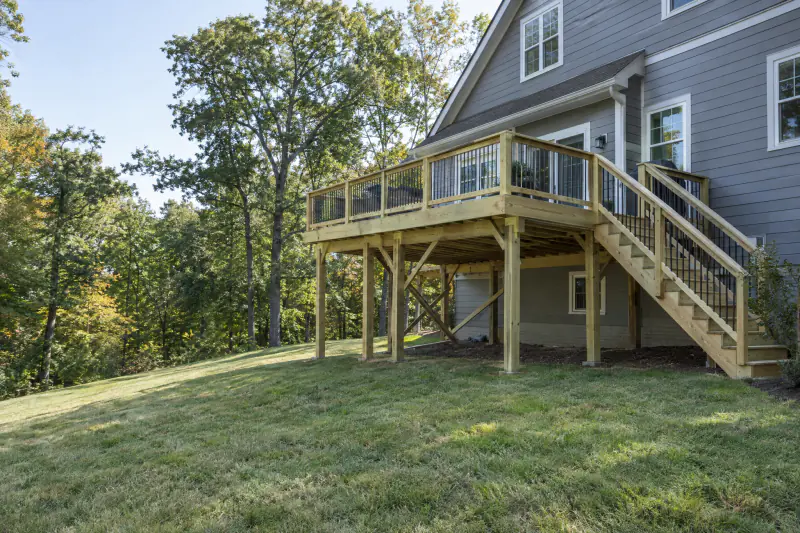
A composite or PVC deck uses manufactured boards in place of wood decking, fastened to a pressure-treated frame.
Learn more
Custom Deck Building
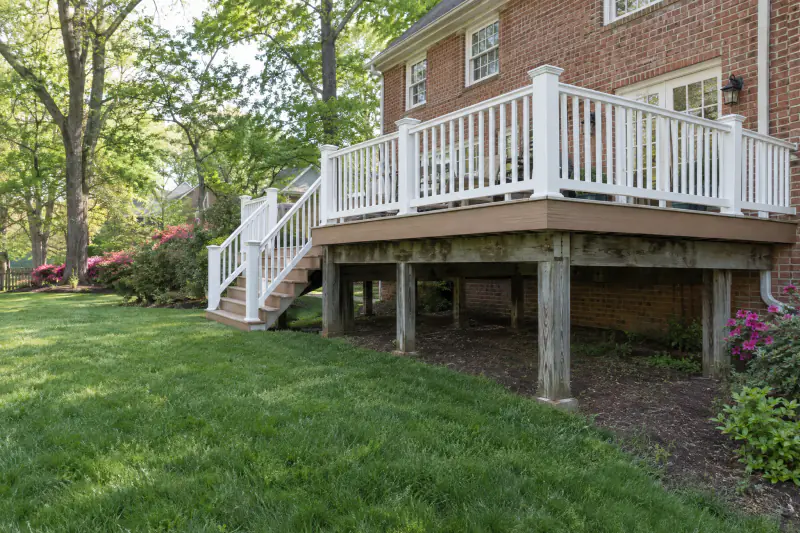
Custom deck building is the design and construction of a new pressure-treated wood or composite deck sized to your house and yard.
Learn more
Deck Repair & Resurfacing
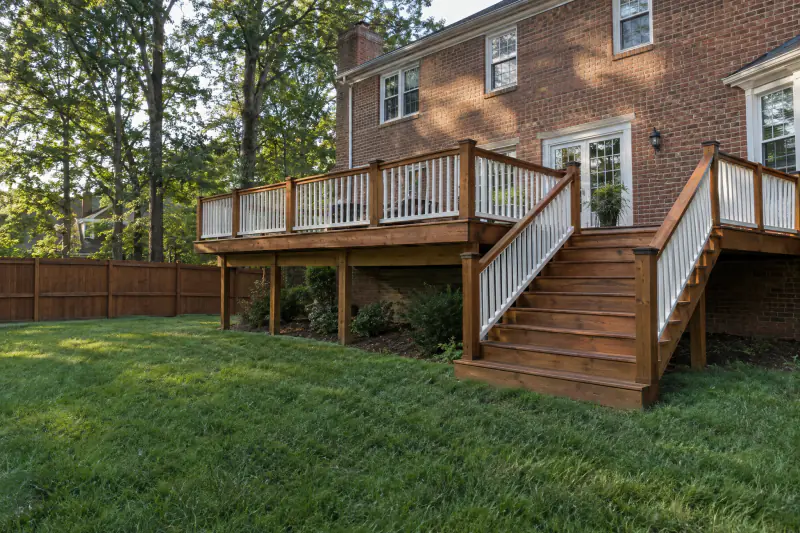
Deck repair and resurfacing fixes or renews an existing deck instead of rebuilding it.
Learn more
Deck & Fence Cleaning & Staining
Deck and fence cleaning and staining is the process of washing weathered wood with a wood cleaner at low pressure, brightening it, letting it dry, and applying a stain or sealer that sheds water and blocks sun.
Learn more
Let's talk about your yard.
Tell us what you have in mind. We will walk the property with you, explain your options plainly and put the scope and price in writing.
Page updated . Photos and video on this page are illustrative.