  • Serving the Northern Virginia area
Call (571) 200-9600 Get an Estimate
Water Management

French Drain Installation in Northern Virginia

A French drain is a gravel-filled trench with a perforated pipe, wrapped in filter fabric, that collects water moving through the soil and carries it to a safe outlet. Northern Virginia homeowners need one when clay soil keeps a lawn soggy for days after rain or pushes groundwater toward a foundation or basement wall.

  • Dries lawns that stay soggy for days
  • Fabric-wrapped stone that resists clay silt
  • Sloped pipe to a real outlet
  • Licensed & insured in Virginia
  • Based in Sterling, VA
  • Residential projects only
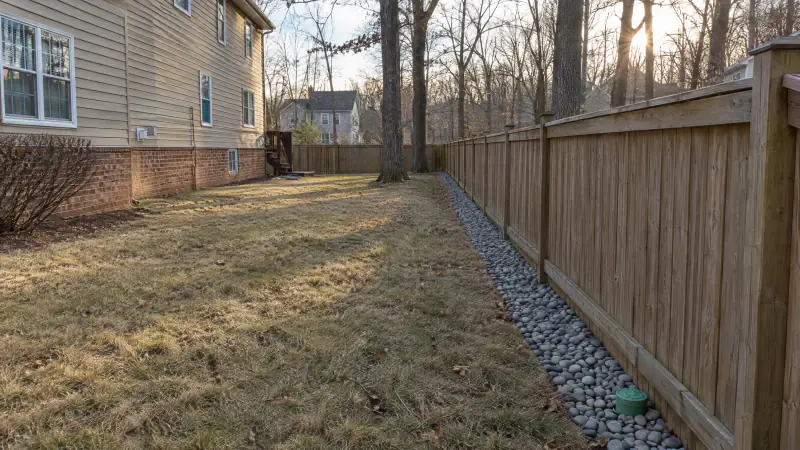
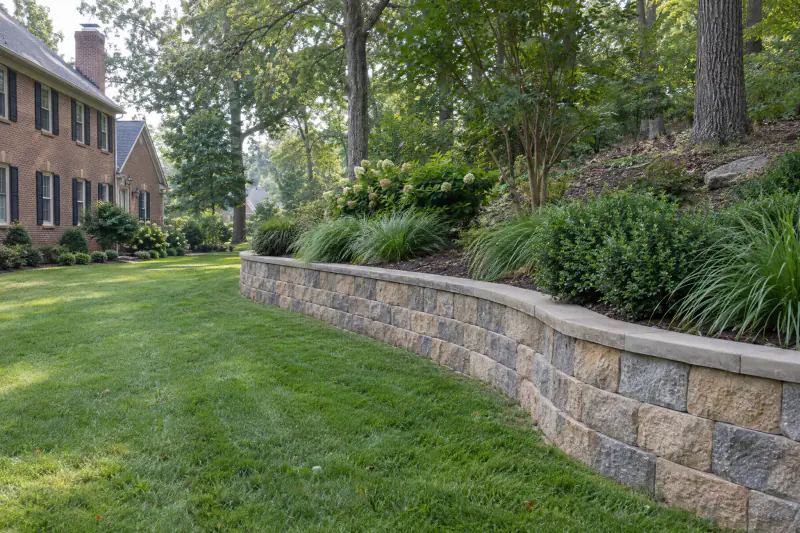
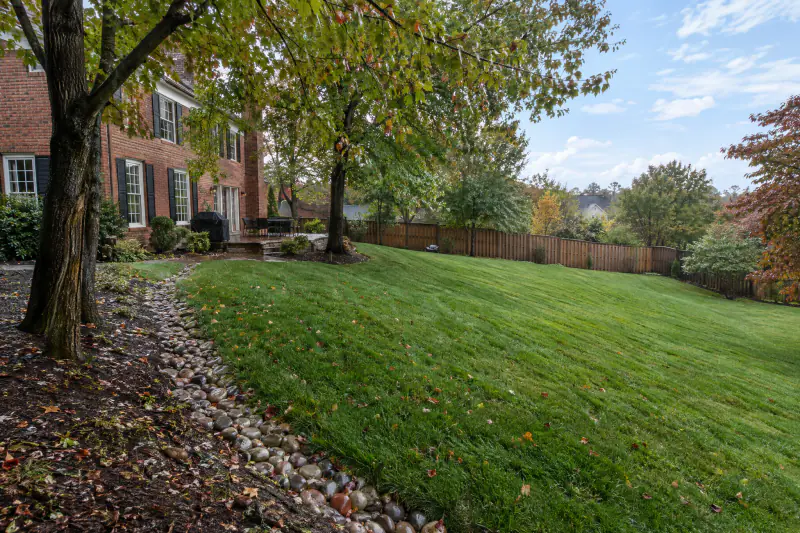
Finished French drain installation with a stone band along the low side of a backyard
A stone-topped French drain along the low edge of the lawn
Typical timeline
1-4 days for most yards
Permit
Not usually; varies by site
Minimum pipe slope
About 1% (1/8 in. per foot)
Before digging
Virginia 811 marking required

What does a French drain do, and why do so many fail in clay soil?

A French drain gives water that is trapped in the ground an easier path than your lawn or basement wall. In Northern Virginia, rain soaks through a thin layer of topsoil, hits dense clay and stops, leaving a saturated layer that stays spongy for days. A stone trench cut through that layer collects the water, and the pipe carries it away.

Failed drains share the same faults: no filter fabric, so clay fines packed the stone; flexible pipe laid with dips that hold sediment; no measured slope; or no outlet at all, only a trench that ends in more clay. Proper work means non-woven geotextile around washed angular stone, pipe on a steady fall of at least 1%, cleanouts and a tested discharge point.

A French drain handles groundwater. Runoff crossing the surface is better solved with grading and catch basins, and roof water belongs in separate solid downspout lines.

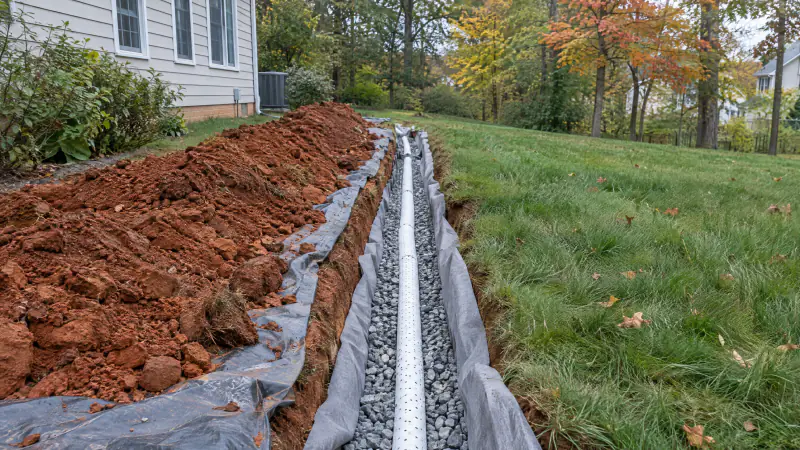
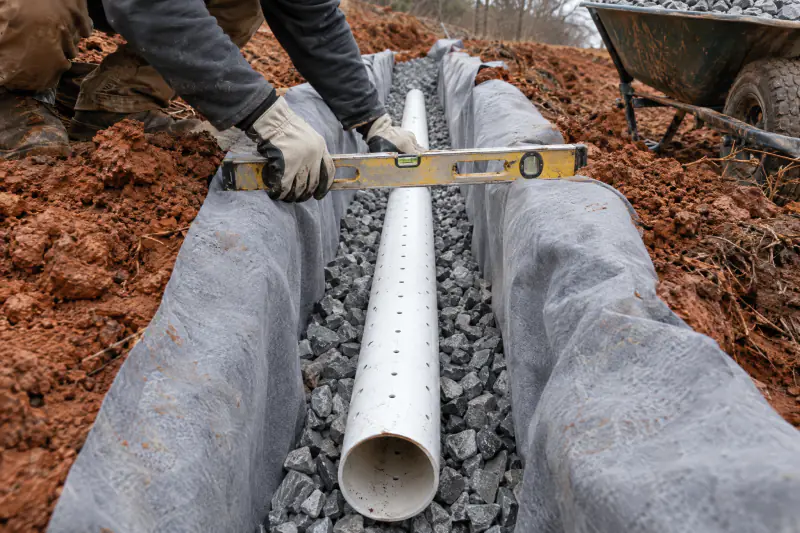
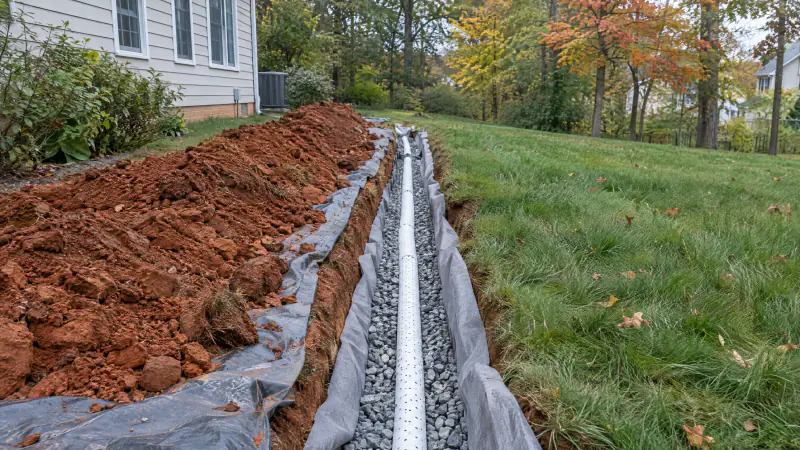
French drain installation trench with filter fabric, washed stone and perforated PVC pipe
Fabric, washed stone and rigid pipe checked for slope

Which types of French drain do we install?

The trench is similar each time; where it sits and where it empties changes with the problem.

  • Yard French drain

    A trench through the wettest part of a lawn, typically 18 to 24 inches deep, that lowers the water held above the clay so turf firms up.

  • Curtain drain

    Also called an interceptor drain. It runs across a slope above the wet area and catches water seeping downhill from higher ground before it reaches your lawn or house.

  • Foundation-side drain

    Set a few feet out from the wall so excavation never undermines the footing, it relieves saturated soil beside a basement or crawl space wall.

  • Wall and patio drains

    Perforated pipe in stone behind a retaining wall or along a patio edge relieves water pressure that would otherwise push on the structure or pond at its base.

  • The outlet

    Every drain needs somewhere to empty: daylight on a lower slope, a pop-up emitter, a catch basin, or a sump basin with a pump when the yard has no natural fall.

How is a French drain installed?

The design decisions made before digging determine whether the drain works.

  1. Site visit and levels

    We ask where water sits and for how long, probe the soil, and shoot elevations with a laser level to confirm enough fall to an outlet.

  2. Design and estimate

    You receive a sketch showing the trench route, depth, pipe type, cleanouts and discharge point, with a written price that includes spoil removal and lawn restoration.

  3. Utility marking and layout

    Virginia 811 marks public utilities before any digging. We paint the route, locate private lines such as irrigation and lighting with you, and adjust around tree roots.

  4. Trench, fabric, stone, pipe

    The trench is cut to grade and lined with non-woven fabric. Pipe goes on a stone bed with slope checked along the run, then stone covers it and the fabric is folded over.

  5. Restoration and water test

    Excess clay is hauled off, the trench is finished with topsoil and sod or seed, or left as exposed stone. We run water through and show you the outlet working.

Checking pipe slope in a French drain trench

A short clip looking down a fabric-lined French drain trench as a level is held on rigid perforated pipe set on washed stone, showing the layers before backfill.

Rigid PVC or corrugated pipe: which is better for a French drain?

Both pipes carry water on day one; the difference shows up years later.

Rigid perforated PVCCorrugated perforated pipe
Holding slopeStays straight between fittingsCan sag and form low spots
SedimentSmooth wall sheds siltRidges trap fines
CleaningCan be snaked or jettedEasily damaged by cleaning tools
Cost and speedMore material and laborCheaper, faster to lay

We default to rigid smooth-wall pipe.

How much does a French drain cost in Northern Virginia?

As of 2026, typical Northern Virginia market ranges for a yard French drain with fabric, washed stone and pipe run roughly $30 to $90 per linear foot, and many residential projects total between $2,500 and $10,000. These are planning figures, not a quote.

The factors that move the number:

  • Length and depth of the trench, and how far the outlet is.
  • Access: a mini excavator through a wide gate costs far less than hand digging behind a fence.
  • Spoil removal, since excavated clay is hauled away, not put back.
  • Outlet type, especially if a sump basin and pump are needed.
  • Obstacles and restoration: roots, utilities, hardscape crossings, sod versus seed.

For a figure based on your yard's levels, request an on-site estimate.

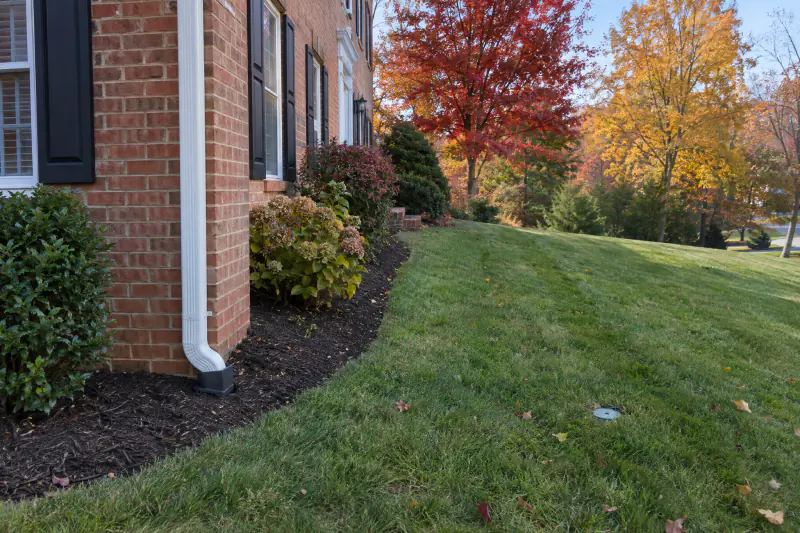
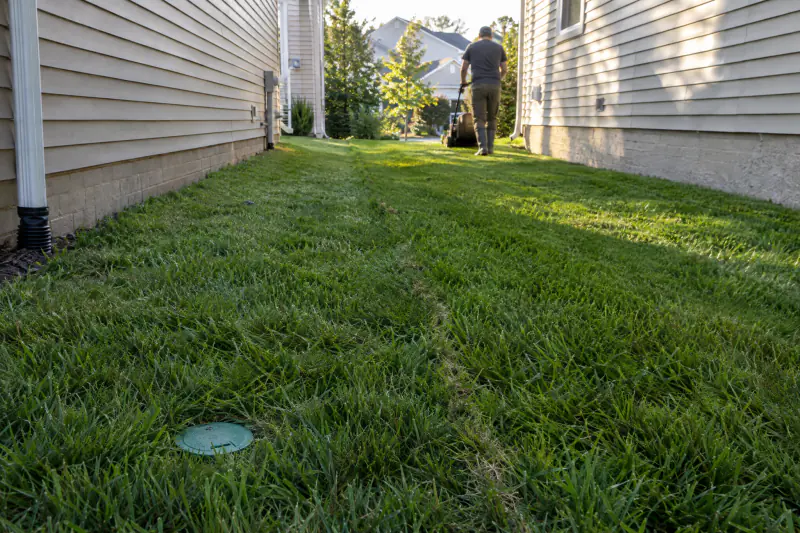
Restored side yard lawn with a flush cleanout cap after French drain installation
Lawn restored over the drain, with a flush cleanout

What are the signs you need a French drain?

These symptoms point to water held in the soil.

  • The lawn is still squishy two or more days after rain stops.
  • Mower wheels leave ruts in the same area every spring.
  • Water seeps in where the basement wall meets the floor after long rains.
  • The sump pump runs often during wet weeks, even without a storm.
  • A slope or a higher neighboring yard weeps water onto your lawn.
  • Moss and thin grass persist in a spot that gets decent sun.

Not sure what you need?

Tell us what you are seeing. We will look at the site, explain the options in plain terms and give you a written estimate.

French drain rules and soil conditions in Fairfax, Loudoun, Prince William and Arlington

Clay is the common thread across the region, and it changes how a drain must be built. Because the surrounding soil will not absorb much, a French drain here is a collection and transport system, not a place for water to soak away, so the outlet matters as much as the trench. Parts of eastern Fairfax County and Alexandria also have shrink-swell marine clay, which calls for extra caution near foundations.

A yard French drain does not usually need a building permit, but check with your county: larger land-disturbing projects can require a grading permit, and work near streams may fall inside a protected buffer. Recorded drainage easements must stay unobstructed, discharge should never be aimed at a neighbor's property, and connecting to a curb or public storm drain typically needs approval.

We install French drains from Leesburg and Ashburn to Centreville, Burke and Woodbridge.

Frequently asked questions about french drain installation

Do French drains work in clay soil?

Yes, when they are built to move water instead of soaking it away. Clay will not absorb what the trench collects, so the pipe must slope continuously to an outlet. Filter fabric and washed stone are essential, because clay fines clog unprotected drains.

How deep should a French drain be?

Most yard drains in Northern Virginia are about 18 to 24 inches deep, enough to cut through topsoil into the clay that is holding the water. Depth is also limited by the outlet, because the pipe has to fall the entire way.

Where does the water from a French drain go?

To the lowest legal point on your property: daylight on a slope, a pop-up emitter in the lawn, a catch basin, or a sump basin with a pump on flat lots. It should not discharge onto a neighbor's yard or into the sanitary sewer.

How long does a French drain last?

A drain wrapped in non-woven fabric with washed stone and smooth-wall pipe can work for decades, and cleanouts allow it to be flushed. Drains built without fabric, or with unwashed gravel, can silt up within a few years in clay.

Can downspouts be connected to a French drain?

They should not be. A downspout delivers a large burst of roof water, and sending it into perforated pipe pushes that water back out into the soil you are trying to dry. Roof runoff should travel in its own solid pipe to a separate outlet.

Should I get a French drain or regrade the yard?

It depends on where the water is. If rain visibly flows or ponds on the surface, regrading or a catch basin is usually simpler and cheaper. If the ground stays saturated long after puddles are gone, a French drain fits. Many yards need both.

From the field notes

Long-form guides on french drain installation from the crew that does the work, with Northern Virginia costs, timing and permit detail.

All guides in this category  ·  Planning guides  ·  Glossary  ·  FAQ

Ready to talk about your french drain installation project?

Tell us about your property and what you want to fix or build. We will visit, measure and send a clear written estimate. We serve Fairfax, Loudoun, Prince William and Arlington counties.

Serving Fairfax, Loudoun, Prince William and Arlington counties and the cities inside them. Check your address. Military, veterans, first responders, healthcare workers and teachers: ask about the Heroes Discount.