Key takeaways
- As of 2026, typical Northern Virginia market ranges run about $30 to $70 per linear foot for a yard french drain and $35 to $80 for a curtain drain across a slope, installed.
- Foundation-side exterior drains dug to the footing with waterproofing are a different job, commonly $100 to $250 or more per foot, and most wet basements are fixed without one.
- Depth, stone volume, pipe type, outlet distance, utility conflicts, access and lawn restoration move the number more than the pipe itself. The outlet is the line item most often missing.
- A 40 foot side yard drain often totals $1,500 to $3,500, a backyard curtain drain with downspout tie-ins $5,500 to $12,000, and a foundation-side drain $12,000 or more.
- A low quote usually leaves out fabric, washed stone, a real outlet, cleanouts, haul-off or sod. Ask for each in writing before you compare numbers.
On this page
- How much does a french drain cost in Northern Virginia in 2026?
- What are the 2026 planning ranges per linear foot by drain type?
- What does a properly built french drain include on Northern Virginia clay?
- What moves the price of a french drain up or down?
- Worked examples: what three typical Northern Virginia lot situations cost
- How do those three examples break down line by line?
- What does a low french drain quote usually leave out?
- What does a DIY french drain cost compared with hiring a contractor?
- Do you need a permit for a french drain in Northern Virginia?
- When is a french drain the wrong purchase, and what should you buy instead?
- How do you compare french drain bids line by line?
- How do french drain costs differ across Fairfax, Loudoun, Prince William and Arlington?
- How do you turn a planning range into a real french drain cost?
- Frequently asked questions
How much does a french drain cost in Northern Virginia in 2026?
As of 2026, a professionally installed yard french drain in Northern Virginia typically costs about $30 to $70 per linear foot, a curtain drain cut across a slope roughly $35 to $80 per foot, and an exterior foundation-side drain excavated to the footing with waterproofing about $100 to $250 or more per foot. Those are typical market planning ranges for Fairfax, Loudoun, Prince William and Arlington, not myYardPros prices or quotes.
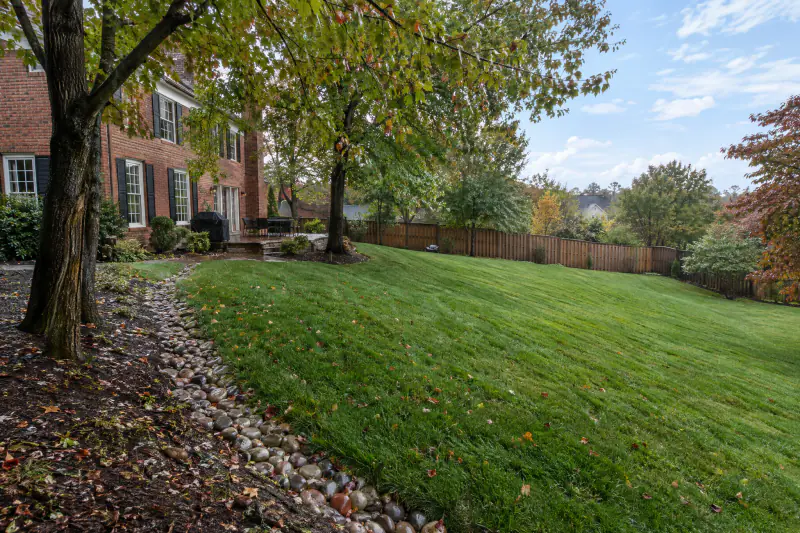
The spread is wide because two drains of the same length can be very different holes in the ground. One is 18 inches deep in open lawn with a gate wide enough for a mini excavator and a curb 20 feet away to drain to. The other is 30 inches deep in clay between townhomes, with 90 feet of solid pipe needed to reach daylight. Below we break the ranges down by drain type, show what moves the number, work three typical lot situations, and list what a low quote usually leaves out. Our french drain installation page explains how we build them.
What are the 2026 planning ranges per linear foot by drain type?
Typical Northern Virginia market ranges as of 2026, installed, on a lot with reasonable access. Not myYardPros prices.
| Drain type | Typical installed range per linear foot | What is usually in the trench | What pushes it to the top |
|---|---|---|---|
| Yard french drain, lawn or bed | $30 to $70 | Trench about 12 in. wide and 18 to 24 in. deep, non-woven fabric, 4 in. perforated pipe, washed stone, outlet to daylight or pop-up emitter | Hand digging, depth over 24 in., long outlet run, sod replacement |
| Curtain or interceptor drain across a slope | $35 to $80 | Same trench, cut deeper on the uphill side of the wet area, often 24 to 36 in., with a solid pipe leg to the outlet | Roots, rock, steep access, a second parallel run |
| Patio or wall drain, added during construction | $20 to $50 | Perforated pipe in the drainage stone behind a wall or along a patio edge, tied to the hardscape outlet | Retrofit after the patio is built, cutting through pavers |
| Downspout and sump tie-in, solid pipe | $15 to $35 | Trench 12 to 18 in. deep, 4 in. solid pipe, downspout adapters, cleanout, pop-up or daylight outlet | Many downspouts, crossing a driveway, long run to the street |
| Foundation-side exterior drain to the footing | $100 to $250 or more | Excavation 6 to 9 ft to the footing, membrane and dimple board on the wall, pipe and stone at the footing, backfill and regrading | Depth, decks and patios in the way, pumping, landscape restoration |
Short runs cost more per foot because mobilization, the outlet and restoration are fixed costs spread over fewer feet.
What does a properly built french drain include on Northern Virginia clay?
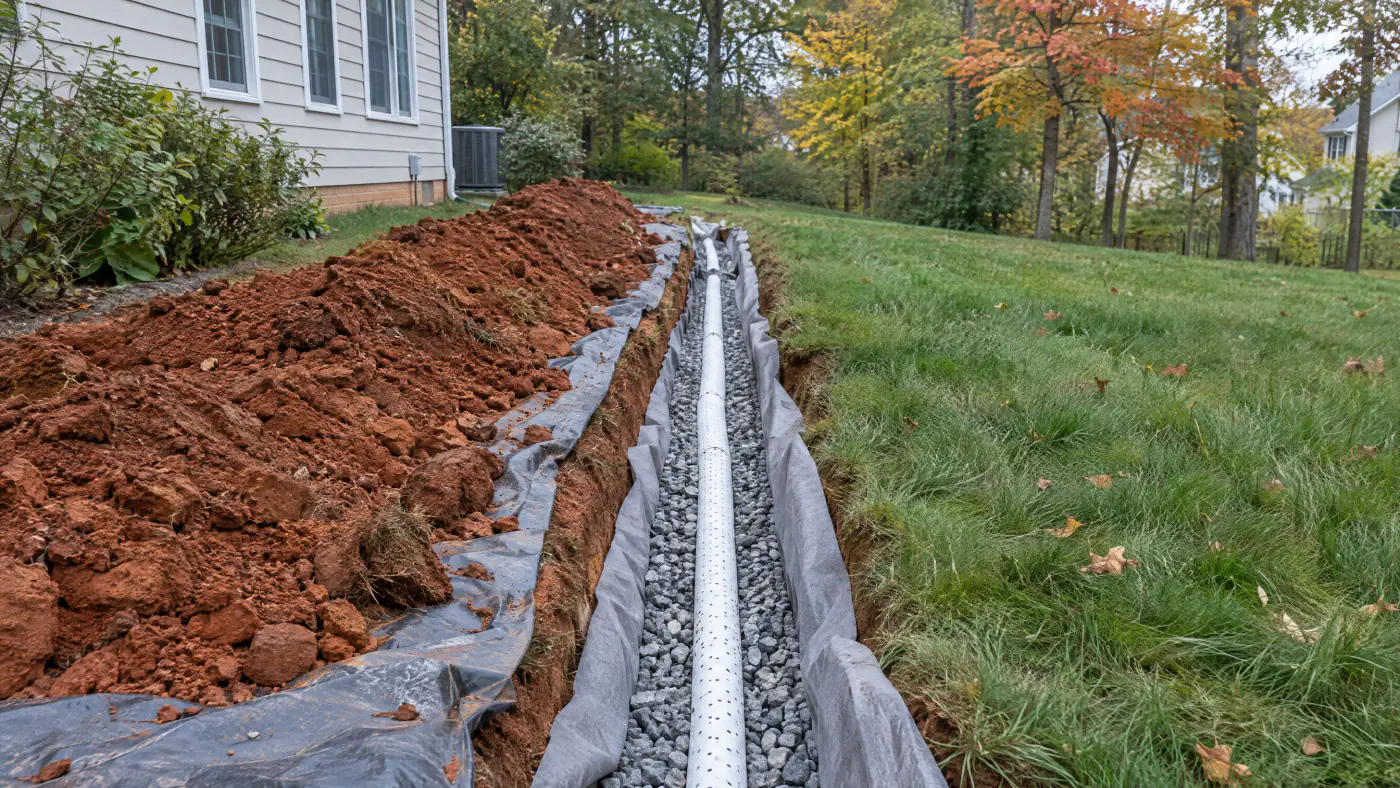
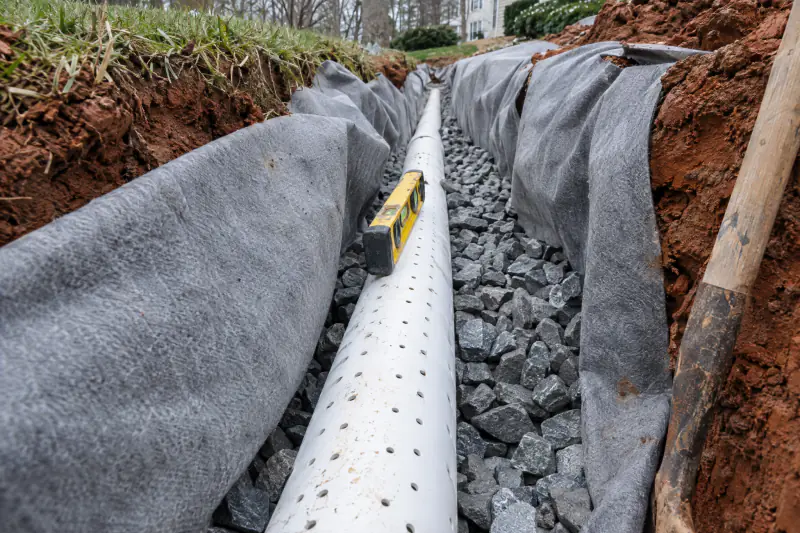
A french drain that lasts on clay has six parts, and the price has to cover all six. First, a trench cut to a consistent fall, typically at least 1 percent, which is about 1 inch of drop for every 8 feet, running the whole way to the outlet. Second, a non-woven geotextile lining the trench so clay fines cannot migrate into the stone; Virginia Cooperative Extension notes that in some fine sandy and silty soils gravel filters or synthetic drainage envelopes are often required to prevent drain clogging, and on clay the same fabric keeps fines out of the stone. Third, a bed of clean, washed, angular stone below the pipe. Fourth, the pipe itself: 4 inch perforated pipe, either rigid PVC with holes down or dual-wall corrugated pipe, laid on the stone and pitched with a level. Fifth, more washed stone over and around the pipe to within a few inches of grade, with the fabric folded over the top. Sixth, an outlet lower than the trench: daylight on a slope, a pop-up emitter near the curb, or a storm structure where the county allows it.
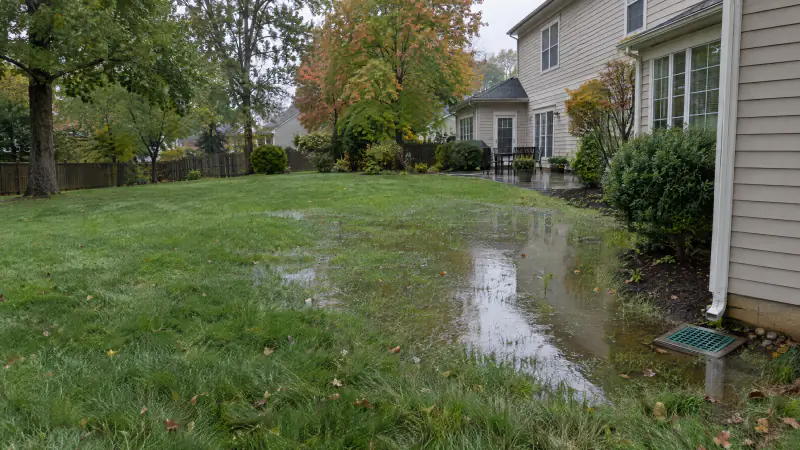
With Washington Dulles averaging 43.24 inches of precipitation a year in NOAA's 1991 to 2020 climate normals, and clay that stays saturated for days after each storm, as the wet backyard article explains, the stone volume and the outlet matter more than anything else.
What moves the price of a french drain up or down?
Seven things explain most of the gap between bids on the same yard. Depth is first, because every extra 6 inches across a 60 foot run is about a cubic yard of clay out and a cubic yard of stone in. Stone volume is second and follows depth and width. Pipe type is third: rigid PVC costs more than corrugated and is easier to pitch accurately and to flush. Outlet distance is fourth and the most underestimated. A drain that can daylight 15 feet away is cheap; one that needs 80 feet of solid pipe to reach the street doubles the trenching. Utility conflicts are fifth. Virginia 811 marks public lines, and the gas and cable services that cross a side yard often force hand digging for part of the run; private lines such as irrigation and landscape lighting are not marked and must be located separately.
Restoration is sixth. Laying sod over 60 feet of trench costs real money, and in a bed, mulch and replanting do too. Access is seventh: a 36 inch gate between townhomes in Herndon or Centreville means hand tools and wheelbarrows instead of a mini excavator.
Worked examples: what three typical Northern Virginia lot situations cost
Typical Northern Virginia market planning ranges as of 2026, rounded and wide. Not a quote.
| Situation | What gets built | Typical 2026 planning range | Biggest variable |
|---|---|---|---|
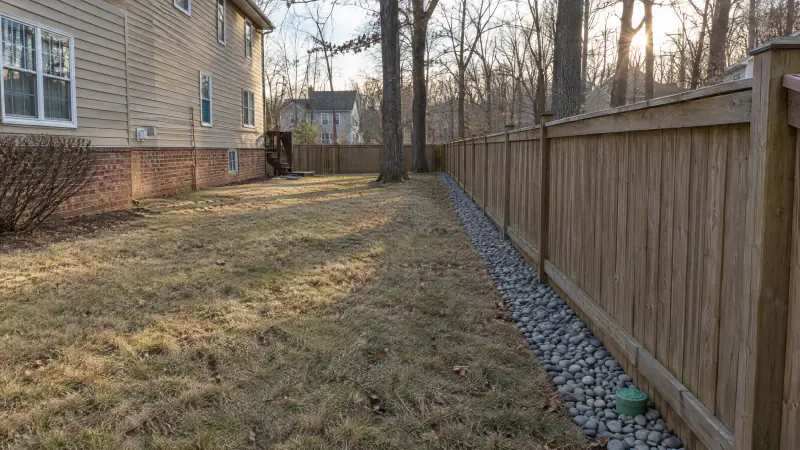
| Soggy side yard between townhomes, Ashburn or Centreville | 40 ft yard french drain 18 to 24 in. deep, hand dug through a 36 in. gate, pop-up emitter at the front lawn, sod over the trench | $1,500 to $3,500 | Hand digging and whether a gas service crosses the run |
| Backyard that stays wet for days, Chantilly or Gainesville | 80 ft curtain drain across the slope above the wet zone, two downspouts tied into 60 ft of solid pipe, shared daylight outlet | $5,500 to $12,000 | Outlet distance and depth needed to get below the wet layer |
| Water in the basement, older colonial in Vienna or Springfield | 60 ft foundation-side drain excavated to the footing, membrane, pipe and stone, backfill, regrading, deck stairs reset | $12,000 to $30,000 or more | Excavation depth and what must be removed and rebuilt along the wall |
| Add-on: drain behind a new patio or wall | 30 ft of perforated pipe in the drainage stone during the hardscape build, tied to the patio outlet | $600 to $1,500 | Whether an outlet already exists for the hardscape |
The first two situations are solved from the yard side. The third is only worth it after cheaper exterior fixes have been ruled out.
How do those three examples break down line by line?
The side yard drain is mostly labor. Forty feet of trench by hand is a long day for two people, the stone is about 4 tons, and the emitter and sod finish it. The backyard curtain drain is a different shape. Eighty feet of perforated pipe cut 30 inches deep on the uphill side intercepts water moving down the slope before it reaches the low spot, and the two downspouts get their own solid pipe so roof water never enters the perforated line. The daylight outlet is shared, which is the main saving.
The foundation-side drain is a construction project, not a drainage install. Excavating to a footing 7 or 8 feet down along 60 feet of wall means shoring or benching the clay, removing anything attached to the house in that run, waterproofing the wall, placing the pipe and stone, backfilling in lifts and regrading so surface water runs away. Most wet basements in Northern Virginia are caused by downspouts, grading and surface water, so we price the exterior fixes first and reserve the footing drain for houses where water still enters after those are done.
What does a low french drain quote usually leave out?
A low quote usually leaves things out rather than lying about what is in. The most common gap is the outlet. A quote that says drain to the property line is a quote for a trench full of water. The second gap is stone. Crusher run or stone dust packs tight and holds water; washed, open-graded stone is what drains, and it costs more. The third is fabric; without it, clay silts the stone within a few seasons. Then come the smaller omissions:
- Depth. A drain pitched from 12 inches at the start can be 6 inches deep at the outlet. Ask for start and end depths.
- Pipe. Thin corrugated pipe with a sock, laid flat, is the cheapest option and the one that fails first on clay.
- Haul-off. Some bids spread the clay on your lawn or leave it in a pile.
- Restoration. Sod, mulch and replanting are often excluded or listed as owner responsibility.
- Downspout separation. Roof water piped into a perforated drain floods it; it belongs in its own solid line, as the downspout drainage page explains.
Ask every bidder to state each of these in writing.
What does a DIY french drain cost compared with hiring a contractor?
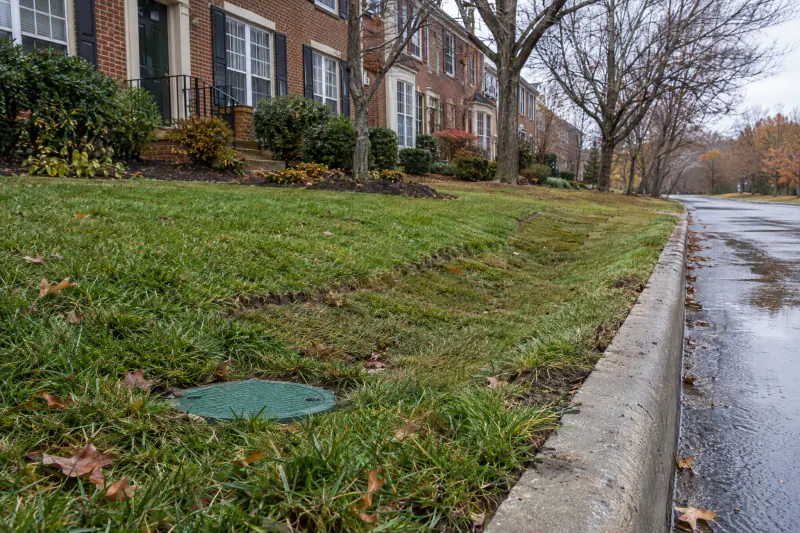
Materials for a 50 foot yard drain typically run $600 to $1,500 as of 2026: about $150 to $300 for 4 inch rigid perforated pipe and fittings, $250 to $500 for 5 tons of washed stone delivered, $50 to $100 for non-woven fabric, $30 to $60 for a pop-up emitter and cleanout, and $150 to $350 to rent a walk-behind trencher or a mini excavator for a day. The same drain from a contractor commonly lands between $1,500 and $3,500, and the saving is almost entirely labor.
Weigh that against three things. Virginia 811 asks for notice at least three working days before any digging and marks only public utility lines, so private irrigation and lighting lines are on you. Pitch is unforgiving; a trench that rises half an inch over 10 feet becomes a long puddle underground. And the outlet has to exist. If the only low point is a neighbor's yard, the storm sewer or a dry well on clay that will not percolate, the problem is design, not digging, and the dry well versus french drain versus catch basin guide is the place to start.
Do you need a permit for a french drain in Northern Virginia?
A yard french drain by itself generally does not need a building permit in Northern Virginia; the state building code regulates structures, and none of the county permit pages we checked list a yard drain. Three other rules can apply, though. The first is land disturbance. Fairfax County requires an approved site-related plan for projects that equal or exceed 2,500 square feet of disturbance, and counts a 10 foot work zone around the project plus a 10 foot access path toward the total; it exempts individual home landscaping, as interpreted by staff. Arlington County sets the same 2,500 square foot threshold and adds a survey certification for projects between 2,000 and 2,499 square feet. Prince William uses 2,500 square feet including incidental access areas, and Loudoun's grading permit starts at 5,000 square feet. A single drain rarely gets there; a drain plus regrading plus a new patio can.
The second is the Resource Protection Area. Within about 100 feet of a stream or wetland, counties require approval before any land disturbance, and an outlet that discharges into the buffer gets reviewed. The third is where the water goes. Discharging onto a neighbor's lot invites a dispute, and connecting to a public storm structure needs the county's or VDOT's permission. The patio and retaining wall permit guide covers the disturbance math in detail.
When is a french drain the wrong purchase, and what should you buy instead?
A french drain is the wrong purchase when the water is arriving on the surface, not through the soil. If a downspout dumps 500 square feet of roof onto the lawn, the fix is a buried solid line to daylight at $15 to $35 per foot, not a perforated drain that will simply fill with roof water. If a low spot ponds after every storm because the grade tips toward it, regrading or a catch basin with a solid pipe out is cheaper; our guide to french drains versus catch basins walks through that choice.
A french drain is the right purchase when soil stays saturated between storms, when water seeps from a slope into a flat area, when a lawn squishes for days, or when water reaches a wall or patio base through the ground. Many yards need both: a solid line for roof water and a perforated line for groundwater, sharing one outlet. Pricing them together is usually cheaper than two separate visits, and the yard drainage page shows the combinations we build most.
How do you compare french drain bids line by line?
Six checks that turn three different numbers into one honest comparison.
Match the length and the route
Confirm every bid uses the same run, drawn on your plat, with the same start point and the same outlet. A bid that stops 20 feet short of daylight is not cheaper.
Find the depths
Look for a start depth and an end depth in inches, and a stated slope of at least 1 percent to the outlet.
Find the stone and the fabric
The bid should name washed, open-graded stone and a non-woven geotextile liner. Crusher run or a sock-only pipe are reasons to ask questions.
Find the pipe
Four inch rigid perforated PVC or dual-wall pipe, with cleanouts at the head and at bends. Roof water belongs in a separate solid line.
Find the outlet
Daylight, pop-up emitter or an approved structure, with its location marked and confirmed lower than the trench bottom.
Find haul-off, utilities and restoration
Clay disposal, Virginia 811 notice, private line locating, and whether sod or seed is included. These are the lines a low bid most often drops.
How do french drain costs differ across Fairfax, Loudoun, Prince William and Arlington?
The per-foot ranges hold across our service area, but the conditions that push a job toward the top cluster by neighborhood. In the newer subdivisions of Ashburn, South Riding, Bristow and Gainesville, lots were mass graded and the topsoil stripped, so drains sit in dense compacted clay and often need to be deeper and wider to intercept water. In older neighborhoods in Arlington, Falls Church, Vienna, McLean and Annandale, the soil is often better but the drain has to thread between mature oak roots, old utility lines and narrow side yards, so more of the run is hand dug. In Alexandria and the eastern part of Fairfax County around Lorton and Springfield, marine clay holds water for weeks and daylight outlets are scarce on flat lots, which pushes systems toward longer solid pipe runs to the street.
Across all four counties, the fall and winter months are the best time to price and build a drain: the ground shows where water sits and crews are less booked than in spring. The french drain installation guide covers the build itself.
How do you turn a planning range into a real french drain cost?
You turn a range into a number by having someone walk the yard after rain. A drainage site visit usually takes less than an hour. We watch where water sits, probe the soil to see how deep the saturated layer runs, find the lowest point on the lot and the nearest legal outlet, check every downspout and the sump discharge, measure gate widths and the route a machine would take, and look for marked and unmarked utilities. From that we write a scope that states the route on your plat, the start and end depths, the slope, the stone type and volume, the fabric, the pipe, the cleanouts, the outlet, the haul-off and the restoration. That written scope is the figure we stand behind and the only one worth comparing against other bids.
Bring a rough budget, photos of the yard during a storm, and your plat if you have it. The cost guide gathers planning ranges across our services, and the how it works page shows what happens between the visit and the finished trench. Request an on-site estimate and we will put a real number on your yard.
Frequently asked questions
Is $50 per foot a fair price for a french drain in Northern Virginia?
For a yard french drain 18 to 24 inches deep with fabric, washed stone, rigid perforated pipe and a real outlet, $50 per linear foot sits inside the typical 2026 market range of about $30 to $70. It is high for a shallow corrugated pipe with a sock and low for a hand-dug drain 30 inches deep between townhomes. Judge the number against the written scope, not the other way around.
Why do short french drains cost more per foot than long ones?
Because mobilization, the outlet, cleanouts and restoration are fixed costs no matter the length. A 25 foot drain still needs a crew, equipment, an emitter and sod, so those costs are spread over fewer feet.
How much does an exterior foundation drain cost compared with an interior system?
Exterior foundation-side drains dug to the footing with waterproofing commonly run $100 to $250 or more per foot in Northern Virginia as of 2026, so a 60 foot wall is $12,000 to $30,000 or more. Interior perimeter systems with a sump are a different trade and often cost less, but they manage water after it reaches the wall rather than keeping it out. Most wet basements are solved first with downspouts, grading and surface drainage.
Does a french drain need a permit in Fairfax or Loudoun County?
Generally not a building permit. Fairfax requires an approved site-related plan at 2,500 square feet of disturbance, counted with a 10 foot work zone and access path, and exempts individual home landscaping subject to staff interpretation. Loudoun's grading permit starts at 5,000 square feet. Work inside a Resource Protection Area needs county approval in both, and connecting to a public storm structure needs permission.
Can a french drain and downspout lines share one trench and one outlet?
They can share an outlet, and often should, but the pipes stay separate. Roof water belongs in a solid pipe so it never floods the perforated drain, while groundwater enters the perforated line through the stone. Running both lines side by side to one daylight point or pop-up emitter saves trenching, and pricing them together is usually cheaper than two separate projects.
What is the cheapest way to fix a wet yard if a full french drain is too expensive?
Start with the water you can see. Extend downspouts and the sump discharge in buried solid pipe at $15 to $35 per foot, regrade the low spot so it sheds toward an outlet, or set a catch basin with a solid pipe out. Those fixes solve many wet yards on their own. If the ground still stays saturated between storms, a short french drain placed exactly where water collects is the next step.
Book the work
Put the plan in writing with a crew that builds this every week.
One visit to measure and talk through options, then a written scope and price. No pressure, no vague numbers. Ask about the Heroes Discount if you serve.
Sources and further reading
- Virginia 811: Homeowners, when and how to request utility marking before digging
- Fairfax County Land Development Services: Land Disturbance 101
- Arlington County: Land Disturbing Activity / Stormwater Permit Overview
- Prince William County: Residential Pool, Spa and Hot Tub Plan Review Requirements (land disturbance permit threshold)
- Virginia Cooperative Extension, Publication BSE-208: Factors When Considering an Agricultural Drainage System
- NOAA NCEI, U.S. Climate Normals 1991-2020, Washington Dulles International Airport (station USW00093738)
Published October 15, 2026. Reviewed and updated October 22, 2026.