Key takeaways
- The Virginia Uniform Statewide Building Code exempts retaining walls supporting less than 3 feet of unbalanced fill, unless the wall carries a surcharge. Counties apply that rule and add their own tiers.
- Fairfax County lists on-grade paver and concrete patios as exempt from a building permit, but zoning, lot coverage, land disturbance and RPA rules still apply. Prince William requires zoning approval for every patio.
- Land disturbance at the 2,500 square foot mark triggers a permit and plan in Fairfax, Arlington and Prince William. Loudoun's grading permit threshold is 5,000 square feet, lower in sensitive areas.
- Engineering arrives early: Loudoun asks for a sealed plan at 4 feet, Alexandria above 3 feet, Prince William at 24 inches when there is a surcharge or problem soil.
- Within 100 feet of a stream or wetland, a patio or wall sits in a Resource Protection Area, and county approval is needed before any land disturbance, even a small one.
On this page
- Do you need a permit for a patio or retaining wall in Northern Virginia?
- Do you need a permit for a paver patio in Virginia?
- What counts as a surcharge, and why does it erase the height exemption?
- How do the counties and cities compare on patio and retaining wall permits?
- What does Fairfax County require for a patio or retaining wall?
- What does Loudoun County require for retaining walls and grading?
- What does Prince William County require for a patio or retaining wall?
- What do Arlington County and the City of Alexandria require?
- When does a patio or regrading project need a land disturbance or grading permit?
- How do Chesapeake Bay RPA rules affect a backyard patio or wall?
- How do you get a patio or retaining wall permitted, step by step?
- How much do permits, engineering and plans add to a patio or wall budget?
- How do patio and wall rules play out across Fairfax, Loudoun, Prince William, Arlington and Alexandria?
- Frequently asked questions
Do you need a permit for a patio or retaining wall in Northern Virginia?
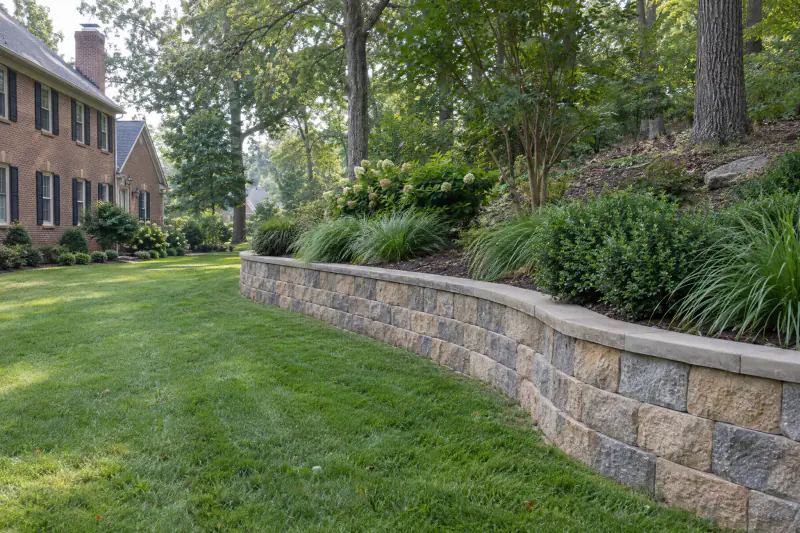
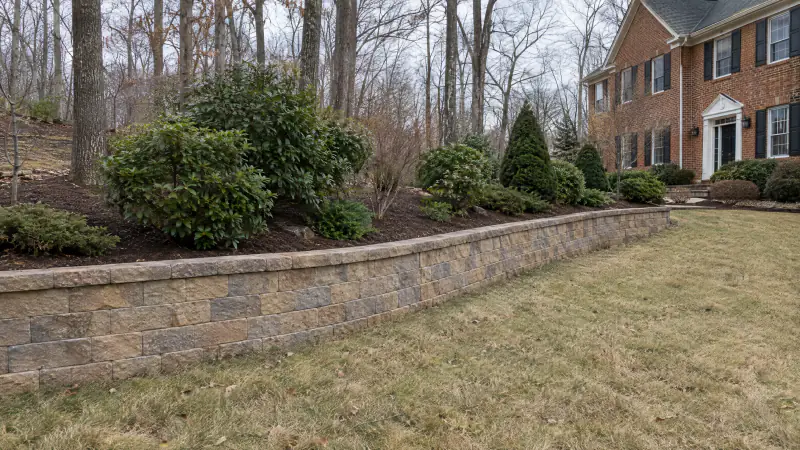
Usually not for a patio, and usually yes for a retaining wall once it holds back 3 feet of soil. Across Northern Virginia, an on-grade paver or concrete patio generally needs no building permit, but it can still need zoning approval, a land disturbance permit if the work opens up enough ground, and Chesapeake Bay review near a stream. A retaining wall follows the Virginia Uniform Statewide Building Code. Section 108.2, published as 13VAC5-63-80, exempts retaining walls supporting less than three feet of unbalanced fill, provided the wall is not supporting a surcharge other than ordinary unbalanced fill. At that height or above, or with a driveway, patio or slope pushing on it, expect a building permit, and in most jurisdictions an engineer's sealed drawing by about 4 feet.
Unbalanced fill means the difference in ground level between the front and back of the wall, not the block you can see, and a wall holding exactly 3 feet is not exempt. The code says nothing about patios or grading; those live in county ordinances, and each county layers its own tiers on top. We build paver patios and retaining walls across the region; our earlier guide to retaining wall permits and engineering covers how the wall itself should be built.
Do you need a permit for a paver patio in Virginia?
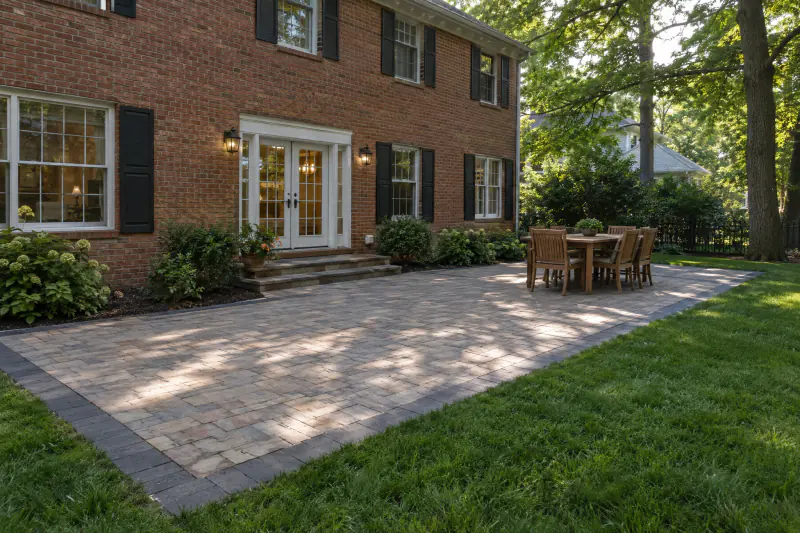
A paver patio laid on grade generally needs no building permit, because there is no structure for the building code to inspect. Fairfax County's permit page lists on-grade paver and concrete patios as exempt residential work. Prince William County exempts concrete patio slabs on grade from a building permit but notes that zoning or watershed approval will be required, and its patio page states that zoning approval is required for all patios.
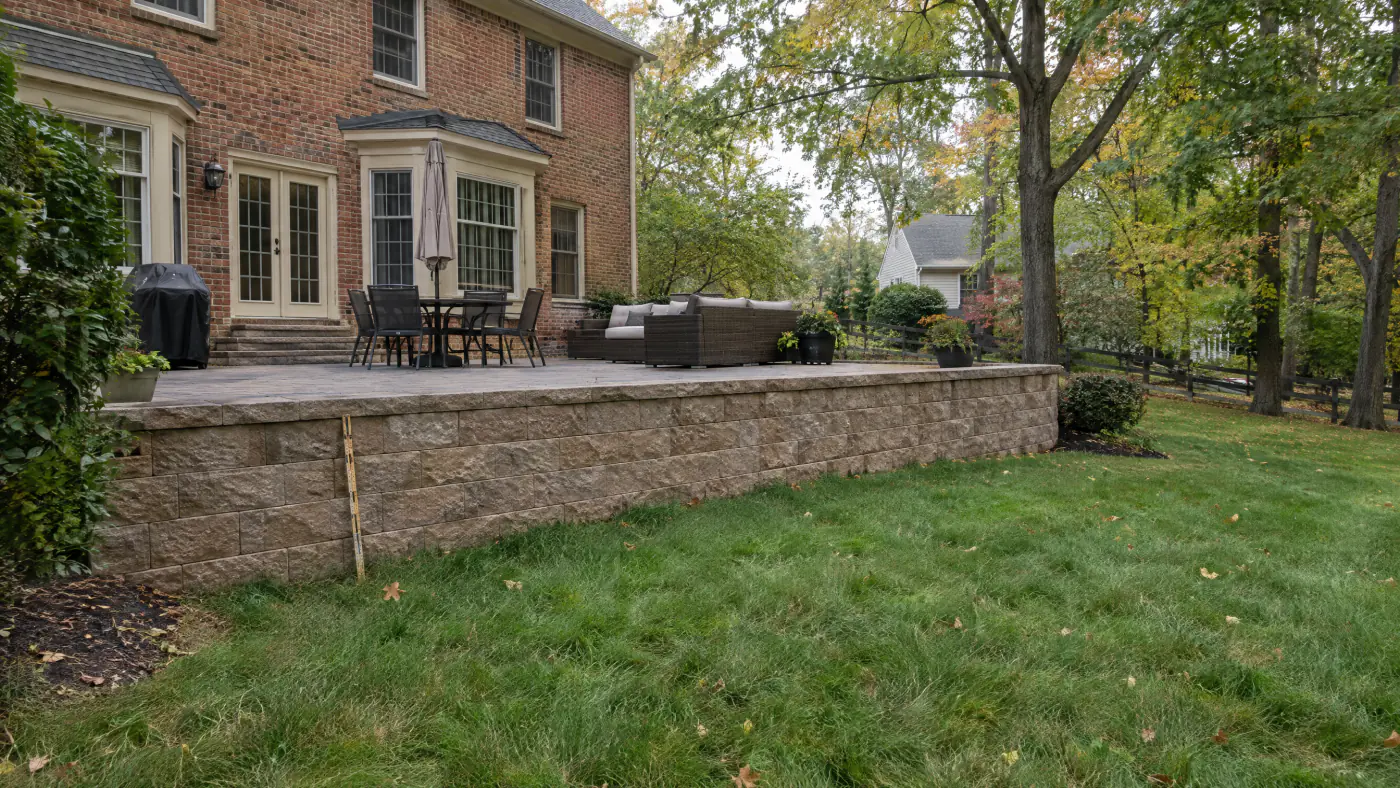
Loudoun County's residential permit page lists decks and retaining walls but not patios, so a Loudoun patio is a zoning and grading question. Everywhere, lot coverage limits, land disturbance thresholds and Resource Protection Areas can still require approval, and a raised terrace held up by a wall is judged by the wall. The deck versus patio comparison covers where that line falls.
What counts as a surcharge, and why does it erase the height exemption?
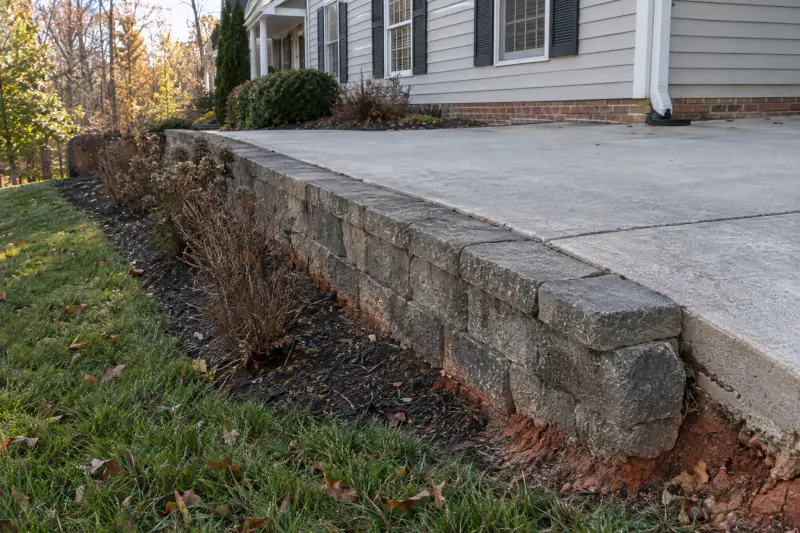
A surcharge is any load on the soil behind a wall beyond the weight of level ground. Prince William County's retaining wall checklist defines it as load transmitted to a retaining wall either from a slope steeper than 3H:1V or from parking areas, roadways, or building foundations. Fairfax County's exemption says the wall cannot have additional surcharge or weight such as supporting a driveway or patio, and cannot be tiered. Because the state code exempts only walls supporting ordinary unbalanced fill, a 2 foot wall under a driveway is a permitted structure.
The reason is physical. Soil pushes on a wall in proportion to its depth and weight. Put a car, a patio base or a steep bank on that soil and the push grows, most of all near the top where a dry-stacked wall is weakest. Saturated clay in Burke and Springfield makes it worse. Planning terraces? Read the slope and terrace guide first.
How do the counties and cities compare on patio and retaining wall permits?
What each jurisdiction's own pages state as of fall 2026. Thresholds and fees change, so confirm on the page named before you design.
| Jurisdiction | Retaining wall trigger, as published | Engineer or sealed design | Patios and land disturbance | Official page to check |
|---|---|---|---|---|
| Fairfax County | Exempt below 3 ft of earth, no surcharge, not tiered. Residential permit from more than 3 ft to less than 4 ft, level backfill, no surcharge. Over 4 ft: commercial wall permit. | Typical details allowed up to 4 ft with level backfill and no surcharge; larger or loaded walls go through the commercial permit, typically with sealed drawings. | On-grade patios exempt. Land disturbance permit and grading plan at 2,500 sq ft. RPA approval for any work in an RPA. | fairfaxcounty.gov: Does My Project Require a Permit; Land Disturbance 101 |
| Loudoun County | Per the county's June 2021 newsletter: under 2 ft, no plans or permits. 2 ft and up: zoning permit. 3 ft and up: zoning plus building permit. | 4 ft and up: site plan sealed by a Virginia PE (same 2021 newsletter). | Patios not listed; confirm with zoning. Grading permit at 5,000 sq ft, possibly less in sensitive areas. | loudoun.gov: Residential Construction Permits; Land Disturbance; Building and Development newsletter of June 25, 2021, which predates the 2023 Zoning Ordinance, so confirm the tiers |
| Prince William County | Permit above 3 ft of unbalanced fill, and at any height with a surcharge. Landscape walls under 3 ft exempt; zoning approval still required. | The 2021 checklist exempts walls of 6 ft or less with no surcharge from a sealed design, though its summary table calls for sealed analysis above 4 ft. Walls 24 in. or taller with surcharge or problem soil must be engineered. | Zoning approval for all patios; over 8 in. above grade counts as a deck. Land disturbance permit above 2,500 sq ft. | pwcva.gov: Do I Need a Permit; Retaining Wall; Patios |
| Arlington County | Any new or replacement retaining wall needs a Fence or Retaining Wall permit. Walls retaining 3 ft or more of soil at any point are inspected. | Walls over 4 ft tall must be sealed by a structural engineer. New walls in an RPA may need a CBORC exception. | LDA/SWM permit at 2,500 sq ft; survey certification from 2,000 sq ft. New patios in an RPA need RPA review. | arlingtonva.us: Fence or Retaining Wall Permit; Land Disturbing Activity permit; Chesapeake Bay RPA |
| City of Alexandria | Permit page lists walls holding 2 ft or more of soil; the 2022 checklist says more than 3 ft of earth. Ask which applies. | Stamped design between 3 and 6 ft of unbalanced fill; structural engineer plus inspections at 6 ft or more. | Patios not listed. Grading plan approval through T&ES when required. Historic districts can add BAR review. | alexandriava.gov: Permit Requirements; Retaining Wall Plan Submission Checklist |
The cities of Fairfax, Falls Church, Manassas and Manassas Park run their own permit offices, and the Towns of Vienna, Herndon, Leesburg and Purcellville add town approvals.
What does Fairfax County require for a patio or retaining wall?
Fairfax County publishes the clearest exemption list in the region. Its Does My Project Require a Permit page says retaining walls holding less than 3 feet of dirt or earth are exempt, provided they cannot have additional surcharge or weight, such as supporting a driveway or patio, and cannot be tiered. On-grade paver and concrete patios are exempt. Separate approval may be required inside a floodplain or Resource Protection Area.
Once a wall needs a permit, Fairfax splits it by height. The residential retaining wall permit, filed through the PLUS portal, covers walls retaining more than three feet of earth but less than four feet that are non-tiered, non-stacked and non-segmental with level backfill and no surcharge loading; the county's Typical Retaining Wall Details can stand in for drawn plans. Anything retaining over four feet is filed as a commercial retaining wall permit, which typically means sealed drawings and a heavier review, so ask the county what that submission needs before you commission anything.
What does Loudoun County require for retaining walls and grading?
Loudoun County uses a four-step ladder, set out in a Building and Development technical newsletter dated June 25, 2021. Retaining walls under two feet in height do not require plans or permits, though they cannot encroach on easements or required buffers and setbacks. Walls greater than or equal to two feet require a zoning permit. Walls greater than or equal to three feet require a zoning permit and a building permit. Walls greater than or equal to four feet require a zoning permit, a building permit, and a site plan sealed by a Professional Engineer licensed in Virginia, which on a residential lot under one acre can be an Individual Lot Grading Plan.
Under that newsletter, a 30 inch garden wall in Ashburn, South Riding or Aldie needs a zoning permit. The newsletter predates the county's 2023 Zoning Ordinance, and as of this writing we found no newer wall-height page on loudoun.gov, so confirm the tiers with Building and Development before you design. Loudoun's grading permit is required when land disturbance equals 5,000 square feet or more, counted with an access path and a 10 foot buffer, and the county lists grading for a patio as an example of land disturbance. Steep slope, limestone, mountainside and river and stream corridor overlays may trigger a grading permit below 5,000 square feet, most often on lots in western Loudoun toward Purcellville.
What does Prince William County require for a patio or retaining wall?
Prince William County requires zoning approval first, then a building permit if the structure needs one. The county's Do I Need a Permit page says a permit is always required for all retaining walls supporting more than three feet of unbalanced fill and for a retaining wall of any height that supports a surcharge (the page's word is surge) from a structure above, listing walls, roads, driveways and sidewalks. Retaining walls used for landscaping purposes that are less than three feet in height need no building permit, but zoning or watershed approval will be required. The county's 2021 guidelines for walls of 4 feet or less add that walls with exposed heights of 24 inches or greater with surcharge or problem soil shall be engineered.
Zoning approval is required for all patios, drawn to scale on a house location plat. Patios less than 8 inches above grade are not subject to setbacks. Patios count toward lot coverage. Land disturbance exceeding 2,500 square feet, including access ways, needs a land disturbance permit. Walls between 3 and 4 feet get three county inspections: footing subgrade, drainage system and backfill, and final. Above 4 feet the county requires third-party inspections, a real cost on sloped Gainesville, Haymarket and Bristow lots.
What do Arlington County and the City of Alexandria require?
Arlington County handles a standalone retaining wall through its Fence or Retaining Wall permit rather than a residential building permit; a wall that is part of a larger project, such as an addition or a pool, rides on that project's building permit. The permit page says a wall retaining 3 feet or more of soil at any point along the wall requires inspection, that walls over 4 feet tall must be sealed by a structural engineer, and that a property with RPA needs a Water Quality Impact Assessment data sheet. A Land Disturbing Activity and Stormwater Management permit is required for any activity that disturbs 2,500 square feet or more, and for projects between 2,000 and 2,499 square feet the county requires a certified survey of the disturbed area with markings on site and perimeter silt fence or another approved control around it.
Alexandria publishes two numbers, so ask which applies. The city's permit requirements page lists retaining walls holding 2 feet or greater of soil among residential work needing a permit. Its 2022 retaining wall checklist says a building permit is required for a wall that retains more than 3 feet of earth, that walls supporting between three feet and six feet of unbalanced fill need a structural design stamped by a licensed professional engineer, and that walls at six feet or more need a licensed structural engineer's design plus engineer inspection during construction and backfill. The Arlington deck permit guide walks through Permit Arlington.
When does a patio or regrading project need a land disturbance or grading permit?
A patio needs a land disturbance permit when the ground you open up, not the finished patio, crosses the county threshold. In Fairfax County, disturbing 2,500 square feet or more without an approved plan is a violation, and the county counts a 10 foot work zone around the footprint plus a 10 foot wide access path from the street or driveway. Arlington's threshold is also 2,500 square feet, with survey certification from 2,000. Prince William's is land disturbance exceeding 2,500 square feet, including incidental disturbance such as access ways. Loudoun's grading permit starts at 5,000 square feet, again including the access path and a 10 foot buffer.
Run the arithmetic. A 20 by 25 foot patio is 500 square feet. Add the 10 foot work zone on all sides and the footprint becomes 40 by 45 feet, or 1,800 square feet. Add a 10 foot wide path along a 60 foot side yard and you are at 2,400. Add a wall or a drain line and you are over. Fairfax exempts individual home landscaping, but says the exemptions are specific and interpreted by staff.
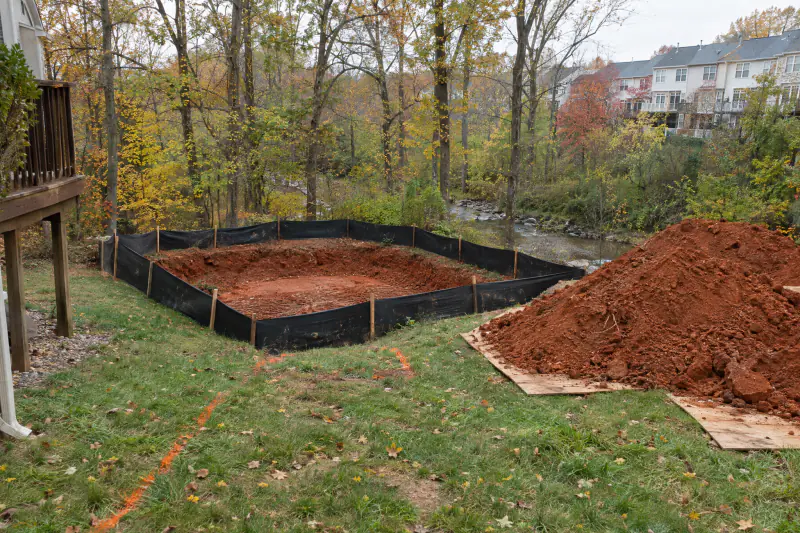
How do Chesapeake Bay RPA rules affect a backyard patio or wall?
If your lot backs to a stream, pond or wetland, part of it is almost certainly a Resource Protection Area, and inside it the small-project exemptions stop. Fairfax County describes the RPA buffer as land within a major floodplain and any land within 100 feet of a protected water feature, and states that generally no development, land disturbance nor vegetation removal is allowed within the RPA boundary without prior approval from Land Development Services. Patios do not qualify for the county's minor addition waiver, which is limited to attached additions, so a patio in a Fairfax RPA takes the longer exception route.
Arlington's RPA page says RPAs include any area within 100 feet of a stream, wider where critical slopes of 25 percent or steeper are present, that projects on lots with RPA need RPA review, and it lists fences, retaining walls and new paved surfaces such as patios as examples. New patios and walls may need a Chesapeake Bay Ordinance Review Committee exception. Pull the RPA map before you sketch; moving a patio 30 feet uphill can turn a committee exception that runs for months into a routine zoning check.
How do you get a patio or retaining wall permitted, step by step?
The order we follow on projects that need approvals. This sequence avoids paying twice for drawings.
Pull the plat and the maps
Find the house location plat from closing, then check county GIS for easements, floodplain, RPA, problem soils and setbacks.
Measure height and surcharge honestly
Measure unbalanced fill at the tallest point and note anything within one wall height behind it.
Add up the disturbance
Draw the footprint, add a 10 foot work zone and a 10 foot access path. Compare the total with 2,500 square feet, or 5,000 in Loudoun.
Ask the county and the HOA the same week
Send the sketch to the county's early assistance service and file the HOA application before commissioning engineering.
Commission the drawings the county asked for
County typical details, a sealed wall design, a lot grading plan or a water quality impact assessment. Have Virginia 811 locate utilities meanwhile.
Build to the drawings and call the inspections
Typical wall inspections are footing or subgrade, drainage and backfill, and final. Photograph the drainage stone and pipe before backfill.
How much do permits, engineering and plans add to a patio or wall budget?
As of 2026, typical Northern Virginia market ranges for the paperwork side of a residential wall or patio run roughly as follows, and none are myYardPros prices. A sealed design for a single segmental block wall between 4 and 6 feet commonly falls between about $800 and $2,500. A geotechnical letter report for a lot in mapped problem soils often runs $1,500 to $4,000. An individual lot grading plan or small site plan commonly lands between $1,500 and $5,000. County permit fees change each fiscal year, so budget from the county's current fee schedule, not from any number in an article.
Height moves these figures first: a 3 foot wall built to county typical details may cost nothing beyond the permit fee, while a 6 foot wall with a surcharge needs a sealed design, third-party inspections and often a soils report. Against a block wall that typically runs $50 to $100 per square foot of face, engineering is a small share, and it is the share that keeps the wall standing; the retaining wall cost guide and the cost guide go deeper. For a number tied to your lot and your county, request an on-site estimate and we will tell you which approvals the project needs before we price it.
How do patio and wall rules play out across Fairfax, Loudoun, Prince William, Arlington and Alexandria?
The state code is the same everywhere in our service area, but the conditions that trigger extra approvals cluster by place. In Fairfax County, the marine clay belt around Lorton, Springfield and Annandale brings soil questions into simple walls, while the wooded stream valleys of Great Falls, McLean, Vienna and Oakton put many backyards inside an RPA. In Loudoun County, the mass-graded subdivisions of Ashburn, South Riding and Aldie put walls at lot lines where the 2 foot zoning threshold catches them. In Prince William County, the sloped lots of Gainesville, Haymarket and Bristow make 4 foot and taller walls routine, and zoning approval for every patio applies in Woodbridge and Dumfries too.
In Arlington County, small lots reach the 2,000 square foot certification band quickly. Alexandria adds historic district review. The cities of Fairfax, Falls Church, Manassas and Manassas Park run their own permit offices. HOAs in Ashburn, Brambleton, Reston and Lake Ridge review patios and walls separately; see our guide to HOA approval for exterior projects. Our hardscaping team handles the approvals on every wall, raised patio and stepped walkway we build.
Frequently asked questions
Can I build a 3 foot retaining wall in Virginia without a permit?
Only if it retains less than 3 feet of unbalanced fill and carries no surcharge. The state code exempts walls supporting less than three feet, so a wall holding exactly 3 feet is not exempt. Loudoun requires a zoning permit from 2 feet and a building permit from 3 feet, and Alexandria's web page lists 2 feet. Measure at the tallest point and confirm with your county.
Do I need a permit for a paver patio in Fairfax County?
Fairfax County lists on-grade paver and concrete patios as exempt from a building permit. You may still need a land disturbance permit and grading plan if the disturbed area, including a 10 foot work zone and access path, reaches 2,500 square feet, and prior RPA approval if any of the work sits within a Resource Protection Area. A raised patio held up by a wall is judged by the wall.
What is a land disturbance permit and when does a patio trigger one?
It is the erosion and sediment control approval a county issues when a project opens up enough ground. Fairfax, Arlington and Prince William set the trigger at 2,500 square feet; Loudoun sets it at 5,000, lower in sensitive areas. The count includes a 10 foot work zone and an access path, so a 500 square foot patio with a side yard path can approach the line.
How is retaining wall height measured for a permit?
By unbalanced fill, the difference between ground level in front of the wall and behind it at the same cross section, taken at the tallest point. Prince William measures a tiered system from the grade in front of the lowest wall to the top of the highest. Arlington's permit page applies its 3 foot inspection trigger to soil retained at any point along the wall, so the tallest section governs, and asks for a section view showing grade before and after construction.
Does a retaining wall under a driveway need a permit even if it is short?
In most Northern Virginia jurisdictions, yes. A driveway is a surcharge, and the state exemption covers only walls supporting ordinary unbalanced fill. Fairfax's exemption excludes walls supporting a driveway or patio. Prince William requires a permit for a wall of any height that supports a surcharge from driveways, roads, walls or sidewalks.
How long does patio and retaining wall permitting take in Northern Virginia?
A simple wall using county typical details is often reviewed in one to three weeks, longer in spring. Walls that need a sealed design add the engineer's schedule, commonly two to four weeks, before county review starts. Land disturbance permits add several weeks. RPA exceptions are measured in months because they go to a committee. HOA review runs in parallel, commonly two to six weeks.
Book the work
Put the plan in writing with a crew that builds this every week.
One visit to measure and talk through options, then a written scope and price. No pressure, no vague numbers. Ask about the Heroes Discount if you serve.
Sources and further reading
- Virginia Uniform Statewide Building Code, 13VAC5-63-80 (Section 108, Application for permit; exemptions in 108.2)
- Fairfax County Land Development Services: Does My Project Require a Permit?
- Loudoun County Building and Development: Technical and Procedural Newsletter, June 25, 2021 (retaining wall categories; predates the 2023 Zoning Ordinance, confirm current tiers with the county)
- Prince William County Building Development Division: Do I Need a Permit?
- Arlington County: Resource Protection Area (RPA), Chesapeake Bay Preservation Ordinance
- City of Alexandria Code Administration: Building Plan Submission Checklist, Retaining Walls (2022)
Published October 8, 2026. Reviewed and updated October 22, 2026.