  • Serving the Northern Virginia area
Call (571) 200-9600 Get an Estimate
Water Management

Irrigation System Upgrades & Smart Controllers in Northern Virginia

An irrigation upgrade improves a sprinkler system you already own instead of replacing it: a Wi-Fi, weather-based controller, pressure-regulated heads, efficient nozzles, drip lines in planting beds and repairs to weak zones. It fits Northern Virginia homeowners whose systems run in the rain, mist, flood the sidewalk or leave dry patches on clay soil.

  • Stop watering during and after rain
  • Less runoff onto walks and driveways
  • Keep the pipes, fix what wastes water
  • Licensed & insured in Virginia
  • Based in Sterling, VA
  • Residential projects only
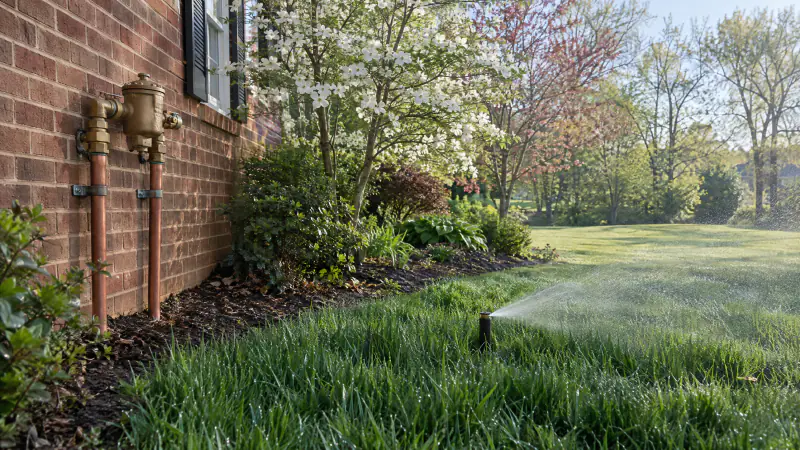
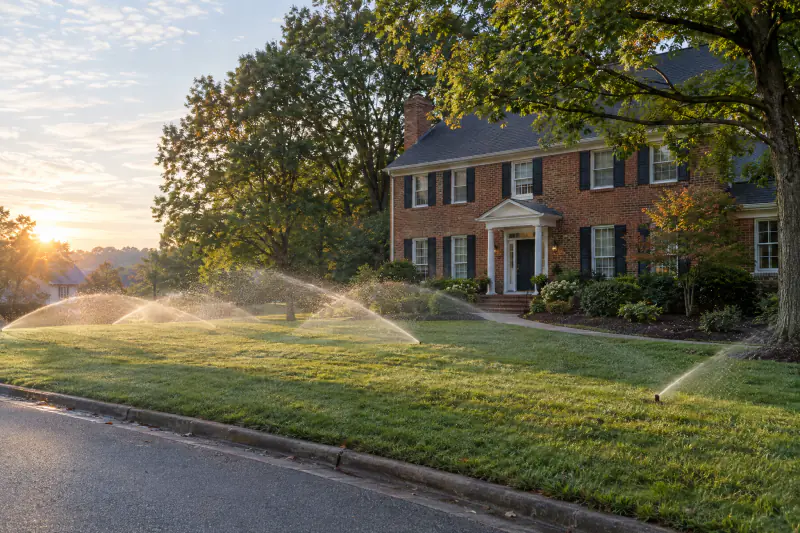
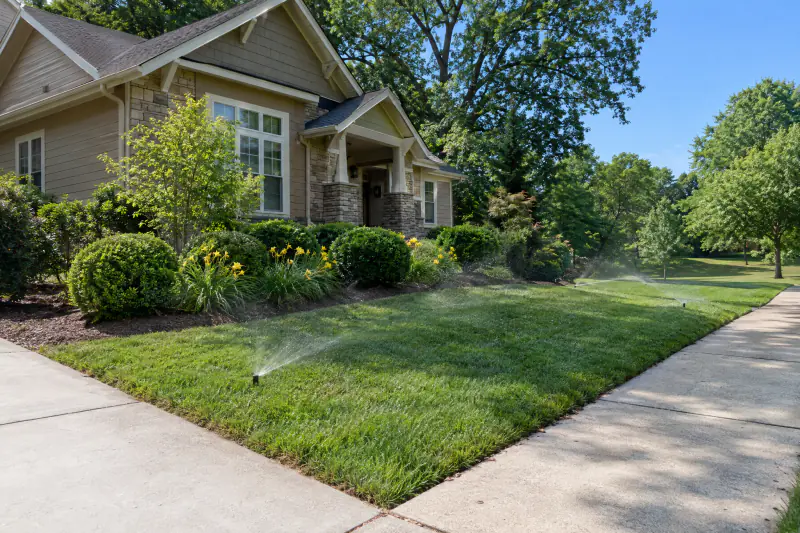
Upgraded irrigation system watering lawn with rotary nozzles and no overspray on the sidewalk
Rotary nozzles keep water on the turf, off the pavement
Typical timeline
Half a day to 2 days
Permit
Not usually for retrofits
Best season
Spring start-up to early fall
Works with
Most 24-volt valve systems

Is it worth upgrading an older sprinkler system?

Usually yes, as long as the buried pipe and valves are sound, because most wasted water comes from the parts that are easiest to change: the controller, the pressure and the nozzles. A basic timer waters on Tuesday whether or not it rained on Monday. Unregulated pressure turns spray into fog that drifts onto the street. Old fixed sprays apply water faster than clay can take it, so it sheets across the sidewalk.

Yards change as well. Shrubs grow in front of heads, a bed replaces turf, heads sink or tilt. An upgrade corrects those mismatches one zone at a time.

We will also tell you when a retrofit is the wrong spend. Brittle, leaking pipe throughout points to a new sprinkler system installation, and a lawn that stays wet with the system off needs drainage work, not a better schedule.

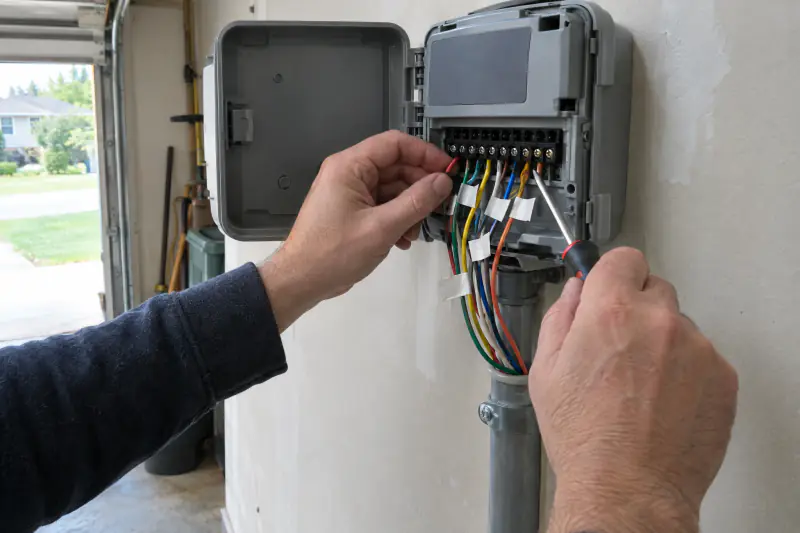
Hands wiring zone terminals on a smart irrigation controller during an irrigation system upgrade
Zone wires moved to a new weather-based controller

Which irrigation upgrades make the biggest difference?

These five retrofits cover most problems on existing systems.

  • Wi-Fi controller and sensors

    A weather-based controller shortens or skips cycles using local weather data and lets you run any zone from your phone. A rain and freeze sensor adds a physical shutoff.

  • Pressure regulation

    Spray heads work best near 30 psi, and many homes supply far more. Pressure-regulating heads or a regulator at the valve turn drifting mist into droplets that land where aimed.

  • Head and nozzle retrofits

    We raise sunken heads, straighten tilted ones and swap fixed sprays for rotary nozzles that apply water more slowly. Arcs are reset so water stops hitting pavement, fences and siding.

  • Drip conversion for beds

    Spray zones in shrub and flower beds are converted to drip tubing with a filter and pressure regulator. Water reaches roots under the mulch and foliage stays dry.

  • Zone fixes and re-zoning

    Failed valves, cut wires and broken laterals are repaired. Where one valve feeds both sunny lawn and shaded bed, we regroup heads so each area gets its own schedule.

How does an irrigation upgrade work?

We audit before we recommend, so every change solves a problem we can show you.

  1. Zone-by-zone audit

    We run every zone and record pressure at the head, coverage gaps, overspray, leaks, sunken or blocked heads, valve response and the current program, flagging each problem in the lawn.

  2. Findings and priorities

    You get a written list sorted by impact, with a price for each item. Leak repairs come first, then water-saving changes, then convenience features, so you can set a budget.

  3. Controller and sensors

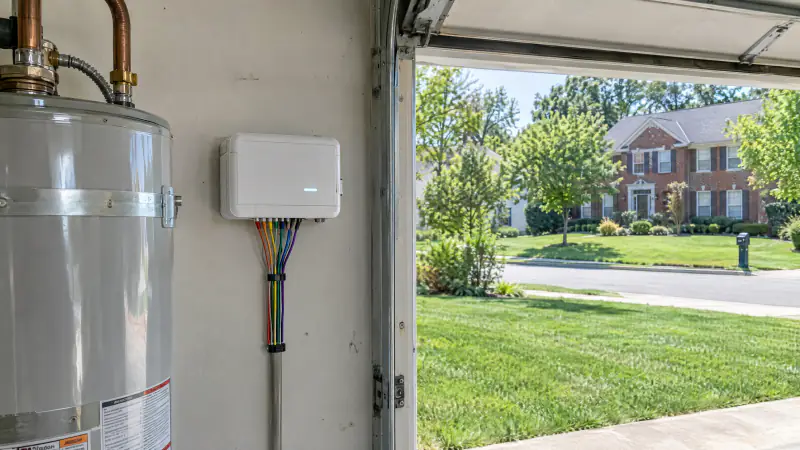
    The new controller is mounted, existing zone wires are labeled and connected, and sensors are tested. We confirm the Wi-Fi signal reaches the mounting spot before choosing a model.

  4. Heads, nozzles and drip

    Field work follows: pressure regulation, nozzle swaps, head adjustments, valve and pipe repairs, and drip conversions. Each zone is run again afterward to verify coverage.

  5. Programming and walkthrough

    We enter soil type, slope, sun exposure and plant type for each zone so the controller can calculate run times. Then we show you the app and the manual controls.

Rotary nozzles watering turf with no overspray

A short clip of low-rate rotary sprinkler streams rotating slowly over a fescue lawn beside a dry sidewalk, showing how retrofitted nozzles keep water on the grass.

Smart controller or standard timer: which is better?

A weather-based controller does automatically what a standard timer needs you to remember.

Standard timerTimer with rain sensorWi-Fi weather-based controller
Skips watering after rainNoYes, once rain has fallenYes, and can act on the forecast
Adjusts to heat and seasonBy handBy handAutomatic, from weather data
Remote control and alertsNoNoPhone app; alerts on many models
Who it suitsOwners who adjust it monthlyBasic systems on a budgetMost homes, frequent travelers

Features vary by brand and model.

How much do irrigation upgrades cost in Northern Virginia?

As of 2026, typical Northern Virginia market ranges for common irrigation retrofits sit far below the cost of a new system, and the work can be staged. These are planning figures, not our prices:

  • Smart controller, installed and programmed: roughly $300 to $800.
  • Head and nozzle retrofit: roughly $150 to $500 per zone.
  • Drip conversion of a bed zone: roughly $400 to $1,200.
  • Valve replacement: roughly $150 to $450 each.

What moves the number: zone count, the condition of existing valves and wiring, whether heads need digging out and raising, bed size for drip, and controller features such as flow monitoring.

Request an on-site estimate or call (571) 200-9600.

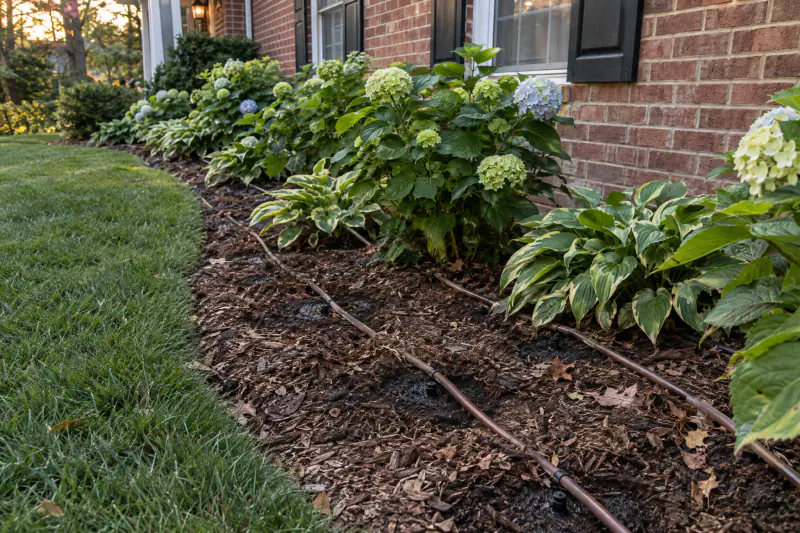
Drip irrigation tubing in a planting bed after an irrigation system upgrade
Drip tubing waters roots while foliage and brick stay dry

What are the signs your irrigation system needs an upgrade?

Any one of these means water is going somewhere other than the roots.

  • Sprinklers run during a storm or the morning after heavy rain.
  • A fine mist hangs over the heads and drifts away on the breeze.
  • Water runs down the driveway or sidewalk before a zone finishes.
  • Brown rings or arcs appear between heads every July.
  • Heads sit below the turf, lean to one side or spray into shrubs.
  • Summer water bills climb while the lawn looks no better.

Not sure what you need?

Tell us what you are seeing. We will look at the site, explain the options in plain terms and give you a written estimate.

Irrigation upgrades for homes in Fairfax, Loudoun, Prince William and Arlington

Upgrades pay off here because of how the region gets its rain and what it falls on. Much of Northern Virginia's summer rain arrives in sudden thunderstorms, so a system that cannot skip a cycle wastes water again and again. The clay underneath takes water slowly, which is why low-rate nozzles and split cycles matter here.

Retrofits rarely involve permits, but your backflow preventer still matters. Local water utilities commonly require periodic testing, and if the audit finds a missing or damaged device we will tell you, since replacing one typically does involve your county.

The patterns repeat across the area: older systems in Reston, Burke and Vienna with worn heads and mechanical timers, and builder-grade systems in Ashburn, South Riding and Haymarket never zoned for the finished landscape. If new beds, a walkway or a patio changed your yard, the irrigation should change with it.

Frequently asked questions about irrigation upgrades & smart controllers

Do smart irrigation controllers really save water?

They can, mainly by skipping cycles the lawn does not need. A weather-based controller cuts run times in cool or wet weeks and raises them in heat, which a fixed timer never does. Actual savings depend on how wasteful the old schedule was.

Will a smart controller work with my existing sprinkler system?

In most cases, yes. Residential valves almost always run on 24-volt signals, and a new controller connects to the wires the old timer used. Confirm enough stations for your zone count, and a usable Wi-Fi signal where it will be mounted, often the garage.

Why do my sprinkler heads mist instead of spray?

Misting means pressure at the head is too high. Water is forced through the nozzle so fast that it breaks into fog, which evaporates or blows away before reaching the grass. Pressure-regulating spray bodies, or a regulator on the zone, restore proper droplets.

Should planting beds be on drip irrigation?

For most shrub and perennial beds, yes. Drip tubing delivers water slowly under the mulch, so little is lost to wind or evaporation and leaves stay dry, which helps limit fungal problems in humid summers. Drip needs its own zone, a filter and a pressure regulator.

Can you add a zone to an existing irrigation system?

Often. A new zone needs spare capacity in three places: a free station on the controller, a wire path to the new valve, and enough flow to run the added heads. When the supply is already fully used, re-zoning existing heads may be the better answer.

How often should an irrigation system be checked?

Once a year at minimum, ideally at spring start-up, with a quick look in midsummer. Mowers knock heads, nozzles clog and plants grow into spray paths. Watching each zone run for a few minutes catches most problems before they show up as brown patches.

From the field notes

Long-form guides on irrigation upgrades & smart controllers from the crew that does the work, with Northern Virginia costs, timing and permit detail.

Water Management

A pre-winter drainage walkthrough

Standing water beside a foundation in November becomes ice in January. Walk the house stop by stop, from gutters to low spots, with the measurements that matter and the fixes that can still be built this winter.

The myYardPros Crew

All guides in this category  ·  Planning guides  ·  Glossary  ·  FAQ

Ready to talk about your irrigation upgrades and smart controllers project?

Tell us about your property and what you want to fix or build. We will visit, measure and send a clear written estimate. We serve Fairfax, Loudoun, Prince William and Arlington counties.

Serving Fairfax, Loudoun, Prince William and Arlington counties and the cities inside them. Check your address. Military, veterans, first responders, healthcare workers and teachers: ask about the Heroes Discount.