Landscape Design & Installation in Northern Virginia
Landscape design and installation is the planning and planting of beds, trees, shrubs and screening around a home, with the soil preparation, edging and mulch that help them establish. It suits Northern Virginia homeowners with overgrown foundation shrubs, bare new-construction yards, deer damage or no privacy. myYardPros prepares the planting plan and installs it.
- Planting plans drawn for your yard
- Chosen for clay, shade and deer
- Whole beds amended, not single holes
- Licensed & insured in Virginia
- Based in Sterling, VA
- Residential projects only
- Typical timeline
- Often 2-6 days on site
- Permit
- Rarely, but HOA approval common
- Best season
- Fall first, then spring
- Establishment period
- 1-2 years of regular watering
Why do new plantings fail, and what does a proper landscape installation look like?
New plantings fail in Northern Virginia mostly for three reasons: the wrong plant for the spot, a hole dug like a bucket in clay, and a root ball set too deep. A sun-loving shrub goes under a maple. A tree is dropped into a narrow hole of rich bagged soil, which holds water like a bathtub while roots circle and never leave. Mulch is piled against the trunk.
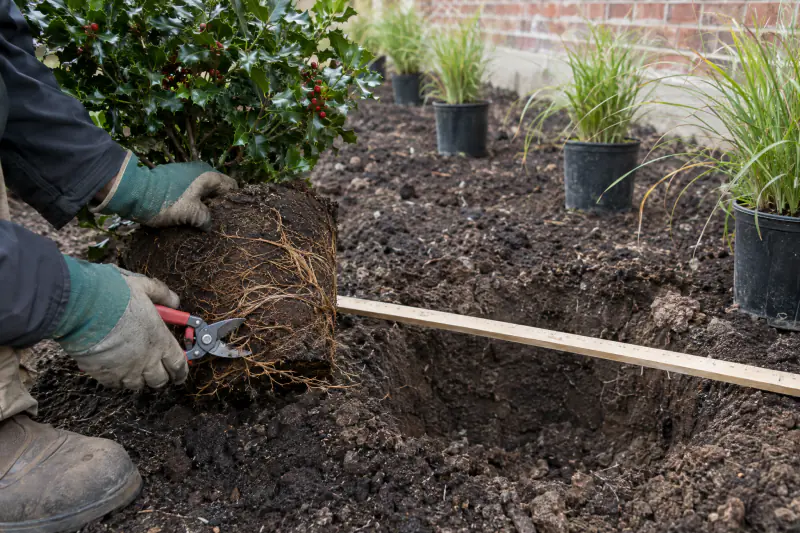
Proper work starts on paper. We map sun, shade and wet spots, and choose plants by mature size so nothing has to be sheared off the windows later. Beds are loosened and amended with compost across the whole area. Holes are dug two to three times the width of the root ball and no deeper, with the root flare at or slightly above grade. Circling roots are cut, and mulch goes down 2 to 3 in. deep, kept clear of trunks.
What does landscape design and installation include?
A project can be a single bed or the whole property, drawn from these five elements.
Planting plans and bed layout
A scaled plan showing bed lines and each plant by name, size and spacing. You get something concrete to review, and your HOA gets what an application usually requires.
Foundation plantings
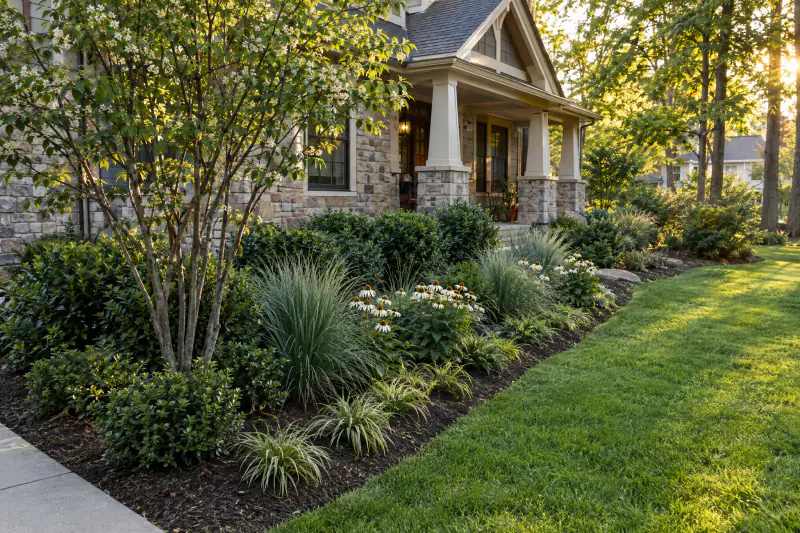
Layered shrubs, perennials and small ornamental trees that frame the house. Mature growth stays off the siding and below the windows, and mulch never buries the foundation line.
Trees and privacy screening
Shade and flowering trees such as redbud, serviceberry and river birch, plus staggered evergreen screens along property lines and patios. We plant trees but do not remove them.
Soil amendment, mulch and edging
Compost worked into the full bed, a clean spade-cut or steel edge against the lawn, and shredded hardwood mulch deep enough to hold moisture without smothering roots.
Native and deer-resistant palettes
Virginia natives such as inkberry, winterberry, sweetspire, switchgrass and mountain mint, mixed with plants deer usually pass by. No plant is deer-proof, but choice makes a large difference.
How does a landscape design and installation project work?
From first walk of the yard to the last watering instruction, the work follows five stages.
Site visit and conversation
We walk the property with you, note sun, shade, wet spots, views to screen and plants worth keeping, and ask how much upkeep you want.
Planting plan and written scope
You receive a plan with bed outlines, a plant list with sizes and quantities, and soil and edging details. We revise it together before any HOA submission.
Clearing and bed preparation
After Virginia 811 marks utilities, old shrubs, weeds and sod come out, bed lines are cut, and compost is tilled in. Grades are shaped so water moves away from the house.
Planting
Plants are set out in their pots and adjusted before any hole is dug. Each is planted at the correct depth, backfilled and watered in thoroughly.
Mulch, cleanup and walkthrough
Beds are edged and mulched, walks are cleaned, and we tour the yard with you plant by plant. You get a written watering schedule for the first two years.
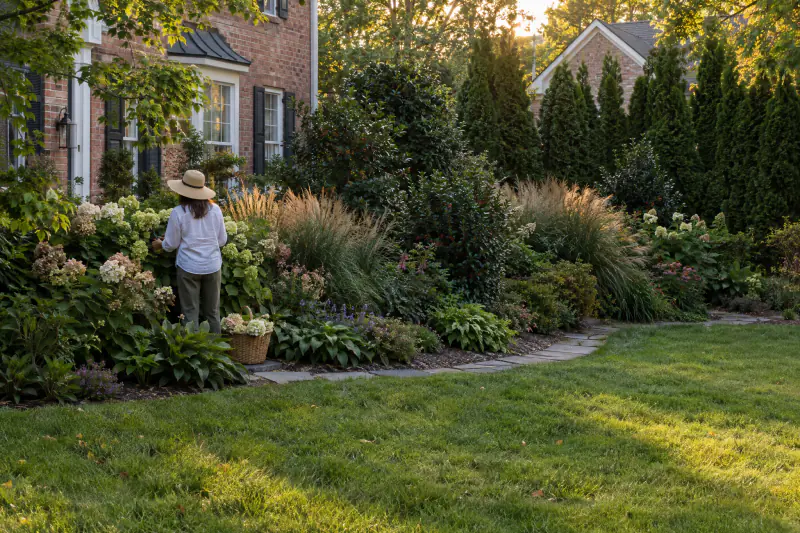
A planted border and privacy screen in evening light
A short clip gliding along a mixed planting bed with grasses and hydrangeas, a homeowner cutting flowers and a staggered evergreen screen providing privacy in the background.
Which evergreen privacy screen suits a Northern Virginia yard?
Screening is the most common request we hear, and the three approaches behave very differently.
| Green Giant arborvitae | Holly (Nellie Stevens, American) | Mixed layered screen | |
|---|---|---|---|
| Growth rate | Fast once established | Moderate | Varies by plant |
| Mature size | Very large, needs wide spacing | Large but narrower | Chosen to fit the space |
| Deer browsing | Usually light | Usually light | Depends on the mix |
| Light | Full sun to part shade | Sun to part shade | Can suit sun or shade |
| Watch for | Outgrowing small lots, bagworms | Slower to close gaps | Higher design effort |
Leyland cypress and Emerald Green arborvitae often disappoint here: the first to disease and storms, the second to deer.
How much does landscape design and installation cost in Northern Virginia?
Landscape installation in Northern Virginia commonly costs $4,000 to $12,000 for a front foundation planting with new beds, and $15,000 to $50,000 or more for a full property with trees and screening. Installed evergreen screening trees of 6 to 8 ft often run $250 to $700 each. These are general market ranges as of 2026, not myYardPros prices.
What moves the number:
- Plant size. Larger container sizes cost several times more.
- How much old planting, stone or weed fabric must come out.
- The area of bed to amend, edge and mulch.
- Access and slopes.
Smaller plants often catch up within a few seasons, so a tight budget is better spent on soil preparation and younger stock. For a figure based on your yard, request an on-site estimate.
What should you ask any landscape contractor before hiring?
The answers tell you whether the plants are expected to live or merely to look good on installation day.
- Will I get a plan and plant list with sizes and quantities in writing?
- How do you prepare clay soil: amending the whole bed or only each hole?
- How deep will trees be planted, and will the root flare stay visible?
- Which of these plants do deer browse heavily in my neighborhood?
- What is the mature height and width of everything near the house?
Not sure what you need?
Tell us what you are seeing. We will look at the site, explain the options in plain terms and give you a written estimate.
What affects landscaping in Fairfax, Loudoun, Prince William and Arlington?
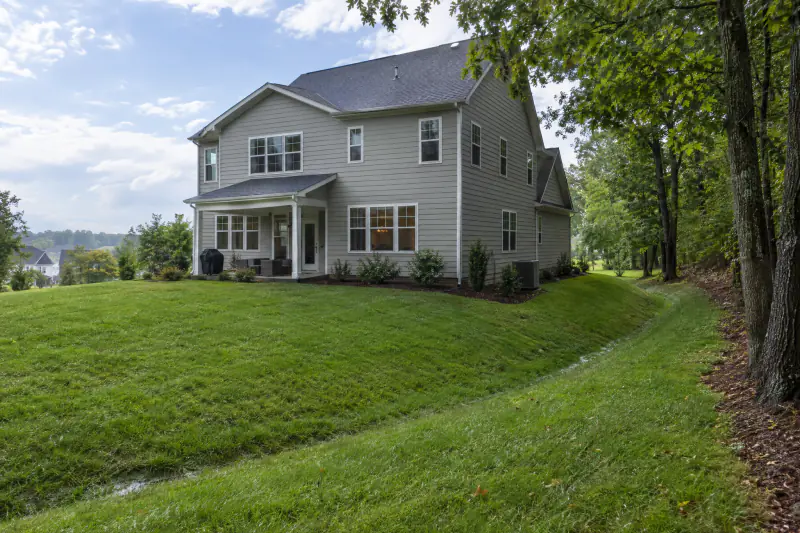
Landscaping in Northern Virginia is shaped by clay, deer and community rules. Clay drains slowly, so plants that hate wet feet need raised or sloped beds, and a soggy yard needs yard drainage work before planting. On slopes, a retaining wall can create level beds that hold soil and mulch.
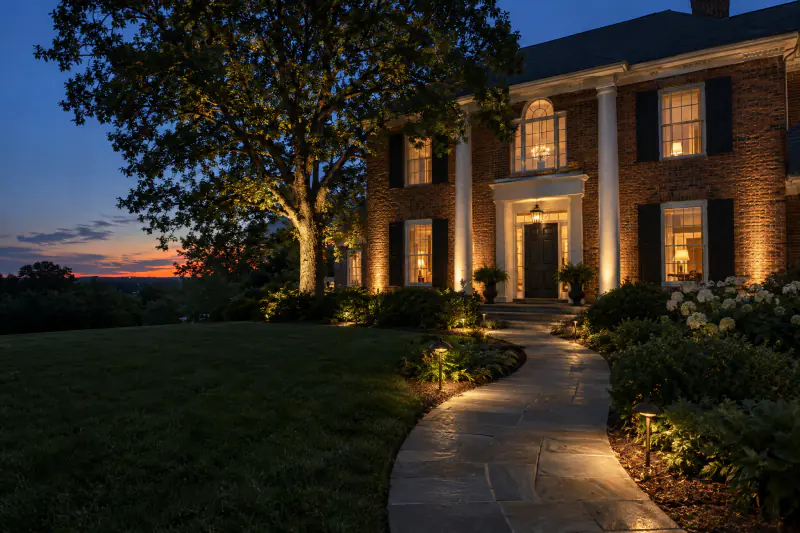
Deer pressure is heavy in Great Falls, Clifton, Oakton, Reston and western Loudoun and lighter in dense parts of Arlington and Alexandria, so one plant list does not fit everywhere. HOAs from Ashburn to Bristow commonly require approval for front-yard changes and new trees. Lots near streams may sit in a Chesapeake Bay Resource Protection Area, where removing vegetation is restricted, so check with your county. Bradford pear, Japanese barberry and English ivy are considered invasive in Virginia, and we do not plant them. Finish the picture with landscape lighting.
Frequently asked questions about landscape design & installation
When is the best time to plant trees and shrubs in Northern Virginia?
Fall is the best time for most trees and shrubs. Soil is still warm, air is cooler and roots keep growing after leaves drop, so plants meet their first summer already rooted. Spring is second choice. Summer planting demands frequent, careful watering.
Which plants are deer resistant in Northern Virginia?
Deer usually leave alone inkberry and American holly, boxwood, spicebush, pieris, hellebore, ferns, catmint, mountain mint and most ornamental grasses. Favorites to avoid include hosta, daylily, yew, azalea and Emerald Green arborvitae. Hungry deer will sample almost anything, so no list is absolute.
Should clay soil be replaced before planting?
No. Replacing clay in a single hole creates a pocket that fills with water and keeps roots from leaving. It works better to loosen and amend the whole bed with compost, plant slightly high and choose plants that tolerate clay.
How long do new plants need to be watered?
Plan to water regularly for the first one to two growing seasons: a deep soaking two or three times a week at first, then weekly through dry spells. Trees take longer than shrubs. A drip zone on an irrigation system makes this far easier.
Do you offer native plant landscaping?
Yes. Many Virginia natives handle our clay and humidity and support pollinators and birds, including redbud, serviceberry, sweetbay magnolia, winterberry, Virginia sweetspire, switchgrass and black-eyed Susan. A design can be fully native or mix natives with well-behaved non-natives.
Do I need HOA approval for new landscaping?
Often, yes, particularly for front yards. Many Northern Virginia HOAs require an application for new beds, trees or screening visible from the street, and some publish approved or prohibited plant lists. Our planting plan and plant list can be attached to your application.
Related services

Landscape Lighting
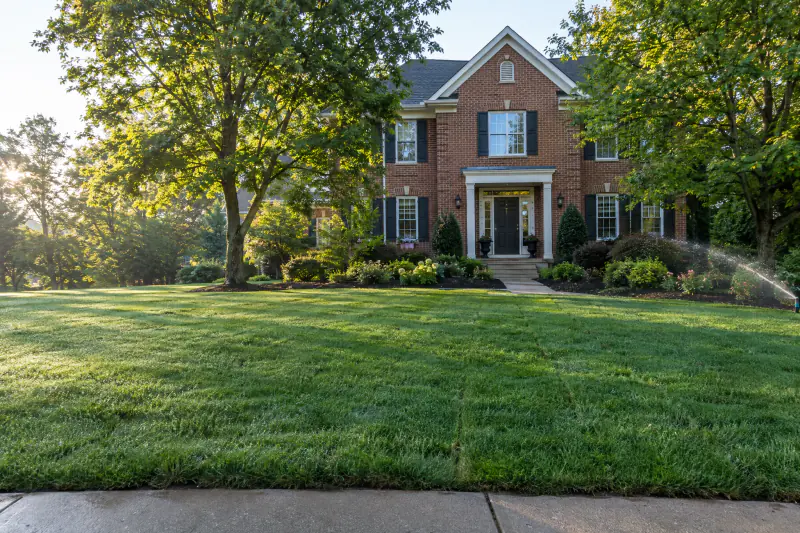
Landscape lighting is a low-voltage LED system of path lights, uplights and step, wall and patio fixtures, powered by a transformer and run by a timer or smart control.
Learn more
Sod Installation & Lawn Renovation
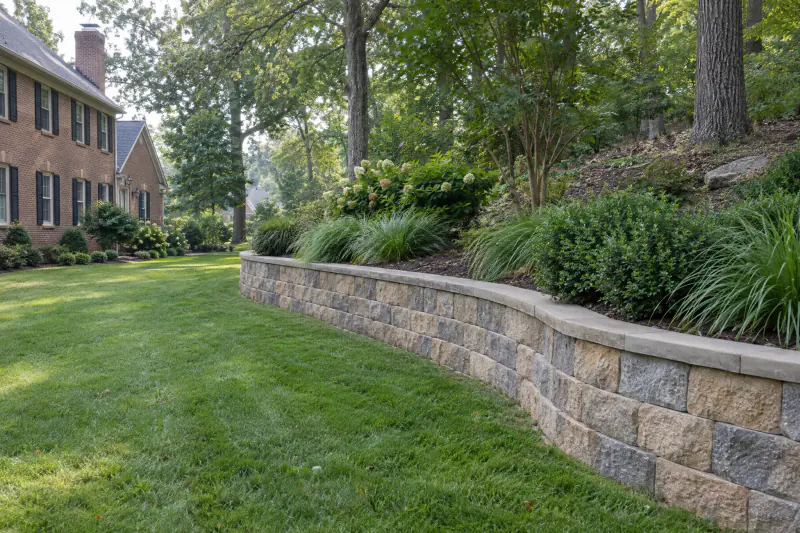
Sod installation replaces a failed lawn with mature tall fescue turf rolled out over graded, amended soil, giving a finished lawn in a day or two.
Learn more

Yard & Foundation Drainage
Yard drainage solutions collect and redirect surface water with grading, swales, catch basins, channel drains and dry wells so rain leaves the lawn and moves away from the house.
Learn more
Ready to talk about your landscape design and installation project?
Tell us about your property and what you want to fix or build. We will visit, measure and send a clear written estimate. We serve Fairfax, Loudoun, Prince William and Arlington counties.
Page updated . Photos and video on this page are illustrative.