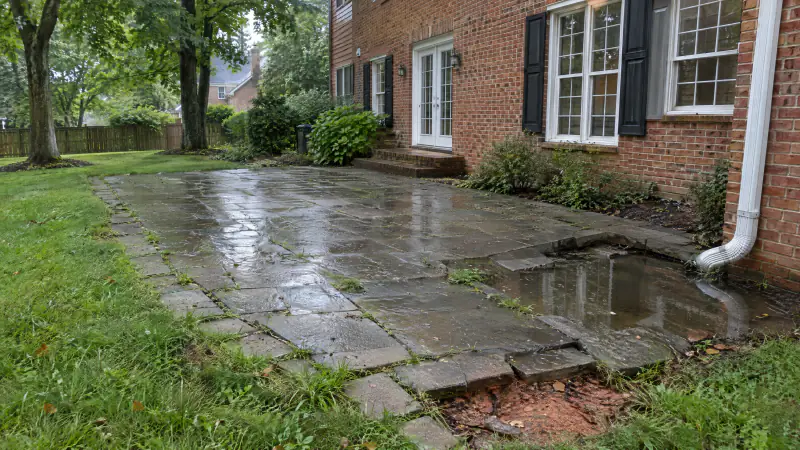
DIY paver patio or hire a crew in Northern Virginia
How many tons does a 16 by 20 foot patio move, what base does clay demand, which steps suit a capable homeowner, and when does hiring cost less than redoing it? The numbers, step by step.
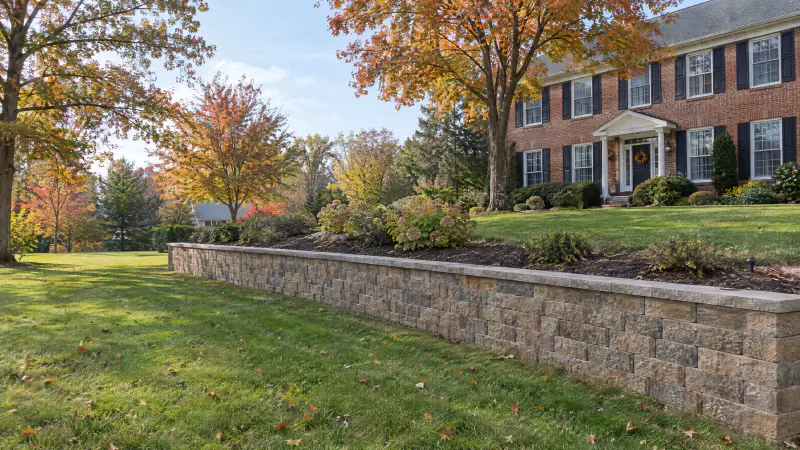
Hardscaping is the built part of a landscape: paver patios, walkways, retaining walls, driveways and fire features. myYardPros builds these for homeowners across Northern Virginia, where heavy clay and freeze-thaw cycles decide how long a surface stays flat. Every project sits on a compacted stone base with drainage planned first.

Most hardscape failures here start below the surface, in the clay. Northern Virginia soil holds water, drains slowly, and swells and shrinks as it freezes and thaws. A patio on a thin base settles into dips, a wall without drainage stone leans, and a driveway without edge restraint spreads at the borders.
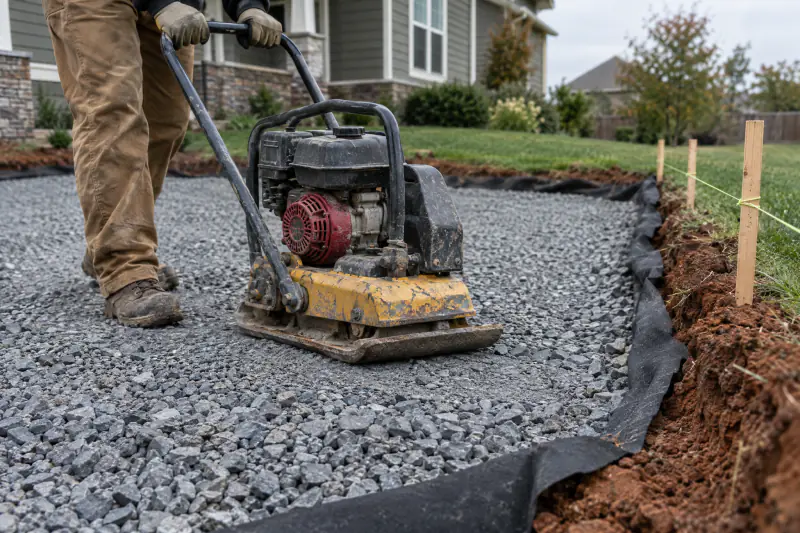
Proper work is mostly unseen. We excavate to firm subgrade, separate clay from stone with geotextile where needed, and compact dense-graded aggregate in thin lifts. Surfaces pitch away from the house, typically 1/8 to 1/4 in. per foot. The method is the same for a paver patio, a retaining wall or a paver driveway. Only the depths change.

Each service has its own page with the process, options, costs and answers to common questions.

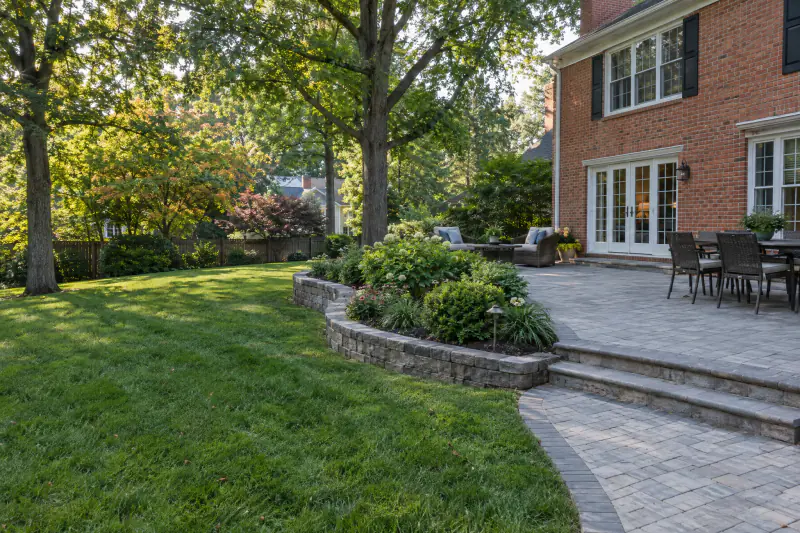
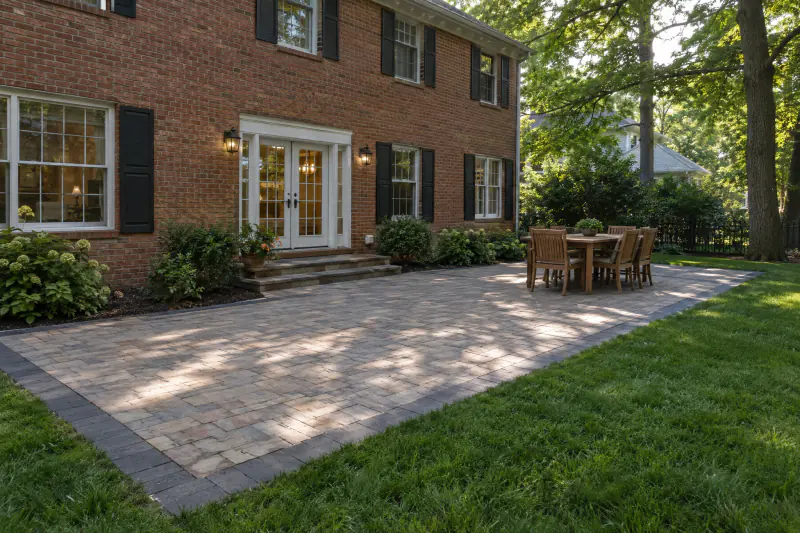
A paver patio is an outdoor floor of concrete, porcelain or natural-stone units laid over a compacted stone base instead of a poured slab.
Learn more
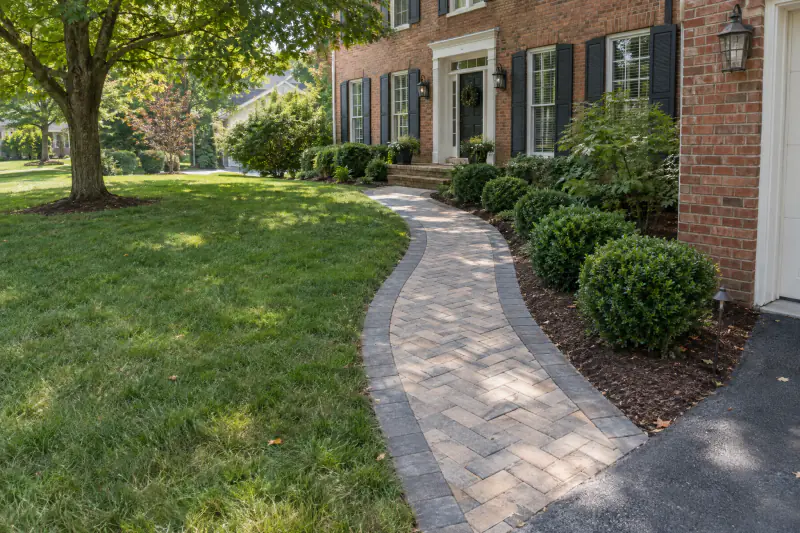
A walkway is a paved or stone route between the places people walk every day: driveway to front door, gate to patio, door to garden.
Learn more

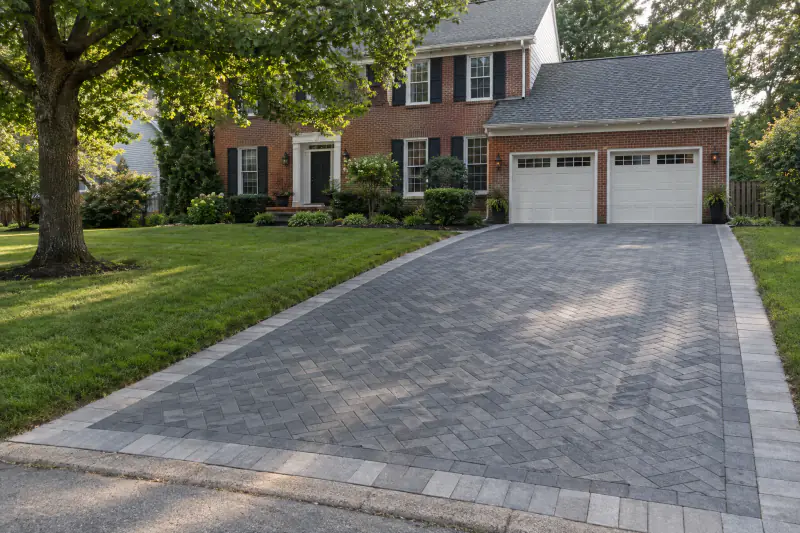
A paver driveway is a vehicle-rated surface of thick interlocking concrete pavers laid over a deep, compacted stone base.
Learn more
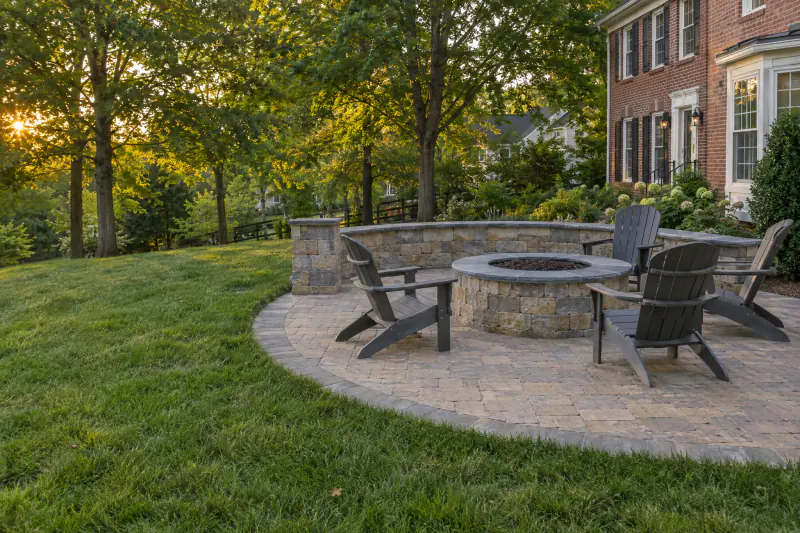
Outdoor living features are the built elements that give a patio a purpose: fire pits, seating walls and masonry bases for outdoor kitchens.
Learn moreFour principles guide every hardscaping project.
The paver you choose is the last decision. Excavation depth, aggregate thickness and compaction follow soil and load: deeper for vehicles, deeper again in wet clay.
We check where roof and yard water goes before drawing anything. Pitch, drain pipe and drainage stone are designed in, so nothing sends water toward the house.
Pavers stay tight only when the perimeter cannot move. We fasten edge restraint into the compacted base, sand the joints and compact the finished surface.
You see dimensions, materials and a written scope first. Utilities are marked through Virginia 811, and permit or HOA questions are settled before excavation starts.
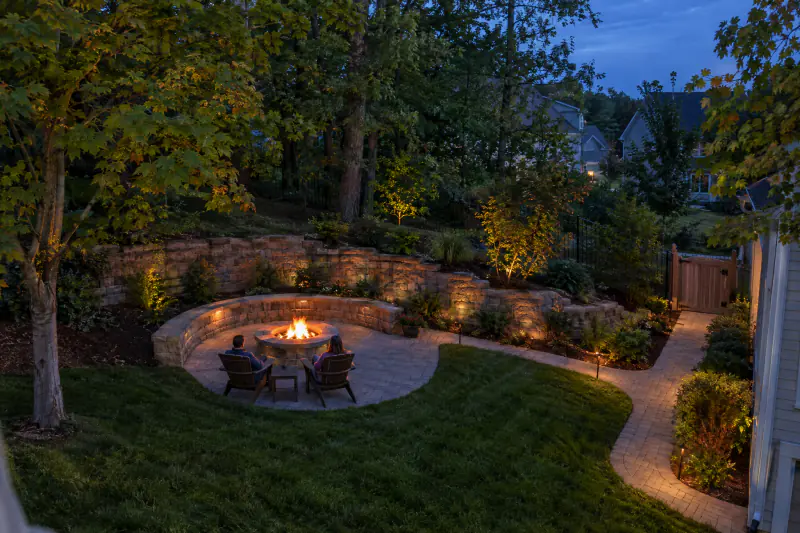
A five-second evening view of a completed backyard: paver patio, fire pit, seating wall and terraced retaining wall, with firelight moving across the stone as the camera eases closer.
Match your problem to the service built for it.
| Your situation | Best-fit service | Why it fits |
|---|---|---|
| You want a level place to sit | Paver patios | Concrete, porcelain or natural stone surfaces |
| The front walk is cracked or narrow | Walkways and garden paths | Entry walks, side paths, stepping stones, steps |
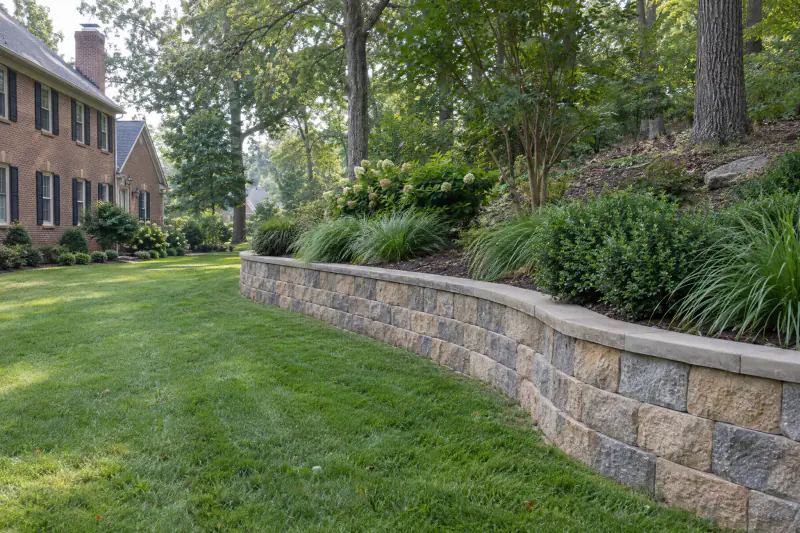
| A slope is eroding or too steep | Retaining walls | Drained block or stone walls create level ground |
| Asphalt or concrete is cracked | Paver driveways | Thicker pavers on a deeper base |
| The patio sits empty after dark | Fire pits and outdoor living | Fire features, seating walls, kitchen bases |
Hardscaping budgets in Northern Virginia run from a few thousand dollars for a short walkway to well into five figures for a driveway. As typical market ranges as of 2026, not myYardPros prices, paver patios and walkways commonly fall around $20 to $50 per sq ft installed. Paver driveways run about $25 to $55 because the base is deeper. Retaining walls are priced per square foot of wall face, often $50 to $150. Fire pits and outdoor living features are priced per feature.
What moves the number: equipment access, clay haul-off, slope, materials, drainage, and any permit or engineering. Only measuring your site gives a reliable figure, so start with an on-site estimate.
Before you decide: All cost and pricing guides · How our estimates work

Check three things early, because rules and soils change from lot to lot. First, permits: patios and walks built at grade typically need no building permit, but zoning setbacks, lot-coverage limits and easements can still apply, and walls holding back more than about 3 ft of soil generally do need one. Check with your county before you commit to a layout. Second, most HOAs from Ashburn to Lorton require architectural approval before exterior work. Third, Virginia 811 must mark utilities before any digging.
If your yard already holds water, fix that first or alongside the build. Our yard drainage solutions often share the same excavation. Every town we cover is listed under service areas.
Most walkways and small patios take a few working days on site. Larger patios, driveways and retaining walls typically run one to three weeks, depending on excavation, weather and material lead times. Permits and HOA approval add waiting time before construction.
At-grade patios typically need no building permit, though zoning rules can still apply. Retaining walls holding back more than about 3 ft of soil, or supporting a driveway or structure, generally do. Requirements vary by county, so confirm with your permit office.
Spring through late fall, plus mild winter stretches when the ground is neither frozen nor saturated. Base stone cannot be compacted properly over frozen or waterlogged clay. Fall works well because the project is finished and ready for use in spring.
They behave differently on clay. A concrete slab is rigid, so soil movement shows up as cracks. Pavers form a flexible surface with many joints, so they tolerate small movement, and a settled area can be lifted, re-leveled and relaid.
Not if runoff is planned. Hard surfaces shed more water than lawn, so we pitch them away from the foundation toward a place that can take it. Where needed, drains or a permeable paver system can handle the extra flow.
Sweep debris, rinse occasionally and top up joint sand if it erodes. Shaded, north-facing surfaces grow algae in our humid summers, so periodic washing helps. Sealing is optional. Our paver cleaning and sealing service handles both.
Long-form guides on hardscaping from the crew that does the work, with Northern Virginia costs, timing and permit detail.
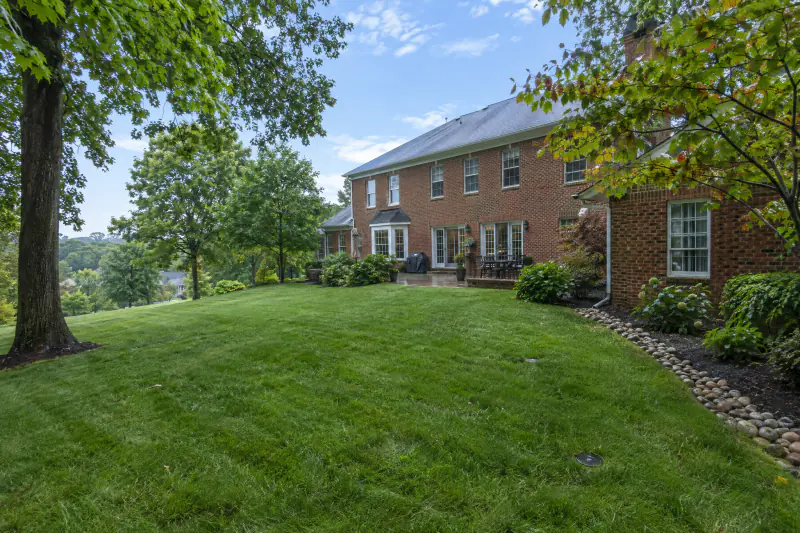
18 min readHow many tons does a 16 by 20 foot patio move, what base does clay demand, which steps suit a capable homeowner, and when does hiring cost less than redoing it? The numbers, step by step.
The myYardPros Crew
19 min readMost Northern Virginia retaining walls land between about $35 and $90 per face square foot installed as of 2026, before engineering and permits. Here is what moves a wall across that range, and what a cheap wall leaves out.
The myYardPros Crew
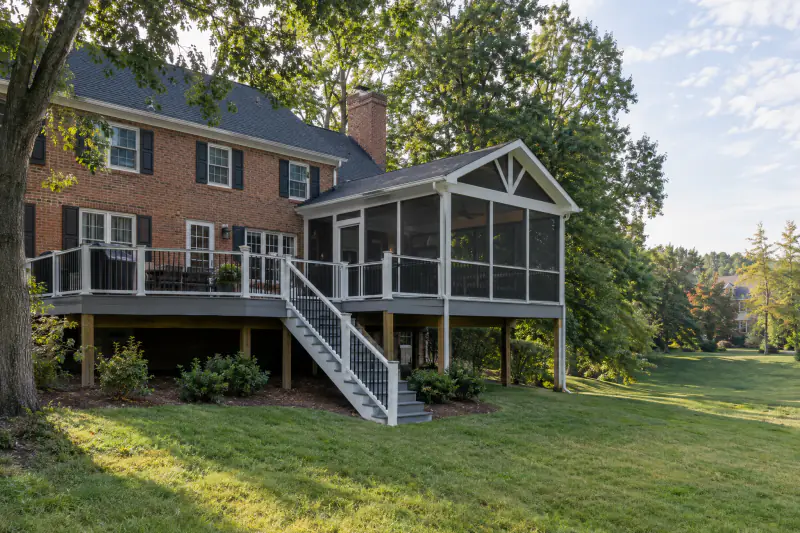
21 min readDoor height decides more than taste does. How a walk-out or step-down back door, clay drainage, county permits, 2026 cost ranges, summer heat and 15 years of upkeep point a Northern Virginia homeowner toward a deck, a patio or both.
The myYardPros Crew
All guides in this category · Planning guides · Glossary · FAQ

Water management covers both sides of a yard's water problem: drainage that moves stormwater, groundwater and roof runoff away from the house, and irrigation that delivers measured water to lawns and beds.
Learn more
myYardPros designs, builds and repairs residential decks and porches across Northern Virginia: wood and composite decks, screened porches, covered porches, pergolas and deck resurfacing.
Learn more
Exterior cleaning removes algae, mildew and stains from a home's outdoor surfaces using the pressure and cleaning solution each material can safely take.
Learn more
Lawn and landscape services are one-time projects that rebuild the living parts of a yard: planting beds, trees and shrubs, sod, aeration and overseeding, landscape lighting and artificial turf.
Learn moreOne visit, a plain-language explanation of your options and a written estimate. We serve Fairfax, Loudoun, Prince William and Arlington counties.
Serving Fairfax, Loudoun, Prince William and Arlington counties and the cities inside them. Check your address. Military, veterans, first responders, healthcare workers and teachers: ask about the Heroes Discount.