  • Licensed & Insured VA Licensed Contractor
  • Serving the Northern Virginia area
Call (571) 200-9600 Get an Estimate
Decks & Porches

Composite and PVC Decks in Northern Virginia

A composite or PVC deck uses manufactured boards in place of wood decking, fastened to a pressure-treated frame. Capped composite and cellular PVC resist rot, do not splinter and never need staining. In Northern Virginia they suit homeowners who want a deck that only needs washing and who plan to stay long enough to recover the higher installation cost.

  • No sanding, staining or sealing
  • Hidden fasteners, clean board surface
  • Joists spaced to manufacturer requirements
  • Licensed & insured in Virginia
  • Based in Sterling, VA
  • Residential projects only
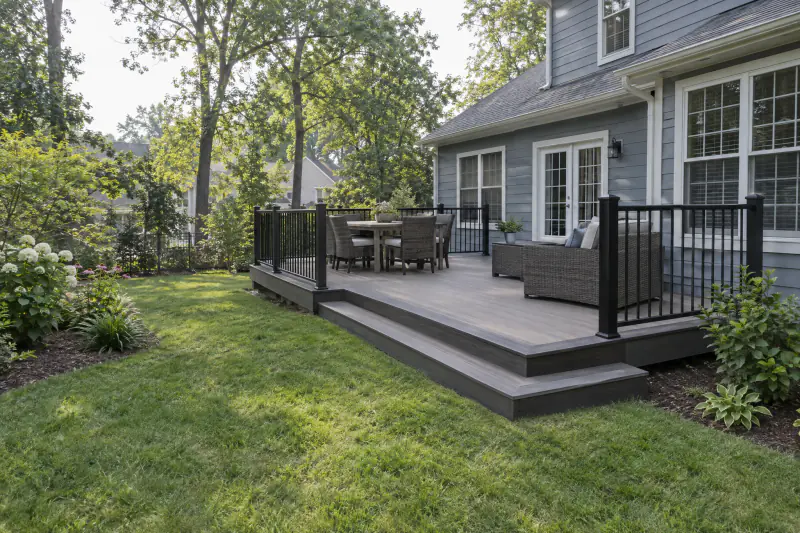
Finished gray composite deck with picture-frame border and black aluminum railing
Capped composite decking with a contrasting border
Maintenance
Wash once or twice a year
Joist spacing
16 in. max, 12 in. on diagonals
Frame
Pressure-treated lumber
Board lifespan
Often 25 years or more

Is composite decking worth it over wood?

Composite decking is worth it when you value low upkeep and plan to keep the house for years, because it trades a higher installation price for almost no maintenance. A wood deck in our humid summers needs cleaning and fresh stain every few years. Capped composite and PVC need soap, water and a soft brush.

The boards only perform if the installation follows the manufacturer's instructions. Composite is more flexible than lumber, so joists spaced too far apart leave a surface that feels spongy. Boards also grow and shrink along their length with temperature, so end gaps set wrong on a cold or hot day open up or buckle later. Structure, footings and permits are the same as any deck and are covered under custom deck building.
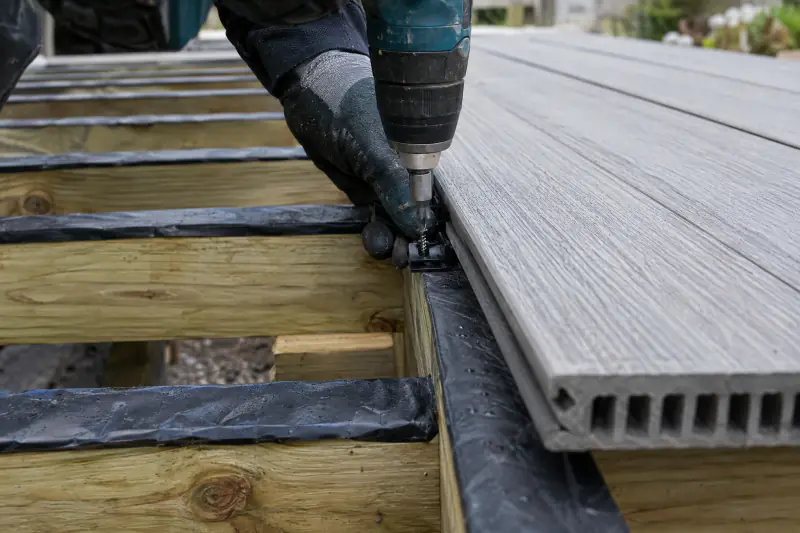
Hidden fastener clip being installed on a composite deck board over taped joists
Hidden clips fasten grooved boards to taped joists

What are the options for a composite or PVC deck?

These are the choices that shape how a manufactured-board deck looks, feels and wears.

  • Capped composite boards

    A core of wood fiber and plastic wrapped in a polymer shell, sold in several price tiers by makers such as Trex, TimberTech and Fiberon. The cap resists stains and fading.

  • Cellular PVC boards

    All-plastic boards with no wood fiber to absorb water. They are lighter, often run a little cooler in pale colors, and suit shaded, damp or poolside decks. They usually cost the most.

  • Hidden fastener systems

    Grooved boards are held by clips that screw into the joists and set the side gap. Perimeter and stair boards get color-matched screws or plugs, leaving almost no visible hardware.

  • Borders, breaker boards and fascia

    A picture-frame border hides cut ends, and a breaker board removes butt joints on long decks. Both need extra blocking in the frame, which we add before the first board goes down.

  • Railing systems

    Composite sleeves, powder-coated aluminum and cable infill all pair with manufactured decking. Whatever the look, the posts are anchored to the frame with blocking so the guard meets code load requirements.

How is a composite deck installed?

The sequence matches a wood deck until the frame is finished, then the product instructions take over.

  1. Site visit and samples

    We measure, check sun exposure and look at full-size board samples with you outdoors, because color and surface temperature read very differently in direct sun than in a showroom.

  2. Design, estimate and permit

    The drawing shows board direction, borders and joist spacing along with the structure. After you approve the written scope, we apply for the county permit and prepare HOA documents with the color named.

  3. Footings and framing

    Footings and the pressure-treated frame are built and inspected. Joists are set at 16 inches on center or closer, crowned, planed flat where needed and blocked for borders. Joist tape is an option we recommend.

  4. Decking, fascia and railings

    Boards are gapped for the temperature on installation day, clipped down, and trimmed with fascia and riser boards. Railing posts, rails and stair treads follow, each to the manufacturer's span limits.

  5. Inspection and care walkthrough

    After the final county inspection we walk the deck with you and go over cleaning, which products to avoid, and how to protect the surface from grills, planters and snow shovels.

Hidden fasteners on a composite deck installation

A close clip of a hidden fastener being driven into a taped joist, showing how grooved composite boards are secured without visible screws on the surface.

Composite vs PVC vs wood decking: how do they compare?

All three sit on the same treated frame, so the differences are in the walking surface.

Pressure-treated woodCapped compositeCellular PVC
Installed costLowestMid to highHighest
UpkeepClean and re-stain every few yearsWash periodicallyWash periodically
Heat in full sunWarmHot in dark colorsOften slightly cooler in light colors
Moisture and rotCan check, cup and decayCap resists moistureNo wood content to absorb water
SplintersYes, with ageNoNo
Typical board life15 to 20 years with care25 years or more25 years or more

Lifespans are typical expectations, not promises, and depend on exposure and care.

How much does a composite deck cost in Northern Virginia?

A composite or PVC deck in Northern Virginia typically runs $75 to $140 per square foot installed, including frame, railings and stairs, as a market planning range as of 2026. Replacing only the decking and rails on a sound existing frame is usually less. These are regional budgeting ranges, not our prices.

The factors that move a composite deck up or down that range:

  • Board tier: entry-level capped composite versus premium composite or PVC
  • Railing type, which can rival the decking in cost
  • Borders, patterns and diagonal layouts that add framing and waste
  • Deck height, stairs and site access
  • Lighting, fascia and skirting

We price your deck from measurements and the exact products you choose. Ask for an on-site estimate.
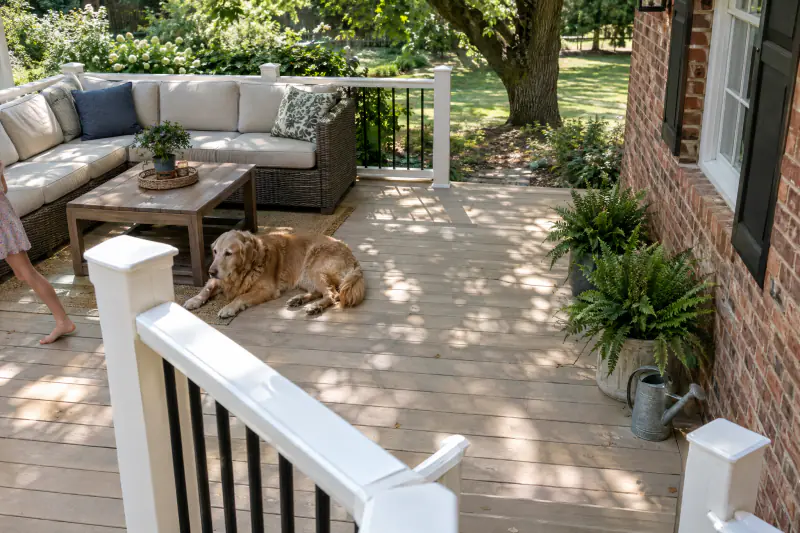
Light-colored PVC deck in use with a dog and outdoor seating
Splinter-free surface for bare feet and pets

Is a composite or PVC deck the right choice for your home?

Composite tends to be the better fit when several of these are true.

  • You are tired of sanding, staining and sealing a wood deck.
  • You expect to stay in the house for ten years or longer.
  • Children or pets use the deck barefoot and splinters are a concern.
  • The deck sits in shade where wood stays damp and grows mildew.
  • You want a consistent color with no visible screw heads.
  • Your budget can absorb a higher up-front cost for lower upkeep.

Not sure what you need?

Tell us what you are seeing. We will look at the site, explain the options in plain terms and give you a written estimate.

How do composite decks hold up in Fairfax, Loudoun, Prince William and Arlington?

Composite and PVC handle Northern Virginia's climate well, provided you plan for sun and shade. On a south or west-facing deck in Ashburn, Chantilly or Bristow with no tree cover, dark boards get uncomfortably hot for bare feet in July, so we steer those decks toward lighter colors or a pergola or roof. On wooded lots in Great Falls, Oakton, Clifton and Reston, pollen and leaf debris feed mildew on any surface, composite included, and a periodic low-pressure wash keeps it clean.

Permit requirements match a wood deck and your county confirms them. HOAs commonly ask for the board and railing color by name. For an older wood deck you want to keep, deck cleaning and staining may be the better spend.

Frequently asked questions about composite & pvc decks

Does composite decking get hot in the sun?

Yes. Any decking heats up in direct summer sun, and dark composite boards can become too hot for bare feet on a July afternoon. Lighter colors, some PVC products and shade from a pergola or trees help noticeably. Test full-size samples left in the sun.

Is PVC decking better than composite?

Neither is better everywhere. PVC contains no wood fiber, weighs less and suits damp, shaded or poolside decks. Capped composite usually costs less and feels more solid underfoot. For most open backyard decks, a good capped composite is the sensible middle choice.

Can composite boards go on my existing deck frame?

Sometimes. The frame must be sound, properly attached and flashed, with joists no more than 16 inches apart and reasonably flat. Many older decks have wider spacing or hidden rot, so our deck repair and resurfacing service starts with that evaluation.

Do composite decks need any maintenance?

A little. Wash the deck once or twice a year with a mild cleaner and a soft brush or low pressure to remove pollen, leaf tannins and mildew. Clear debris from the gaps so water drains, and use a plastic shovel for snow.

Will composite decking fade, stain or scratch?

Capped boards resist fading and staining much better than first-generation composites, though most lighten slightly in the first months outdoors. Clean grease promptly. Furniture feet and dragged planters can scratch the cap, and scratches cannot be sanded out as on wood.

Why does joist spacing matter for composite decking?

Composite and PVC boards are less stiff than lumber, so manufacturers limit their span. Most require joists at 16 inches on center or less for straight runs, 12 inches for diagonal layouts, and closer still on stairs. Exceeding the limit causes sagging.

Ready to talk about your composite and pvc decks project?

Tell us about your property and what you want to fix or build. We will visit, measure and send a clear written estimate. We serve Fairfax, Loudoun, Prince William and Arlington counties.

Page updated . Photos and video on this page are illustrative.