  • Serving the Northern Virginia area
Call (571) 200-9600 Get an Estimate
Hardscaping

Fire Pits & Outdoor Living in Northern Virginia

Outdoor living features are the built elements that give a patio a purpose: fire pits, seating walls and masonry bases for outdoor kitchens. myYardPros builds them for Northern Virginia homeowners who want to use their yard into the evening and the cooler months, planning foundations, clearances and utility routes before any stone is set.

  • Wood-burning and gas-ready fire pits
  • Seating walls at a comfortable height
  • Utility sleeves placed before the pavers
  • Licensed & insured in Virginia
  • Based in Sterling, VA
  • Residential projects only
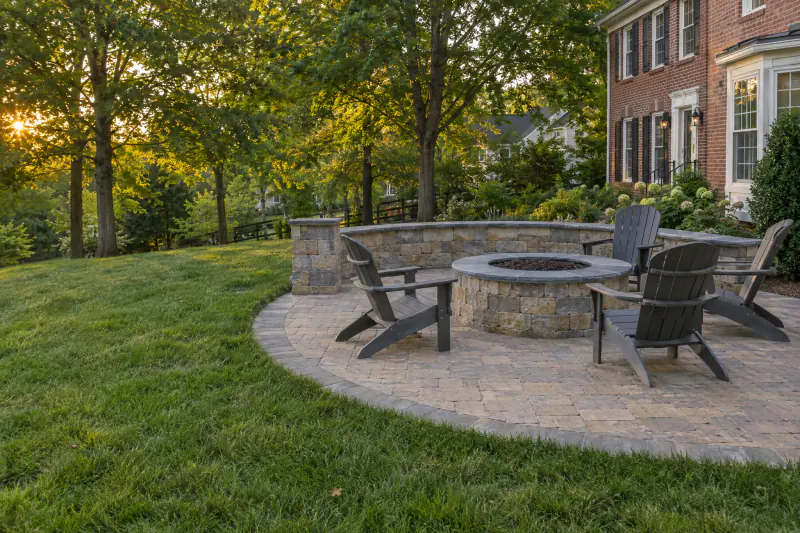
Round stone fire pit with curved seating wall on a circular paver patio
Fire pit and seating wall built as part of the patio
Typical timeline
A few days to about 3 weeks
Gas and electrical
By licensed trades, with permits
Wood-burning rules
Local fire code and HOA apply
Seating wall height
About 18-22 in.

Why plan a fire pit or outdoor kitchen instead of just adding one?

Fire pits and outdoor kitchens disappoint when they are added as afterthoughts, because their placement, foundation and utilities all have to be decided before the surface around them is finished. Common results: a fire pit too close to the house, wall block cracked by direct heat, a kitchen island that settles away from the patio, and finished pavers torn up to run a gas line.

Done properly, the order reverses. Location comes first: distance from the house, fences and tree limbs, prevailing wind, and room for chairs. Then the structure. A wood-burning pit gets a steel insert or fire-brick liner so flame never bears on the wall block, and a base that lets rain drain out. Heavy masonry sits on its own compacted or concrete foundation, not just on patio bedding. Sleeves for gas and electrical go under the paver patio before it is laid.

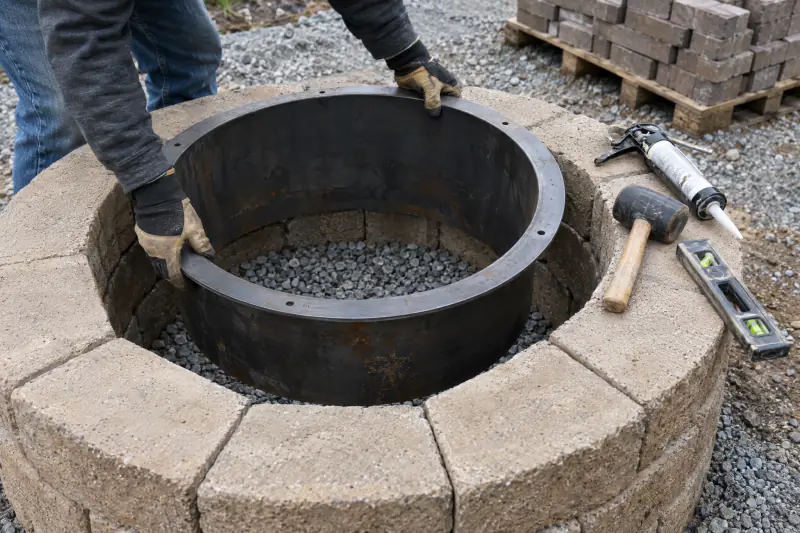
Hands setting steel insert into block fire pit under construction
A steel insert keeps flame off the wall block

What outdoor living features do we build?

Each feature can stand alone or be built with a new patio.

  • Wood-burning fire pits

    Round or square pits in block or natural stone with a steel insert or fire-brick lining, a cap wide enough to rest a foot on, and a drained gravel floor.

  • Gas fire pits

    The masonry enclosure, burner support and vented cavity for a gas fire feature. The gas line and connection are done by a licensed gas fitter under the required permit.

  • Seating walls

    Low freestanding walls, typically 18 to 22 in. high with a smooth cap about 12 in. deep, that define the patio edge and add permanent seating around a fire.

  • Outdoor-kitchen bases

    Masonry islands sized for a built-in grill and counter space, on a foundation suited to the weight. Electrical and gas hookups are completed by licensed trades.

  • Utility sleeves and conduit

    Buried sleeves and conduit under the patio, placed during base work, so licensed trades can run gas, power or lighting later without lifting finished pavers.

How does an outdoor living project come together?

Decisions made in the first two steps prevent most rework.

  1. Site visit and use plan

    We measure the space and ask how many people you seat, wood or gas, where smoke would drift, and how the area connects to the kitchen door.

  2. Layout, rules and scope

    You get a scaled layout and written scope. We review county fire code, HOA guidelines and the permits the gas or electrical trades will need. Virginia 811 marks utilities.

  3. Foundations and sleeves

    Bases are excavated and compacted, or footings poured where mortared masonry requires them. Conduit and sleeves are placed, and licensed trades rough in gas and electrical.

  4. Masonry and fire lining

    Walls, pit and island are built course by course with adhesive or mortar as the system requires. Liners and inserts are set, and caps are cut and fitted.

  5. Finish and walkthrough

    Surrounding pavers are completed and jointed. We walk the project with you, covering safe use, ash removal and what to cover for the winter months.

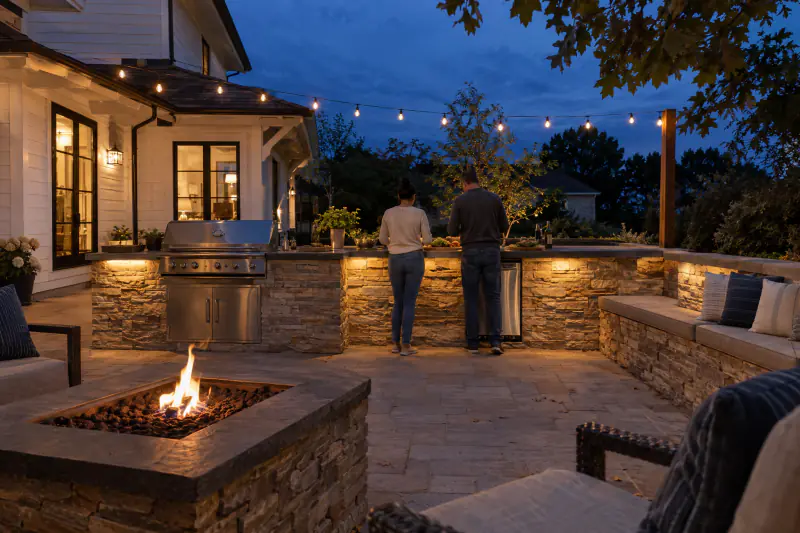
Outdoor kitchen and gas fire pit at dusk

A short evening clip moving past a gas fire pit toward a stone-veneer kitchen island, with a steady flame, string lights and two people cooking at the counter.

Wood-burning or gas fire pit: which is right for your yard?

The choice comes down to smoke, convenience and what your community allows.

Wood-burning fire pitGas fire pit
ExperienceCrackle, aroma and high heatSteady flame at the turn of a valve
Smoke and sparksBoth, so placement matters mostAlmost none
UtilitiesNoneGas line by a licensed gas fitter
Rules to checkFire code distances, burn restrictions, HOAGas permit, appliance clearances, HOA
Relative costLowerHigher, rises with gas line length

How much do fire pits and outdoor kitchens cost in Northern Virginia?

Built-in fire pits in Northern Virginia typically run about $2,500 to $7,000 for wood-burning and roughly $5,000 to $14,000 or more for gas, including the gas line. Seating walls commonly cost around $100 to $250 per linear foot, and masonry outdoor-kitchen bases often start near $6,000 and climb past $25,000 before appliances. These are general market ranges as of 2026, not myYardPros prices.

The numbers move with:

  • Material: manufactured block, stone veneer or full natural stone.
  • Size and shape.
  • Distance from the gas meter or electrical panel to the feature.
  • Foundation type and soil conditions.
  • Whether the patio is built at the same time.

Appliances, countertops and trade permits are usually priced separately. For a figure built around your layout, request an on-site estimate.

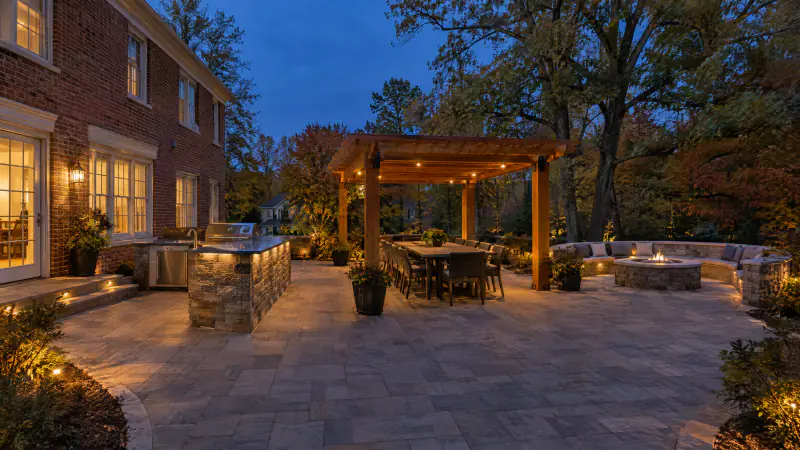
Outdoor kitchen island, gas fire pit and seating wall on patio at dusk
A masonry kitchen base and gas fire pit in evening use

What should you settle before building a fire pit or outdoor kitchen?

Answer these and the design nearly draws itself.

  • Wood or gas, decided before the patio base is built.
  • What your county fire code says about distance from structures.
  • Whether your HOA allows wood-burning fire features at all.
  • Where gas, power and water would enter, and who is licensed to connect them.
  • Whether overhanging limbs, a deck or a pergola sit above the planned spot.
  • Which appliances are going into the kitchen, with their cut-out dimensions.

Not sure what you need?

Tell us what you are seeing. We will look at the site, explain the options in plain terms and give you a written estimate.

What fire pit rules apply in Fairfax, Loudoun, Prince William and Arlington?

Wood-burning fire features in Northern Virginia may be subject to local fire code, enforced by each county or city fire marshal. Fire codes commonly set minimum distances between recreational fires and structures or combustible materials, limit fire size, require attendance, and allow burning to be restricted in dry conditions. Details differ by jurisdiction and by type of fire feature, so check with your fire marshal's office before choosing a location. HOAs add their own layer: many communities in Reston, Ashburn, Bristow and Springfield regulate or prohibit wood fires, particularly near townhomes.

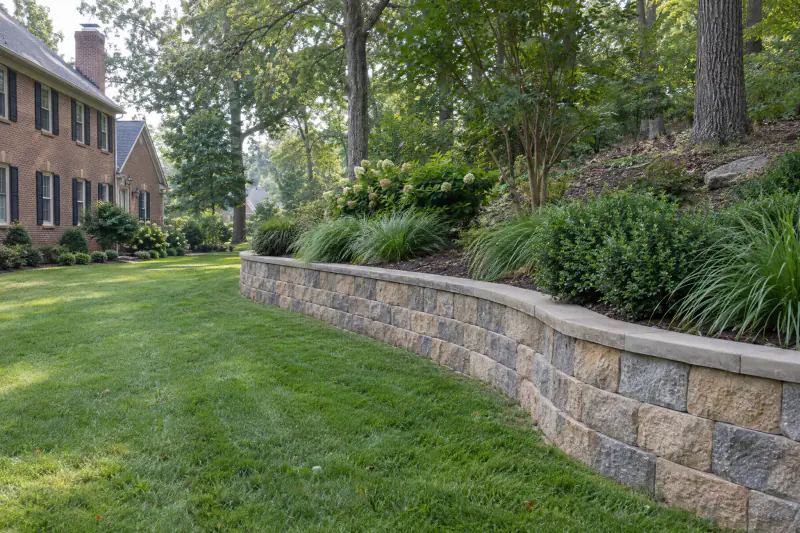
Gas and electrical work is done by licensed trades and generally requires permits and inspection. A roof over a kitchen generally needs a building permit too. For cover, see covered porches, pergolas and pavilions. Wood fire pits do not belong on or under a deck. For level ground on a slope, start with retaining walls.

Frequently asked questions about fire pits & outdoor living

How far should a fire pit be from the house?

Follow your local fire code first. Codes commonly call for wood-burning recreational fires to be kept well away from structures and combustibles, often around 25 ft, with different distances for some contained or gas appliances. Your county fire marshal's office can confirm the figure.

Can a fire pit be built on an existing paver patio?

Often, yes. Pavers under the pit are usually removed so the walls sit on compacted base, and a liner or insert keeps heat off the block. The patio also has to leave enough clear space around the pit for seating and safe circulation.

Is a gas or wood-burning fire pit better?

Wood gives more heat and the campfire feel, along with smoke, sparks and ash. Gas lights instantly, shuts off completely and is accepted in more communities, but costs more because of the burner and gas line. Lot size and HOA rules often decide.

Do you install the gas line and electrical?

Gas piping and electrical circuits are installed by licensed gas fitters and electricians under their own permits. We build the masonry and place the sleeves and conduit they need under the hardscape, so nothing finished has to be taken apart.

How big should a fire pit and seating area be?

A common inside diameter is about 3 to 4 ft, with the wall top roughly 12 to 18 in. above the patio. Allow about 6 to 7 ft from the pit edge to the back of the seating so chairs can slide away from the heat.

Does an outdoor kitchen need a special foundation?

Yes. A masonry island with a stone countertop and grill is heavy and rigid, so it must not settle unevenly. Dry-stacked block systems get a thickened compacted base, and mortared masonry gets a concrete footing or slab. Patio bedding sand alone is not enough.

From the field notes

Long-form guides on fire pits & outdoor living from the crew that does the work, with Northern Virginia costs, timing and permit detail.

Hardscaping

Designing an outdoor room

An outdoor room is a patio with jobs: a place to cook, eat and sit by a fire. Here is how we lay out and size those zones, run utilities under them, shade them in July and build them to last.

The myYardPros Crew

All guides in this category  ·  Planning guides  ·  Glossary  ·  FAQ

Ready to talk about your fire pits and outdoor living project?

Tell us about your property and what you want to fix or build. We will visit, measure and send a clear written estimate. We serve Fairfax, Loudoun, Prince William and Arlington counties.

Serving Fairfax, Loudoun, Prince William and Arlington counties and the cities inside them. Check your address. Military, veterans, first responders, healthcare workers and teachers: ask about the Heroes Discount.