  • Serving the Northern Virginia area
Call (571) 200-9600 Get an Estimate
Decks & Porches

Pergola Design and Installation in Northern Virginia

A pergola is an open-roof frame of posts, beams and rafters that shades a patio, deck or garden without enclosing it. myYardPros builds freestanding and attached pergolas in Northern Virginia from treated pine, cedar, aluminum or vinyl, with optional louvered roofs, for homeowners whose outdoor space gets too much sun.

  • Footings below frost, posts on raised bases
  • Wood, aluminum or vinyl, built to suit
  • Optional louvered roof for rain cover
  • Licensed & insured in Virginia
  • Based in Sterling, VA
  • Residential projects only
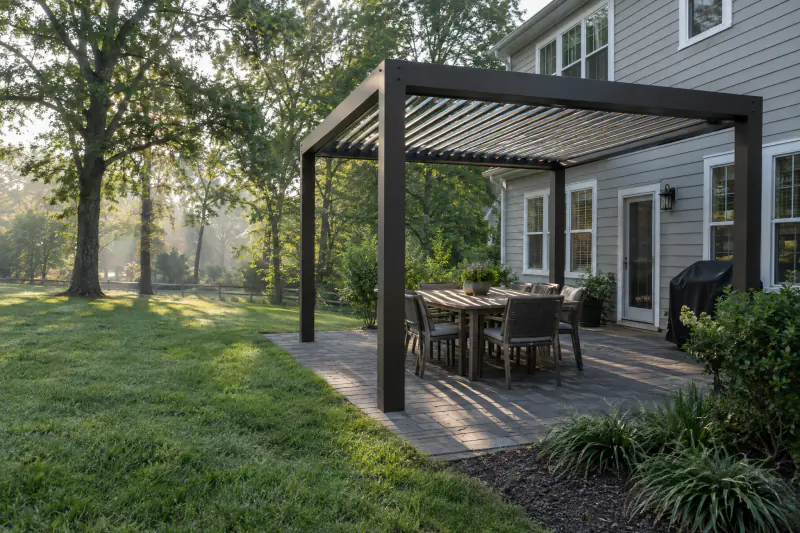
Bronze aluminum louvered pergola over a paver patio dining area behind a home
Louvered roof tilted open for filtered morning light
Permit
Depends on county and size
Footing depth
About 24 in. or deeper
Rain cover
Only with a louvered roof
Typical build time
Days to 2 weeks on site

What makes a pergola last in Northern Virginia weather?

A pergola lasts when its posts bear on concrete below the frost line and every joint is tied with hardware that resists uplift, because wind loosens an open roof long before weight does. Footings here typically go roughly 24 in. deep or more, so clay heaving through freeze-thaw cycles cannot jack the posts and rack the frame.

Early failures share familiar shortcuts: shallow posts in bags of dry concrete mix, toe-nailed beams, fasteners that corrode in treated lumber, and a ledger nailed over siding with no flashing.

A pergola gives filtered shade, not rain cover, unless you add louvers. For a solid shingled or metal roof, see our covered porches and pavilions page.

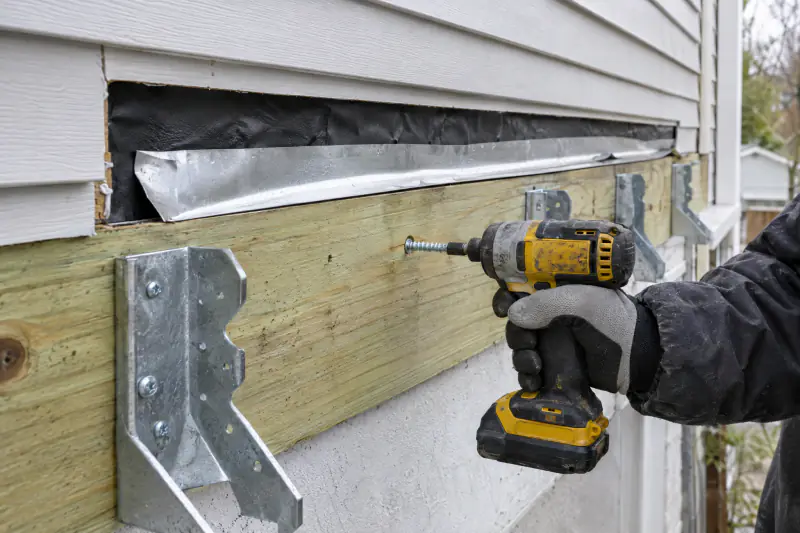
Pergola ledger board fastened to house framing with flashing above the board
Ledger fastened to framing, flashed under the siding

What kinds of pergolas can you build?

Most projects pair one frame type with one way of adding shade.

  • Freestanding pergola

    A frame on its own posts and footings, over a patio, beside a pool or in a garden corner. With no wall to lean on, it relies on footings and knee braces to stay square.

  • Attached pergola

    One side hangs from a ledger fastened to the house framing, flashed behind the siding above, and the other rests on posts. It suits the space outside a back door.

  • Pergola over a deck

    Posts run down to their own footings instead of bolting to deck boards or a rim joist, often passing beside the existing frame to reach the ground.

  • Louvered aluminum roof

    Powder-coated blades rotate, usually by motor, from open slats to a closed roof that drains to built-in gutters. Closed blades catch wind and hold snow, so footings are sized for that.

  • Shade cloth and vines

    Removable shade cloth adds shade cheaply but also wind load, so it usually comes down for winter. For vines we favor native trumpet honeysuckle or American wisteria over invasive Asian wisteria.

How is a pergola built, from site visit to walkthrough?

Five stages take a pergola from tape marks to a finished frame.

  1. Site visit and layout

    We measure the space, note where sun falls at the hours you use it, check windows, gutters and door swings, and mark post locations and what lies beneath them.

  2. Design, permit check and HOA

    You get a drawing with dimensions, materials, member sizes and any attachment method. We confirm with the county whether a permit is needed and prepare drawings for your HOA.

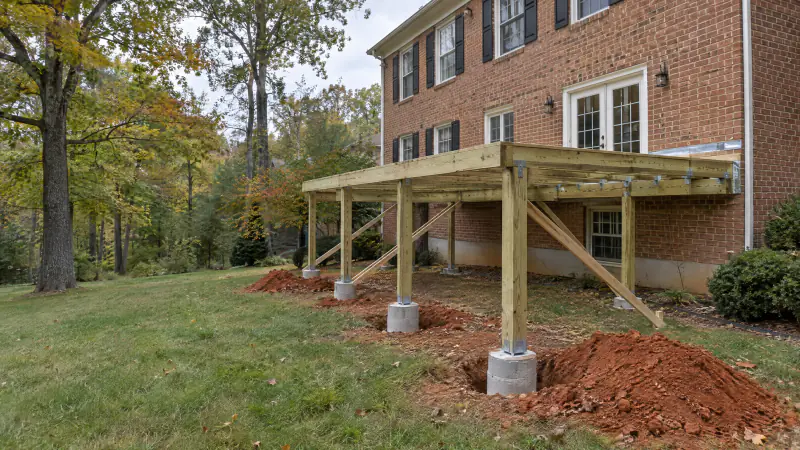
  3. Footings

    Once Virginia 811 has flagged buried lines, we dig each hole below frost depth, through pavers or concrete where needed, with anchor hardware set in the wet concrete so posts stay dry.

  4. Framing and attachment

    Posts are plumbed and braced, beams through-bolted or set in steel saddles, and rafters tied with hot-dip galvanized or stainless hardware. Any ledger gets structural fasteners and flashing.

  5. Shade, finish and walkthrough

    Louvers, shade cloth, lighting or plant supports go in, wood is sealed when ready, and any inspections are completed. We walk the structure with you and explain upkeep.

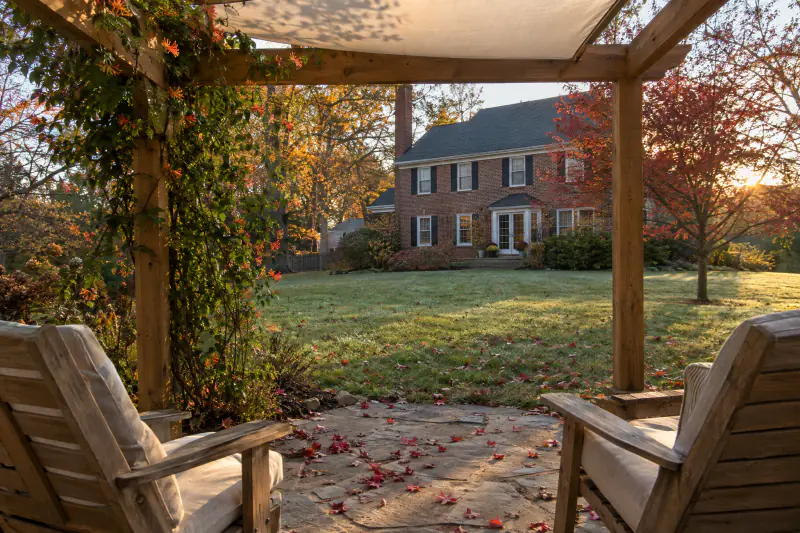
Autumn afternoon under a cedar pergola

A short clip moving slowly into a freestanding cedar pergola, where shade cloth ripples, honeysuckle climbs a post and maple leaves settle on the flagstone floor.

Which pergola material is right for you: wood, aluminum or vinyl?

Material changes the look and upkeep, while the footings underneath stay the same.

MaterialUpkeepStrengthsWatch for
Pressure-treated pineStain or seal every few yearsStrong, economical, easy to custom cutChecking and twisting as it dries
CedarOptional finish, weathers to grayLight, stable, naturally decay resistantSofter wood that dents, higher cost
AluminumOccasional washingLong spans, louvered roof systemsMust use the maker's engineered parts
VinylOccasional washingBright white, will not rotAsk what reinforces the posts inside

How much does a pergola cost in Northern Virginia?

As typical Northern Virginia market ranges as of 2026, a professionally built wood pergola commonly runs $6,000 to $25,000, with pressure-treated pine toward the lower end and cedar toward the upper. Vinyl or fixed aluminum often runs $7,000 to $18,000, and motorized louvered aluminum systems $15,000 to $50,000 or more. They are regional planning figures, not our prices.

What changes the budget:

  • Footprint, height and number of posts
  • Freestanding versus attached, and the wall involved
  • Footings through an existing patio or beside a deck
  • Lumber grade and decorative end cuts
  • Motors, rain sensors, lighting and wiring
  • Permit drawings and HOA requirements

Your figure comes from an on-site estimate.

Cedar pergola with shade cloth and climbing honeysuckle over a flagstone seating area
Shade cloth and a native vine on a cedar frame

What should you ask a contractor before building a pergola?

These questions separate a frame that stays square from one that leans.

  • How deep will the footings go, and what will each post rest on?
  • Will posts sit on raised metal bases or be buried in concrete?
  • Are the fasteners and connectors rated for contact with treated lumber?
  • For an attached pergola, how will the ledger be fastened and flashed?
  • For a louvered roof, what wind and snow ratings does the maker state?

Not sure what you need?

Tell us what you are seeing. We will look at the site, explain the options in plain terms and give you a written estimate.

Do you need a permit for a pergola in Fairfax, Loudoun, Prince William or Arlington?

Sometimes, depending on the county, the pergola's size, and whether it attaches to the house or a deck. The state building code does not list pergolas among its permit exemptions, so counties differ. Fairfax County's code compliance office says freestanding accessory structures over 256 square feet need a building permit, and a pergola added to a deck may too. Prince William's building official has published a code interpretation on pergolas that turns on whether one is attached to or carried by a deck or other structure and on its size, so read the current version before you build. Arlington counts pergolas toward lot coverage. We found no published Loudoun rule. Setbacks still apply, and closing louvers can change the answer. We confirm with your county first.

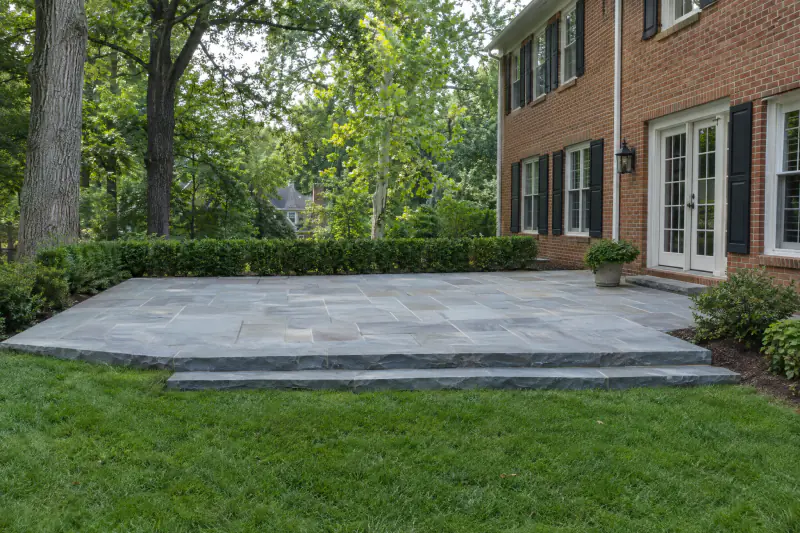
Clay soils here heave in winter, so footing depth is no place to save money, and HOAs commonly require architectural approval. A pergola often covers a new flagstone patio or part of a new deck, with low-voltage lighting along the beams.

Frequently asked questions about pergolas

How deep should pergola footings be in Northern Virginia?

Below frost, which across most of the region means roughly 24 in. or more to the bottom of the footing, deeper in soft fill. We prefer each post on a metal base set in the concrete rather than buried, so its end grain stays dry.

Can a pergola hang off the brick on my house?

Not from the veneer. County deck details and Virginia's prescriptive deck rules do not allow a ledger on brick or stone veneer, and we hold pergolas to the same rule. Instead we add posts close to the wall. On siding, a ledger can be fastened to the framing behind it, with flashing above.

Is a louvered aluminum pergola worth the cost?

It is if you want to sit outside in rain as well as sun, since closed blades form a draining roof. It often costs two or more times as much as wood. If rain rarely keeps you inside, wood with shade cloth costs far less.

What plants grow well on a pergola in Northern Virginia?

Native vines such as trumpet honeysuckle, crossvine, American wisteria and virgin's bower clematis suit the region. Avoid Chinese and Japanese wisteria and sweet autumn clematis, all on Virginia's invasive plant list; the wisterias also grow heavy enough to strain rafters. Keep vines off the ledger and the house wall.

How does a pergola handle wind and snow?

Open rafters let most wind and snow through, so the main risks are uplift and racking, handled by deep footings, bolted beams and bracing. Shade cloth and closed louvers catch wind and hold snow, so follow a louvered system's stated ratings.

What size pergola do I need?

Size it to the furniture plus walking room. A dining table for six usually needs about 12 by 12 ft. Many pergolas have 8 to 9 ft of clearance under the beams. We tape out the footprint on site first.

From the field notes

Long-form guides on pergolas from the crew that does the work, with Northern Virginia costs, timing and permit detail.

Decks & Porches

Deck permits in Fairfax County

A Fairfax County deck permit runs through PLUS, needs a sealed plat and either drawings or the county's Typical Deck Details, and ends with footing, framing and final inspections. What to prepare, what it costs and what gets plans sent back.

The myYardPros Crew

All guides in this category  ·  Planning guides  ·  Glossary  ·  FAQ

Ready to talk about your pergolas project?

Tell us about your property and what you want to fix or build. We will visit, measure and send a clear written estimate. We serve Fairfax, Loudoun, Prince William and Arlington counties.

Serving Fairfax, Loudoun, Prince William and Arlington counties and the cities inside them. Check your address. Military, veterans, first responders, healthcare workers and teachers: ask about the Heroes Discount.