
  • Serving the Northern Virginia area
Call (571) 200-9600 Get an Estimate
Water Management

Catch Basins & Dry Wells in Northern Virginia

Catch basins are grated surface inlets that collect standing water and send it through solid pipe to a downhill outlet or an underground dry well. Northern Virginia homeowners need them for low spots grading cannot fix and wet patio or garage edges, but a dry well only works where the local clay absorbs water fast enough.

  • Inlets set at the true low point
  • Solid pipe on a measured slope
  • Dry wells sized after a percolation test
  • Licensed & insured in Virginia
  • Based in Sterling, VA
  • Residential projects only
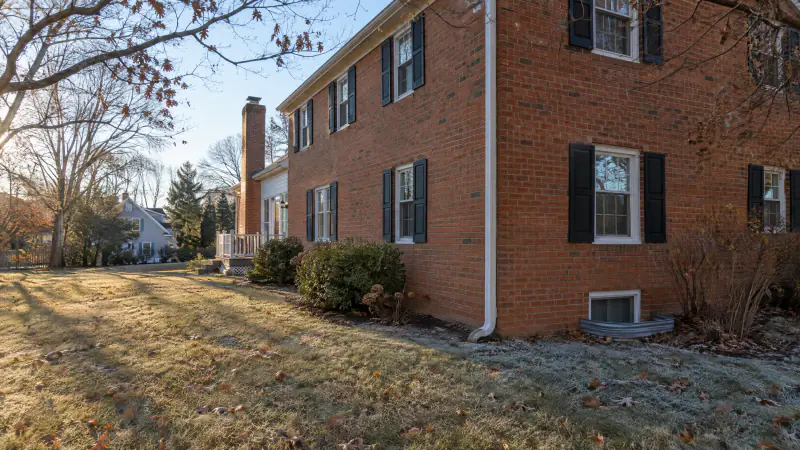
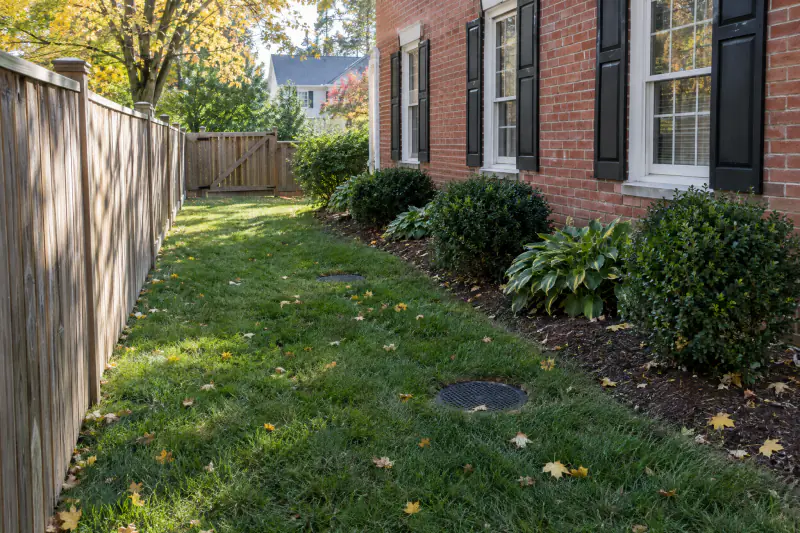
Flush catch basin grates in a side yard lawn beside a brick colonial home
Flush lawn grates along the side yard's lowest line
Typical timeline
1-3 days for most projects
Pipe slope
Commonly 1/8 in. per ft or more
Before a dry well
Percolation test at the site
Upkeep
Clean sumps twice a year

When does a yard need a catch basin or dry well?

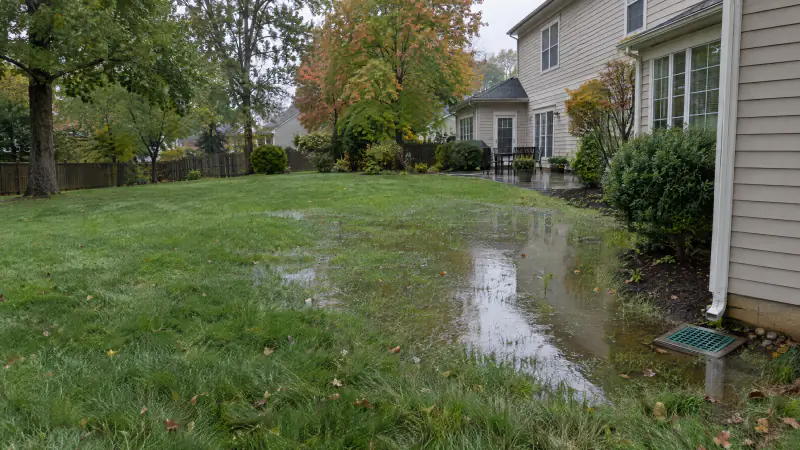
A yard needs a catch basin when water collects in a spot lower than everything around it and the surface cannot be reshaped to let it escape: a courtyard boxed in by house and patio, or the foot of a sloped driveway. If the hollow can simply be filled and sloped, yard grading is simpler. Our yard drainage overview compares the options.

Done badly, a catch basin becomes a puddle with a grate in it. Common mistakes: an inlet set slightly high, corrugated pipe that sags and holds silt, and an outlet no lower than the basin. A dry well dug into dense clay without testing fills in the first storm and stays full for days.

Done properly, the grate sits just below the surrounding surface, a sump traps grit, and smooth-wall pipe runs on steady fall to an exit that is truly downhill.

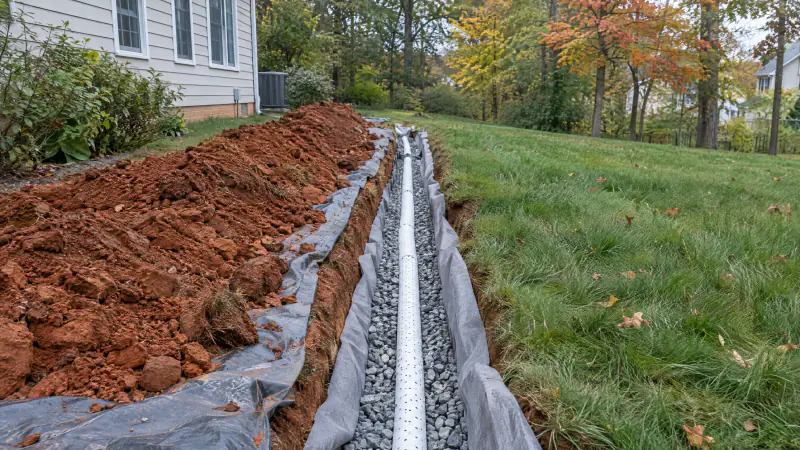
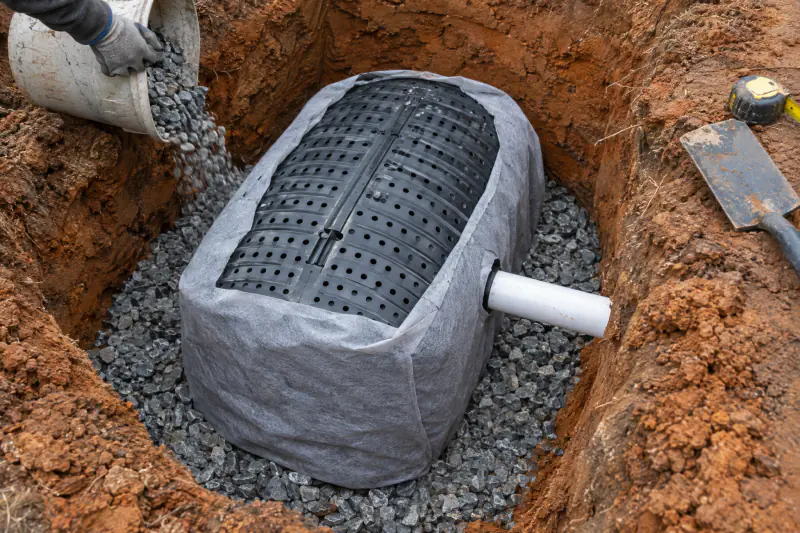
Dry well chamber wrapped in filter fabric on crushed stone during installation
Fabric-wrapped dry well chamber bedded in clean stone

What types of catch basins and surface drains do we install?

The inlet is chosen by where water collects, the outlet by where it can go.

  • Lawn catch basins

    A square or round basin with a flat grate set flush with the turf, or a domed grate in mulched beds that still takes water when leaves cover it. A sump below the outlet traps sediment.

  • Channel drains

    A narrow grated trench set in concrete across a garage apron or along a patio edge, with a grate rated for the load, stops sheet flow before it reaches a door.

  • Solid pipe and outlet

    Smooth-wall PVC, usually 4 inch, carries water on a constant slope to a daylight outlet, emitter or dry well, with cleanouts where the line is long or turns.

  • Dry wells with overflow

    Where no outlet exists and the soil passes a percolation test, a fabric-wrapped perforated chamber bedded in stone stores runoff underground, with an overflow for big storms.

How is a catch basin or dry well installed?

Every part is sized from measured elevations and, for dry wells, measured absorption.

  1. Storm walk and elevations

    We note where water stands, measure how far the low point sits below the surrounding grade, and trace a route to the lowest workable exit.

  2. Percolation test if needed

    If a dry well is under consideration, we dig a test hole at its proposed depth, fill it and time how fast the water drops. Slow clay rules it out early.

  3. Layout and written price

    You receive a layout of each inlet, the pipe route and slope, the outlet type and any concrete or paver cutting, with a written price.

  4. Marking and installation

    After Virginia 811 marks utilities, we trench, bed the pipe on a smooth base, set basins just below grade and check fall at every joint.

  5. Flow test and restoration

    We run a hose into every inlet, confirm water leaves at the outlet, restore turf or pavers and show you how to lift and clean each grate.

Patio slot drain catching summer rain

A five-second clip of light rain on a paver patio where a narrow slot drain along the edge collects runoff before it can reach the French doors of the house.

Daylight outlet, pop-up emitter or dry well: where should the water go?

The outlet decides whether a system works for decades or backs up.

Daylight outletPop-up emitterDry well
NeedsLower ground at the pipe endEmitter lower than the inletSoil that absorbs water
In clay soilUnaffectedUnaffectedOften poor; test first
Water left in pipeLittle; the line emptiesSome stands below the emitterChamber may stay wet for days
UpkeepKeep the end open and screenedCheck the lid opens freelyKeep silt out; watch the overflow

How much do catch basins and dry wells cost in Northern Virginia?

As of 2026, typical Northern Virginia market ranges put a single catch basin with a solid pipe run to an outlet at roughly $1,500 to $5,000. These are regional budget figures, not our prices:

  • Several inlets on a shared line: roughly $3,000 to $9,000.
  • Channel drain across a driveway or patio edge: roughly $2,000 to $6,000.
  • Dry well with overflow: roughly $2,000 to $6,000.

The total moves with pipe length, the depth needed to keep fall, concrete or paver cutting, rock or roots in the trench, and lawn restoration. A dry well is sized to the area draining into it and the tested absorption rate, so slower soil means a larger, costlier chamber.

Request an on-site estimate to have your elevations measured.

Slot trench drain along a paver patio catching rain below French doors
A slot drain keeps patio rain away from the doors

What should you ask before hiring someone to install a catch basin?

Put these questions to any installer, us included.

  • Where exactly is the outlet, and is it measurably lower than every inlet?
  • Will the pipe be smooth-wall PVC or flexible corrugated, and why?
  • Does each basin have a sump below the outlet pipe to trap sediment?
  • If a dry well is proposed, was a percolation test done at that spot?
  • Does the dry well have an overflow for storms larger than it holds?
  • Will downspouts share this line, and is the pipe sized for that flow?

Not sure what you need?

Tell us what you are seeing. We will look at the site, explain the options in plain terms and give you a written estimate.

Catch basins and dry wells in Fairfax, Loudoun, Prince William and Arlington

Soil decides whether a dry well makes sense in Northern Virginia. Much of the region has dense, slow-draining clay, and parts of eastern Fairfax and Prince William counties have marine clay, a high shrink-swell soil both counties flag as a problem soil, that absorbs very little. That is why we test first and prefer a daylight outlet whenever the lot has one.

Connecting to a street, curb or public storm drain typically needs approval from the county, city or VDOT. With a private well or septic system, keep infiltration features well away from both and check the setbacks your county or health department applies. HOAs in South Riding, Woodbridge and similar communities commonly review visible outlets. If roof water is the main source, a downspout line may be cleaner, and driveway drains often go in with new paver driveways.

Frequently asked questions about catch basins & dry wells

Do dry wells work in Northern Virginia clay?

Sometimes, but less often than homeowners hope. A dry well empties only as fast as the surrounding soil absorbs water, and much local clay absorbs very slowly. A percolation test at the proposed depth shows whether it can drain between storms.

How often does a catch basin need cleaning?

Clean it at least twice a year, typically in spring and again after leaf drop, plus after any storm that washes mulch or soil into it. Lift the grate, scoop sediment from the sump and run a hose into the inlet to confirm it flows.

Where should a catch basin be placed?

At the true lowest point of the area that holds water, set slightly below the surrounding surface. That spot is found with a level or laser, not by eye. A basin placed beside a puddle rather than in it leaves water standing after every rain.

Can downspouts be connected to a catch basin line?

Often, if the pipe is sized for the combined flow. Roof runoff arrives fast, so a small line serving several downspouts and a yard basin can back up and push water out through the grate. In many yards a separate downspout line is the better design.

What is the difference between a channel drain and a catch basin?

A catch basin collects water at one point, while a channel drain is a long, narrow grate that intercepts water flowing across a wide surface. Channel drains suit driveways, garage aprons and patio edges where water sheets toward a building; basins suit lawn and bed low spots.

Will a catch basin or dry well freeze in winter?

Standing water in a shallow sump or outlet can freeze in a hard cold snap, and ice in an emitter can block a line until it thaws. A properly sloped line that empties between storms leaves little water to freeze, one more reason pipe fall matters.

From the field notes

Long-form guides on catch basins & dry wells from the crew that does the work, with Northern Virginia costs, timing and permit detail.

Water Management

A pre-winter drainage walkthrough

Standing water beside a foundation in November becomes ice in January. Walk the house stop by stop, from gutters to low spots, with the measurements that matter and the fixes that can still be built this winter.

The myYardPros Crew

All guides in this category  ·  Planning guides  ·  Glossary  ·  FAQ

Ready to talk about your catch basins and dry wells project?

Tell us about your property and what you want to fix or build. We will visit, measure and send a clear written estimate. We serve Fairfax, Loudoun, Prince William and Arlington counties.

Serving Fairfax, Loudoun, Prince William and Arlington counties and the cities inside them. Check your address. Military, veterans, first responders, healthcare workers and teachers: ask about the Heroes Discount.