  • Serving the Northern Virginia area
Call (571) 200-9600 Get an Estimate
Patio Planning Worksheet: a Northern Virginia home and yard

Printable worksheet

Patio planning worksheet: decide before you get quotes

A patio that lasts starts with decisions made on paper: how you will use it, where the water goes, what sits under the surface and what approvals apply. This worksheet takes you through each one and ends with questions for any installer. It is free to print and needs no sign-up. Bring the finished pages to your estimate visit.

How do you use this worksheet?

Print it and write beside each item. A short note is enough, and "not sure" is a perfectly good answer. Those are the items to raise at the site visit. Work through the sections in order, because the early answers, such as use and location, shape the later ones, such as base and budget.

If you are still choosing a surface, read our pavers vs. stamped concrete guide first. To see how we build, visit the paver patios page. For a patio that is already failing, our article on why patios fail on clay explains the usual causes.

Size and use

Start with how the space will live, then let the layout follow.

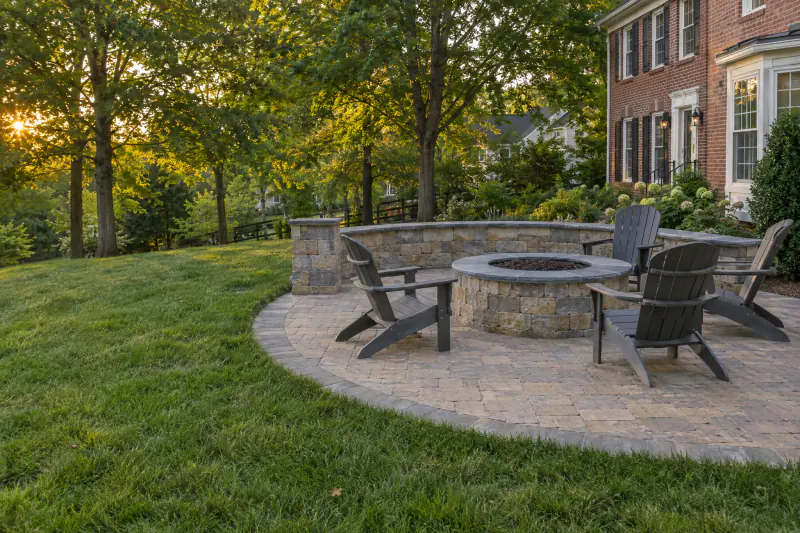
  • Write down the main use: dining, lounging, grilling, a fire pit, play space or a mix.
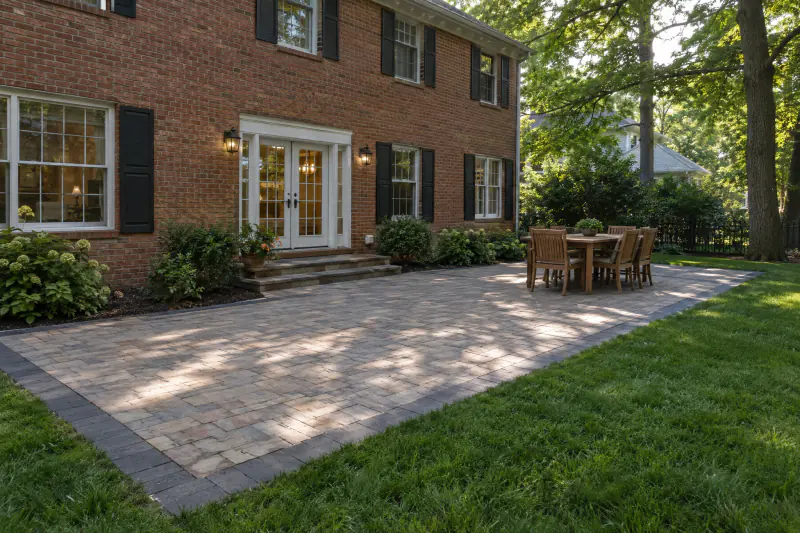
  • List the furniture and equipment that must fit, then mark the footprint on the lawn with rope or chalk.
  • Note how many people you host most often, and how many at the largest gathering.
  • List features you may add later, such as a fire pit, seating wall or lighting, so the layout allows for them.

Location, grade and drainage

Water decides how long a patio stays level, so settle it before choosing a finish.

  • Pick the spot by sun, shade, wind and the view from the kitchen window.
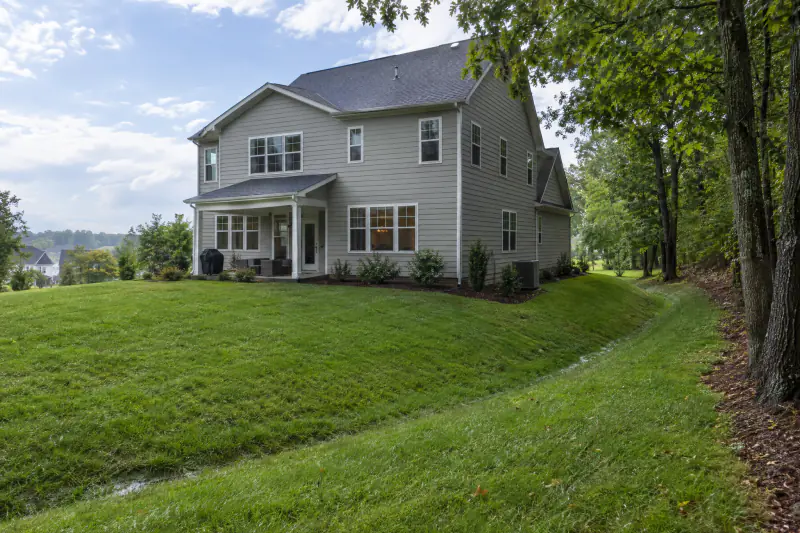
  • Note which way the yard falls. Paver makers suggest a slope of 1/8 to 1/4 inch per foot away from the house.
  • Note where every downspout drains. Roof water must go under or around the patio, never onto it.
  • Walk the yard after rain and mark soft or wet ground. Fix wet spots first.
  • Look for tree roots, buried irrigation and lighting wire. Virginia 811 marks public utilities before digging.
  • Check your plat for easements and whether the lot touches a stream buffer.

Base and material choices

Many patio failures come from the inches nobody sees.

  • Ask how deep the dig will be. Manufacturers specify roughly 4 to 10 inches of base depending on soil, plus sand and paver.
  • Ask about the base layers: fabric on clay, compacted aggregate and about an inch of bedding sand.
  • Compare pavers, natural stone, porcelain and poured concrete for your soil, budget and repair needs.
  • Ask about edge restraint spiked into the base, so border pavers do not drift into the lawn.
  • Ask what happens if a gas, drain or electric line must go under the patio later.

Permit and HOA questions

An on-grade patio often needs no building permit, but other approvals can still apply.

  • Read your HOA guidelines. Many Northern Virginia associations want written approval before a patio starts.
  • Ask your county about zoning approval and lot coverage. Prince William requires zoning approval for every patio.
  • A raised patio held up by a wall is judged by the wall, so ask about wall height.
  • Add up disturbed ground, including the work zone and access path. County thresholds run from 2,500 to 5,000 square feet.
  • Check whether any part of the patio falls inside a Resource Protection Area.
  • File the HOA application and ask the county the same week. Neither approval replaces the other.

How should you frame the budget?

Set a ceiling first, then separate must-haves from phase two. Features such as a fire pit or lighting can wait if the layout leaves room. Planning ranges for patios and related work are on our cost guide. They are typical Northern Virginia market ranges, not myYardPros prices, so use them to test whether a project fits your budget.

Five things move the number most: access, what is under the surface, size and shape, materials, and demolition or permits. A written scope after a site visit is the only figure worth planning around. For permit questions, see our patio and retaining wall permit guide.

What should you ask any installer?

Ask every contractor the same questions and compare the answers in writing.

  • How deep is the excavation, and how thick is the compacted base on my soil?
  • Where will roof water and surface water go once the patio is built?
  • Does the written scope name materials, edge restraint, joint sand, haul-away and lawn repair?
  • Who handles the permit questions and the HOA package, and who signs what?
  • Is the contractor licensed in Virginia? Verify the license with DPOR and ask for insurance details.
  • Can I see a patio at least five winters old, not a photo from installation day?

Common questions

Do I need a permit to build a patio in Northern Virginia?

Usually not a building permit for a patio laid on grade, though counties differ. Zoning approval, lot coverage, land disturbance thresholds and Resource Protection Area rules can still apply, and a raised patio held up by a wall follows the wall rules. Check your county, and see our county-by-county patio permit article.

Should I choose pavers or stamped concrete?

It depends on your soil, budget and tolerance for cracks. Pavers tolerate ground movement better and can be lifted and relaid. A stamped slab usually costs less up front but can crack if the ground shifts. We build with pavers and natural stone and do not pour stamped concrete. Our comparison guide sets out the trade-offs.

Can I bring this worksheet to an estimate visit?

Yes, and it helps. At a visit we walk the site, take measurements and levels, check access and drainage, and ask how you want to use the space. Your notes shorten that conversation. You then receive a written scope. Start on the estimate page or call (571) 200-9600.

Let's talk about your yard.

Tell us what you have in mind. We will walk the property with you, explain your options plainly and put the scope and price in writing.

Serving Fairfax, Loudoun, Prince William and Arlington counties and the cities inside them. Check your address. Military, veterans, first responders, healthcare workers and teachers: ask about the Heroes Discount.