  • Serving the Northern Virginia area
Call (571) 200-9600 Get an Estimate
Pre-Winter Drainage Checklist: a Northern Virginia home and yard

Printable checklist

Pre-winter drainage walkthrough: a one-hour checklist for your yard

Water that stands beside your house in November can turn to ice in January, and freeze-thaw cycles can damage slabs, steps and foundations. This one-hour checklist covers gutters, downspouts, grading, window wells, the sump discharge and a sprinkler reminder. It is free to print and needs no sign-up. Walk it during or just after a rain if you can.

How do you use this walkthrough?

Start at the front door and walk clockwise around the house with a pen. You need a tape measure, string, a level and your phone for photos. The walk takes about an hour on a typical lot, and in most years the best window is after the leaves are mostly down and before the ground freezes hard.

Tick what passes and circle what does not. Weekend fixes can wait on your list, but anything leaving water against the house should not. Our full walkthrough article explains each stop, and our yard and foundation drainage page covers the construction side.

Gutters and downspouts

Roof water is the biggest source of water beside the house.

  • Look for sagging sections, dripping seams and leaves above the lip. Watch each corner and valley for overflow in rain.
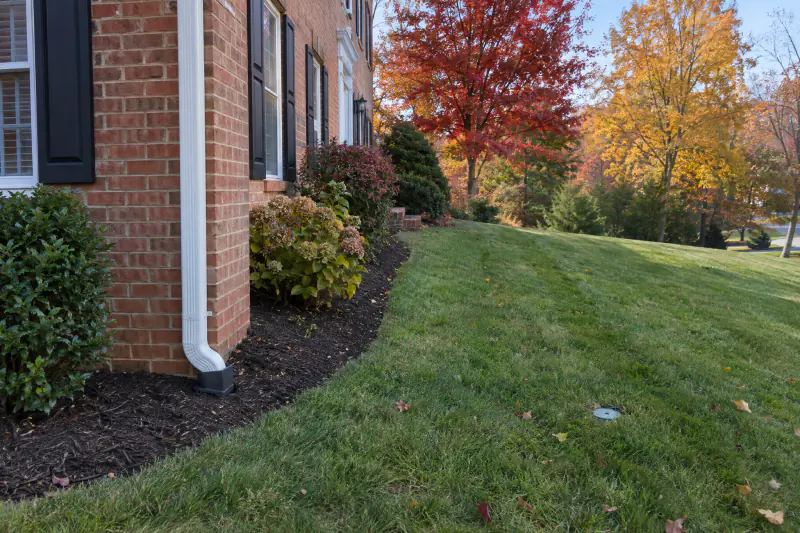
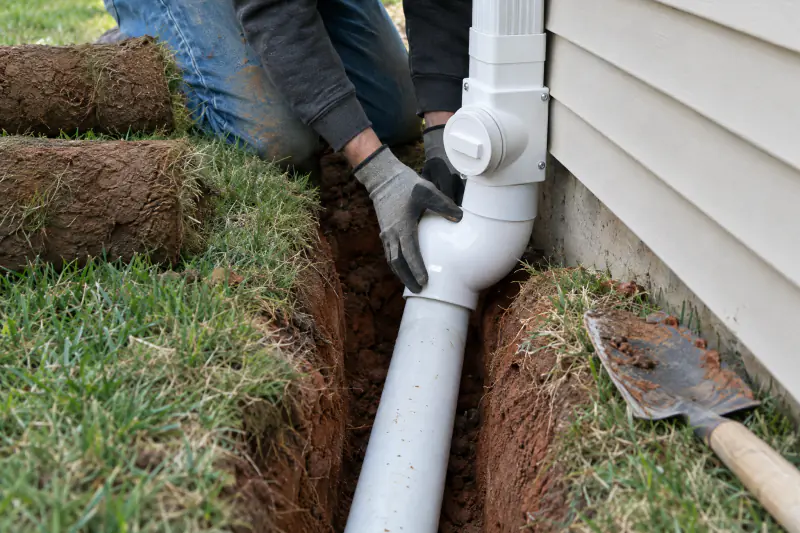
  • Follow every downspout to its end: splash block, extension or buried line.
  • Run a hose into each buried line and time how long water takes to appear at the outlet.
  • Aim to release each downspout about 10 feet from the foundation, as Virginia Cooperative Extension advises, even with a staked winter extension.
  • Check the seal where each downspout meets its buried adapter. Unsealed joints leak at the wall.
  • Plan a second gutter cleaning after the late oaks drop their leaves.

Grade, low spots and slabs

You are looking for any place where water can sit still long enough to freeze.

  • Stake a string at ground level against the wall, pull it level ten feet out and measure the drop. Aim for about 6 inches.
  • Record the drop at each wall. New homes need 6 inches in 10 feet under Virginia's code; less shows where to work.
  • Keep soil, mulch and stone below the siding, ideally with several inches of visible gap.
  • Lay a four-foot level across any patio or walk beside the house. It should fall away from the wall.
  • Seal any gap where a sunken slab has pulled away from the wall, and clear the outlet it should drain to.
  • Mark each low spot with its distance from the house and whether the ground beyond it rises or falls.
  • Leave recorded drainage easements and rear swales open. Do not fill them.

Window wells, sump discharge and outlets

The pieces nobody looks at until February.

  • Clear leaves and silt from every window well. Soil should stay below the bottom of the window frame.
  • Fit a clear cover on any well that has held water, and check that no gutter corner sits above it.
  • Find where the sump pipe ends. Water should typically exit about 10 feet out, onto ground that keeps falling away.
  • Look for a freeze-relief fitting on the discharge line, a device sold to let water escape if a buried line freezes.
  • Replace flexible black hose extensions on sump lines. They can sag, hold water and freeze solid.
  • Lift each pop-up emitter cap, clear the grates and confirm daylight pipe ends are open.

What about the sprinkler system?

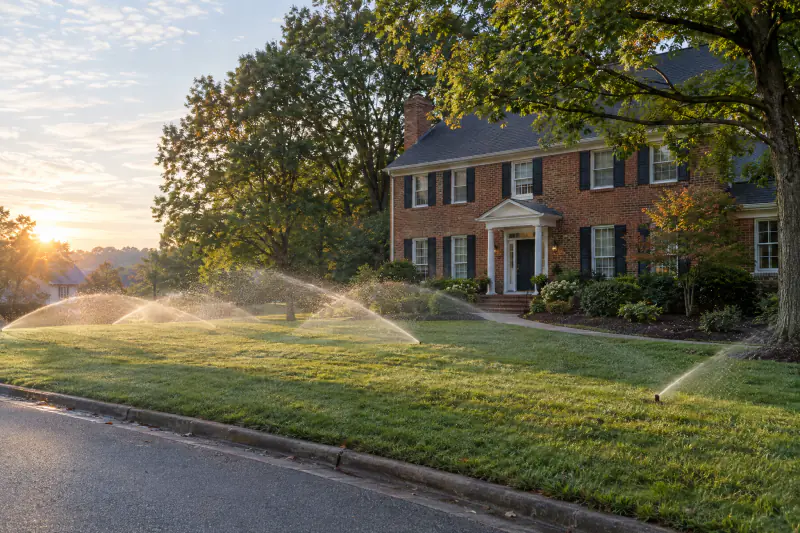
If you have irrigation, book the blowout before the first hard freeze. That is a forecast, not a date. The National Weather Service uses 28 degrees or lower as its hard freeze threshold, and a backflow preventer above ground can crack if it freezes full of water, so many irrigators drain it earlier. Our sprinkler winterization guide covers timing and method.

One more caution while you work. Avoid compacting fill or setting base stone on frozen or saturated ground. Call Virginia 811 before any trenching, in any month. The details are in our maintenance guide.

What should you photograph for a contractor?

Specific observations get you a specific design.

  • Photos from a heavy rain showing where water stood or ran, with the time since the rain began.
  • The string and tape at each wall, with the measured drop written beside it.
  • Each downspout end and each window well, including any standing water.
  • The sump pipe outlet and the fitting where it leaves the house.
  • Private lines we should locate: irrigation, lighting wire, invisible fence, gas to a grill.
  • Your plat with any drainage easement marked, plus your HOA's rules on grading changes.

Common questions

Is it too late for a walkthrough if the leaves are already down?

No. The walk works any time before the ground freezes hard, and leaf fall actually makes low spots and troughs easier to see. The weekend fixes, such as extending downspouts and clearing wells, work in any mild week. Larger drainage construction can also go ahead in mild stretches, as long as the clay is neither frozen nor soaked.

Which fixes should not wait for spring?

Anything that leaves water standing against the house. That means downspouts that release too close, buried lines that fail the hose test, clogged window wells, a sump discharge with no freeze relief, and soil or mulch against the siding. Masonry and concrete repairs are different. Those usually wait for mild weather so they can cure properly.

Do I need a permit to fix drainage around my house?

Usually not for spot repairs, a short buried line or a small swale. Counties do set land disturbance thresholds above which a grading permit applies, and work in a recorded easement or near a stream buffer can need approval. Your HOA may review grading changes too. Check before anything larger, and see our estimate page if you want a site visit.

Let's talk about your yard.

Tell us what you have in mind. We will walk the property with you, explain your options plainly and put the scope and price in writing.

Serving Fairfax, Loudoun, Prince William and Arlington counties and the cities inside them. Check your address. Military, veterans, first responders, healthcare workers and teachers: ask about the Heroes Discount.