Key takeaways
- For most Northern Virginia lawns, buy a blend of three or more turf-type tall fescue varieties named on the current Virginia Tech and University of Maryland recommended list, 90 to 100 percent tall fescue.
- Virginia Cooperative Extension's tall fescue seeding rate is 6 to 8 pounds per 1,000 square feet for establishment; Kentucky bluegrass 2 to 3, fine fescue 3 to 5, ryegrass 4 to 6.
- Late summer to mid-fall is the best time to seed cool-season grass in Virginia. In mid-October the window is closing; after it, the honest choices are a dormant seeding or waiting until late August.
- Fine fescues have the best shade tolerance of the cool-season grasses and poor traffic tolerance. Under a dense oak, no seed fixes the light.
- Read the label as Virginia law requires: kinds and varieties with percentages, germination with a test date, weed seed, other crop and inert matter. Skip anything marked variety not stated.
On this page
- What is the best grass seed for Northern Virginia?
- Why is Northern Virginia such a hard place to grow grass?
- How do the lawn grasses compare for Northern Virginia?
- Why do turf-type tall fescue blends dominate Northern Virginia lawns?
- What grass seed works in shade in Virginia?
- Where do Kentucky bluegrass and perennial ryegrass fit?
- Should you consider zoysia or bermuda for a full-sun yard?
- How do you read a grass seed label?
- What are the seeding rates for new lawns and overseeding?
- When should you plant grass seed in Virginia?
- How do you prepare the soil and seed a new lawn?
- How do you water new seed, and when do you mow it for the first time?
- What grass seed should you not buy for a Northern Virginia lawn?
- How much do grass seed and seeding cost in Northern Virginia in 2026?
- Which seed and timing fit Fairfax, Loudoun, Prince William, Arlington and Alexandria lawns?
- Frequently asked questions
What is the best grass seed for Northern Virginia?
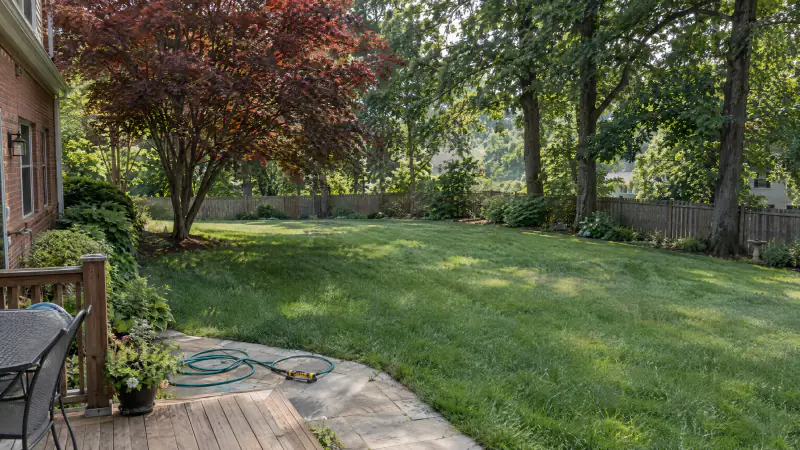
The best grass seed for most Northern Virginia lawns is a blend of three or more turf-type tall fescue varieties taken from the current Virginia Turfgrass Variety Recommendations, the list Virginia Tech and the University of Maryland publish together each year. Tall fescue is the best adapted lawn grass across Virginia, it has the deepest roots of the cool-season grasses, and it tolerates our clay, our humid summers and moderate shade better than anything else that stays green in winter. A blend of 90 to 100 percent tall fescue by weight, with up to 10 percent Kentucky bluegrass if you want the lawn to knit, is the mix Virginia Cooperative Extension describes for tall fescue sod and the one we use for seed.
The exceptions are narrow. Under heavy shade, fine fescues hold on longer than tall fescue, at the cost of traffic tolerance. On a full-sun lot where a brown lawn from November to April is acceptable, zoysiagrass is a low-maintenance alternative established by sod, plugs or seed in late spring, not from a fall bag of seed. Kentucky bluegrass alone and perennial ryegrass alone are poor choices here, for reasons covered below.
Timing is part of the answer. Virginia Cooperative Extension says late summer to mid-fall is the best time to establish cool-season turfgrass, and that is the window our aeration and overseeding projects are built around. If you are reading this in mid-October, the window is closing, and the timing section tells you what to do about it.
Why is Northern Virginia such a hard place to grow grass?
Northern Virginia is hard on lawns because it sits in what turfgrass scientists call the transition zone: too hot in July for the cool-season grasses and too cold in January for the warm-season grasses. Virginia Cooperative Extension's turfgrass specialist put it plainly in a 2008 newsletter: our cold winters and hot, dry summers do not allow for easy choices in lawn grasses. Every species that grows here is compromised in one season.
Cool-season grasses, which include tall fescue, Kentucky bluegrass, fine fescues and perennial ryegrass, prefer temperatures of 60 to 75 degrees and grow hardest from late summer into early winter and again in spring; their growth drops sharply in mid-summer heat. Warm-season grasses, zoysiagrass and bermudagrass, prefer 80 to 95 degrees, go dormant and brown for three to five months after frost, and are best established from mid-May through June, not in fall.
Soil makes it harder. Most Northern Virginia lots sit on acidic clay, and on newer lots in Ashburn, Brambleton and Bristow the topsoil was stripped during construction. Virginia Cooperative Extension notes that many Virginia soils are very acid and probably require lime, which is why the soil test comes before the seed. We explain the summer side in keeping tall fescue alive through a Northern Virginia summer. The conclusion is that the lawn here is a fall project, and the species that handles the compromise best is tall fescue.
How do the lawn grasses compare for Northern Virginia?
Traits as described in Virginia Cooperative Extension turfgrass publications, with our verdict for typical Northern Virginia lots.
| Grass | Sun and shade | Germination and establishment | Strengths | Weaknesses | Our verdict |
|---|---|---|---|---|---|
| Turf-type tall fescue | Full sun to moderate shade | 10 to 14 days; sod widely available | Deepest roots of the cool-season grasses, tolerates a wide range of soils, low to moderate maintenance | Bunch grass that does not fill its own gaps; thins in summer heat | The default for most lawns here |
| Kentucky bluegrass | Full sun | 14 to 21 days; slow to establish | Dark color, fine texture, spreads by rhizomes | Moderate to high maintenance, thatch, disease when underfed | A minor partner with tall fescue |
| Fine fescues (creeping red, chewings, hard) | Best shade tolerance of the cool-season grasses | 10 to 14 days; seed in early fall | Low fertility needs, low maintenance, persistent in dry conditions and poor soils | Poor traffic tolerance, dislikes wet soil, declines if overfed | The shade specialist |
| Perennial ryegrass | Full sun to moderate shade | 7 to 10 days, the fastest of these | Quick cover, excellent wear when mature | Poor heat and drought tolerance; VCE suits it to elevations above 1,500 feet | Not a main component here |
| Zoysiagrass | Full sun, average shade tolerance | Sod, plugs or seed in May to June; slow | Dense, low maintenance, most cold-hardy warm-season grass | Brown 3 to 5 months, slow, costly to establish | A full-sun option if winter brown is acceptable |
| Bermudagrass | Full sun, very poor shade tolerance | Sod, sprigs or seed in late spring | Fastest growing lawn grass, strong recovery from damage, more drought tolerant than zoysia | Invades beds, brown 3 to 5 months, cold tolerance varies | Rarely right on a Northern Virginia lot |
Germination days and traits are general guidance from a 2008 Virginia Cooperative Extension newsletter by the state turfgrass specialist and the 2025-26 variety list; variety names come from the annual Virginia-Maryland recommended list.
Why do turf-type tall fescue blends dominate Northern Virginia lawns?
Turf-type tall fescue dominates because it survives both halves of the transition zone better than any other grass that stays green all year. Virginia Cooperative Extension calls it the best adapted turfgrass used as a lawn grass across the state. It has the deepest root system of the cool-season grasses, which lets it find water in July when bluegrass and ryegrass have gone dormant. It germinates in 10 to 14 days, tolerates a wide range of soil conditions, performs in full sun to moderate shade, and responds to a modest 2 to 4 pounds of nitrogen per 1,000 square feet per year.
The word blend matters. Tall fescue is a bunch grass: each plant is a clump, it spreads very little, and no single variety is best at drought, brown patch and shade at once. A blend of three or more varieties means one weakness does not take out the whole lawn. Virginia Tech's recommendations list tall fescue varieties in a recommended category at 90 to 100 percent of the blend by weight, with 10 percent, or 15 percent at most, Kentucky bluegrass allowed for sod strength. The same proportions make sense for seed.
Which varieties? The list changes yearly, so we will not print names that may drop off; the current edition, 2025-26 as we write, is publication SPES-727 on the Virginia Cooperative Extension site. To make it, a variety must be sold as certified seed, be tested at sites in both Virginia and Maryland, and perform well for two years to be called promising and three years to be called recommended, drawing on National Turfgrass Evaluation Program trials. VCE also warns not to expect those cultivars at the garden centers of large retailers; a turf supply house or farm cooperative usually has them.
What grass seed works in shade in Virginia?
For shade, use fine fescues: creeping red, chewings and hard fescue. Virginia Cooperative Extension describes them as having the best shade tolerance of the cool-season turfgrasses, persistent in dry conditions and somewhat poor soils, and recommends them for low maintenance areas or partial to full shade. They need only 1 to 2 pounds of nitrogen per 1,000 square feet a year and fewer mowings, and they germinate in 10 to 14 days; in our experience they are slow to thicken, so fall seeding is best.
The trade-offs are specific. Fine fescues have poor traffic tolerance, so they are wrong for the strip where the kids and the dog run. They do not like persistently wet soil, which rules out the low corner in Lorton or Clifton until the drainage is fixed. Their quality declines when overfertilized. And the Virginia-Maryland list notes that the limited research so far has not shown an advantage to blending fine fescue species, so a single good chewings or hard fescue variety is fine.
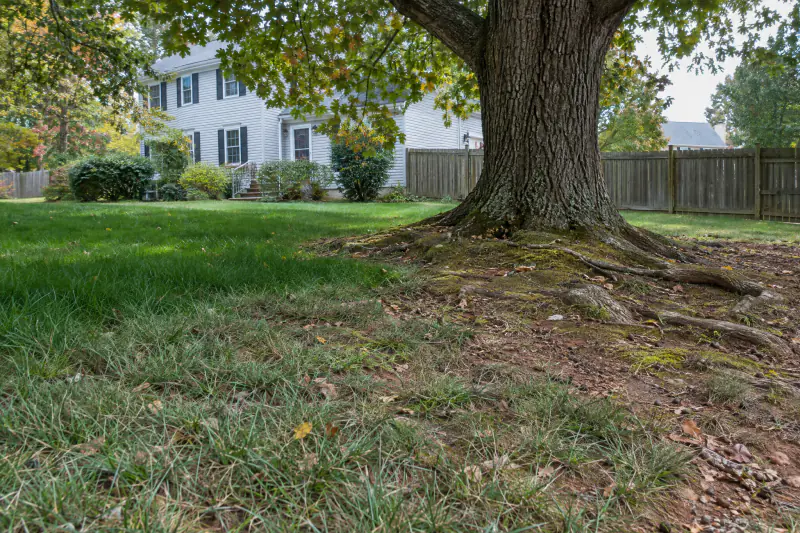
Be honest about the limit. Fine fescue extends a lawn into moderate shade; it does not grow grass under a dense Vienna oak or along the north wall of a McLean townhome. Where a strip gets less than a few hours of filtered sun, the options are mulch, a shade bed, or artificial turf for a play or pet area. Sun-shade mixes of fine fescue and Kentucky bluegrass segregate over time; in Northern Virginia, tall fescue with a fine fescue component for the shaded edge is the more durable version of that idea.
Where do Kentucky bluegrass and perennial ryegrass fit?
Kentucky bluegrass fits as a minor partner. Virginia's recommendations allow 10 percent, and up to 15 percent, Kentucky bluegrass by weight in a tall fescue mixture to improve sod strength, because bluegrass spreads by rhizomes and knits the clumping fescue together. As a lawn on its own, bluegrass is a full-sun grass that VCE describes as a commitment to moderate to high maintenance: 3 to 4 pounds of nitrogen a year, thatch, disease when underfed, and slow germination of 14 to 21 days followed by slow establishment, which makes spring plantings much less successful than early fall ones. On a lot with shade, clay and a July drought, that is a lot of work for a result tall fescue gives more easily.
Perennial ryegrass tempts people at the register because it germinates in 7 to 10 days and looks seeded within two weeks. VCE suits it to full sun or moderate shade at elevations above 1,500 feet, which describes the Blue Ridge, not Reston. It is not very heat or drought tolerant and can carry significant disease pressure in warmer climates. A small share in a blend is tolerable; a bag that is mostly ryegrass gives you a green November and a thin August.
Annual ryegrass is a different plant and belongs nowhere in a lawn mix. It sprouts in days, dies within the year, and leaves the gaps it was supposed to fill. It appears in cheap contractor mixes because it is inexpensive. If the label lists it, put the bag back.
Should you consider zoysia or bermuda for a full-sun yard?
Zoysiagrass is worth considering on a full-sun lot if you can accept a brown lawn for three to five months every winter; bermudagrass rarely is. Virginia Cooperative Extension describes zoysia as the most cold-hardy of the warm-season grasses, very unlikely to be damaged even by a severe winter in Virginia, very dense once established, and in need of only 1 to 2 pounds of nitrogen a season. The recommended vegetative varieties on the current Virginia-Maryland list are Meyer and Zeon, with Zenith the recommended seeded variety. The costs are patience and money: zoysia is an extremely slow grower, is expensive to establish by sod or plugs, and the ideal planting time is mid-May through June, so it is never the answer to a fall seeding question.
Bermudagrass is a full-sun grass with very poor shade tolerance that VCE calls both an awesome turfgrass and one of the world's most troublesome weeds. It creeps into every bed and under every fence, it is the fastest growing lawn grass, which means more mowing than any other, and its cold tolerance varies by variety; two of the recommended varieties on the 2025-26 Virginia list are flagged for the state's warmest regions only. On a Northern Virginia lot with neighbors, beds and an HOA, we do not recommend it.
A note for HOA communities in Ashburn, South Riding and Brambleton: a lawn that is tan from Thanksgiving to late April stands out on a street of green fescue, and some associations have opinions about it. Check the covenants first. If the yard is full sun and the goal is a lawn that shrugs off July, zoysia sod in late spring is the honest alternative, and sod installation is how it is done.
How do you read a grass seed label?
Virginia's seed law, Code of Virginia section 3.2-4008, sets the facts a seed label must carry; lawn and turf mixtures have their own subsection with slightly different wording, but these are the items to read.
- Kind and variety, with percentage by weight
- Each grass kind and variety present at more than 5 percent of the bag, in order of predominance. You want named tall fescue varieties you can find on the Virginia-Maryland list, not the phrase variety not stated.
- Germination percentage and test date
- The percentage expected to sprout, stated separately from hard or dormant seed, with the month and year the test was completed. Look for high germination and a recent test; seed loses vigor in a warm garage.
- Weed seed percentage
- The percentage by weight of all weed seeds. The number you want is as close to zero as the label can print. A fraction of a percent across a 50 pound bag is a lot of weed seeds.
- Restricted noxious weed seeds
- The name and number per ounce or pound of each restricted noxious weed present. The right entry is none; any named noxious weed is a reason to choose another bag.
- Other crop seed
- The percentage by weight of agricultural or vegetable seed other than the named kinds. In a lawn bag this is where orchardgrass or pasture fescue hides, and both are coarse clumps you cannot mow out.
- Inert matter
- The share of the bag that is not seed: chaff, broken seed and, on coated products, the coating. Compare bags by pounds of pure live seed, not by bag weight.
- Lot number and labeler
- The lot identification and the name and address of the seller or labeler; straight agricultural seed also carries its origin. The lot number is what lets you trace a problem bag.
What are the seeding rates for new lawns and overseeding?
Rates per 1,000 square feet as published in Virginia Cooperative Extension's Maintenance Calendar for Cool-Season Turfgrasses in Virginia (publication 430-523, 2025), with what they mean on a typical lawn.
| Grass | VCE rate per 1,000 sq ft | Seed for a 5,000 sq ft lawn | Notes for Northern Virginia |
|---|---|---|---|
| Tall fescue | 6 to 8 pounds | 30 to 40 pounds | VCE gives one rate for initial establishment or renovation. On a lawn still mostly grass, crews commonly overseed at about 4 to 6 pounds and give bare areas the full rate. |
| Kentucky bluegrass | 2 to 3 pounds | 10 to 15 pounds | Seed is small, so the rate is low. In a tall fescue blend it is 10 to 15 percent of the mix by weight, not a separate application. |
| Fine-leaf fescues | 3 to 5 pounds | 15 to 25 pounds | For shaded or low-maintenance areas only. Slow to fill in, so seed in early fall and keep traffic off. |
| Perennial ryegrass | 4 to 6 pounds | 20 to 30 pounds | Listed for completeness. We do not recommend it as a main component on Northern Virginia lawns. |
| Coated seed of any kind | Follow the bag | More pounds for the same seed | The coating is counted as inert matter and can be a large share of the weight. Use the rate printed on that bag, not the uncoated rate. |
Measure the lawn, not the lot. A quarter-acre lot in Centreville with a house, driveway and beds often has 5,000 to 7,000 square feet of actual turf.
When should you plant grass seed in Virginia?
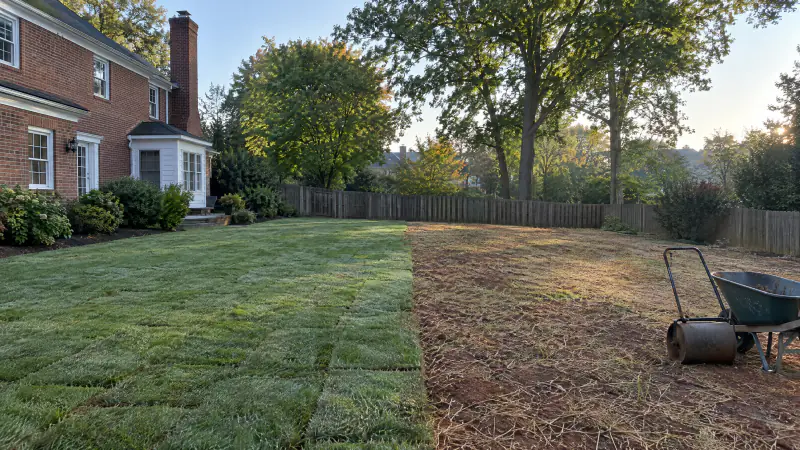
Plant cool-season grass seed in Virginia from late summer to mid-fall. That is Virginia Cooperative Extension's guidance, and the reasons are warm soil for fast germination, cool nights that suppress disease, fading weed competition, and a full fall and spring of root growth before the first July. In our experience that works out in Northern Virginia to roughly the last week of August through about mid-October, with early to mid-September the heart of the window; western Loudoun runs a week earlier, Arlington and Alexandria a week later. VCE's calendar marks spring as second best and warns that pre-emergent herbicides, including the spring crabgrass products, also affect seeding of desirable grasses, so a spring seeding usually gives up crabgrass control.
Today is October 15. For most of the area that means a week or two of useful seeding remains, and only if the seed goes onto prepared soil and gets watered. A seedling that germinates in late October goes into winter with little root and a fair chance of heaving out in a freeze-thaw cycle. If you miss the window, there are two honest options: a dormant seeding in late November or December, after the soil is too cold to germinate, so the seed sprouts in March with mixed results; or waiting, keeping the leaves off, liming by the soil test over winter, and seeding properly in late August. The whole schedule is in the fall lawn renovation plan.
One caution on herbicides. VCE notes that pre-emergent products applied in August or September for annual bluegrass will also prevent turfgrass seed from germinating, and that most broadleaf herbicides cannot be applied until the new grass has been mown at least twice. If a lawn service treated the lawn recently, read the label before any seed goes down.
How do you prepare the soil and seed a new lawn?
The sequence Virginia Cooperative Extension describes for establishing a cool-season lawn, as we run it on Northern Virginia clay.
Test the soil months ahead
Take ten or more cores to a depth of 4 inches, excluding thatch, mix them and send the sample to the Virginia Tech Soil Testing Laboratory through your county extension office. VCE recommends sampling a few months before seeding and waiting six to eight weeks after any lime or fertilizer.
Lime and amend by the test
Many Virginia soils are very acid and need lime, and fall and winter are the ideal time to apply it because it works slowly. Apply the rate on the report. Where the budget allows, a quarter to half inch of screened compost is one of the best improvements to compacted clay.
Open the soil
For a new lawn, VCE recommends tilling to a 4 to 6 inch depth, then raking to a firm grade that sheds water away from the house. For overseeding, a few passes with a core aerator or vertical mower prepare a seedbed; seed thrown over an unprepared lawn, in VCE's words, usually does nothing more than feed birds.
Apply starter fertilizer
A starter fertilizer emphasizes phosphorus, typically 1:2:1 or 1:2:2. VCE notes that establishment is the one time an additional phosphorus application, up to 1 pound per 1,000 square feet, can be justified independent of the soil test. Virginia's fertilizer law otherwise bars phosphorus in lawn maintenance fertilizer for established turf; products for new, renovated or soil-test-deficient lawns are the exception.
Seed in two directions
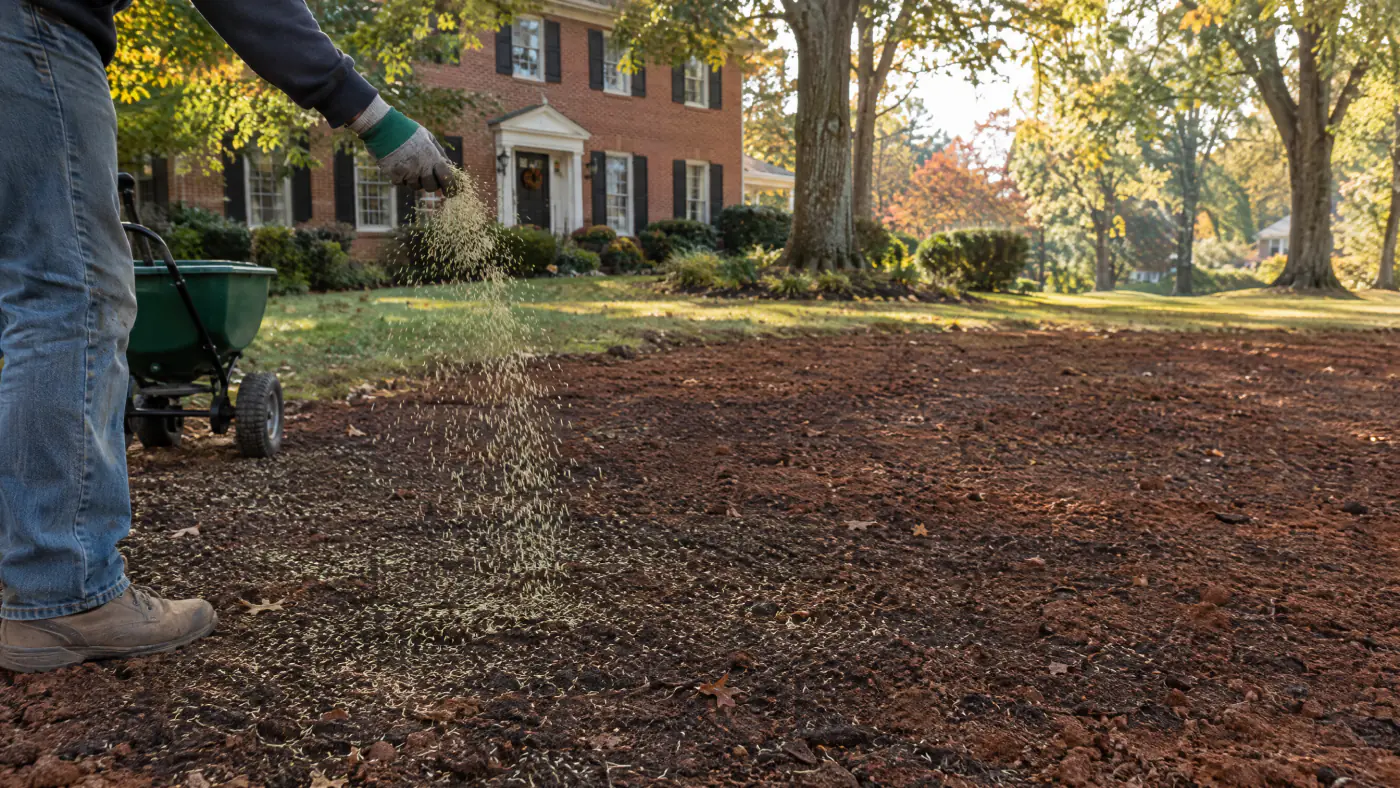
Set a calibrated spreader to half the rate and make two passes at right angles. Use the full 6 to 8 pounds per 1,000 square feet of tall fescue on bare soil. Rake lightly for seed-to-soil contact, then roll or drag. On slopes, a thin layer of clean straw holds seed and moisture.
Water lightly and often, then taper
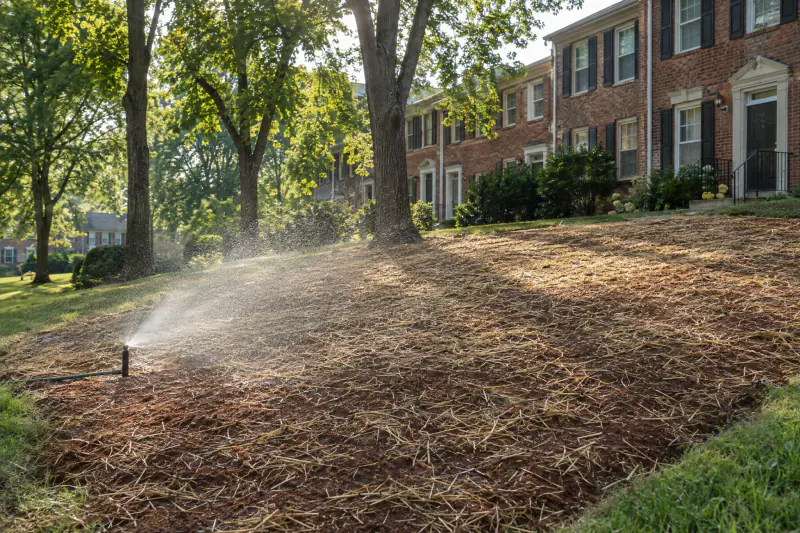
Irrigate lightly and frequently until germination and initial establishment are complete, avoiding puddling, then gradually cut back to encourage deep roots. A smart controller on a seeding program does this automatically, one reason a <a href="/water-management/sprinkler-system-installation/">sprinkler system</a> earns its keep in the first fall.
How do you water new seed, and when do you mow it for the first time?
Water new seed lightly two or three times a day so the top half inch of soil stays moist but never puddled, for about two to three weeks, then shift to deeper and less frequent watering once the seedlings are up and mowed. Virginia Cooperative Extension's instruction is to irrigate lightly and frequently until establishment, to avoid excessive water that washes away or drowns the seed, and then to cut back gradually to promote deep roots. Tall fescue germinates in 10 to 14 days in warm September soil and slower as it cools. VCE also suggests fungicide-treated seed for new seedings, because damping-off fungi thrive in the wet conditions new seed needs.
Mow by the one-third rule. VCE's example is a tall fescue lawn kept at 2 inches during peak growth that is first mowed when it reaches 3 inches; many Northern Virginia homeowners keep tall fescue taller than that heading into summer so the canopy shades the soil. Whatever the target, cut when the grass is about a third taller than it, with a sharp blade, on firm soil. Mowing encourages tillering, which is how a bunch grass thickens. Keep foot traffic off the seeded area for about three weeks.
Feed in the fall. VCE's acronym is SON, for September, October and November: up to 0.7 pound of water-soluble nitrogen per 1,000 square feet every four weeks, or a controlled-release source at up to 1 pound in early September, and never on frozen soil. Broadleaf weed killers wait until the new grass has been mowed at least twice. Leaves on seedlings come off gently every few days. The rest of the first year is in our maintenance guide.
What grass seed should you not buy for a Northern Virginia lawn?
Put the bag back if the label shows any of these.
- Kentucky 31 or any tall fescue described as pasture, forage or field type.
- Annual ryegrass at any percentage in a permanent lawn mix.
- A blend that is mostly perennial ryegrass, whatever the bag calls itself.
- The phrase variety not stated, or VNS, next to any grass kind.
- A germination test date more than about a year old, or no date at all.
- Weed seed well above zero, any named restricted noxious weed, or other crop seed above a trace.
- A coated product priced by bag weight that does not state the pure seed percentage.
- Bermudagrass in any mix destined for a lot with beds, neighbors or shade.
- A shade mix that leans on bluegrass or ryegrass rather than fine fescue.
- Any bag bought in spring to fix a thin lawn before a crabgrass preventer goes down.
How much do grass seed and seeding cost in Northern Virginia in 2026?
As of 2026, a 50 pound bag of a quality turf-type tall fescue blend with named varieties typically costs in the low hundreds of dollars at a turf supply house, so the seed for a 5,000 square foot lawn at 6 to 8 pounds per 1,000 square feet is usually under a few hundred dollars. The soil test through the Virginia Tech lab is a modest fee; check the lab's current price. Lime, starter fertilizer and compost add up faster than seed; compost delivered and spread often runs $80 to $150 per cubic yard as a typical market figure, and a quarter inch over 5,000 square feet is about four yards.
Professional work scales with preparation. Typical Northern Virginia market planning ranges as of 2026 run about $300 to $800 for core aeration and overseeding of a 5,000 to 10,000 square foot lawn with a quality blend and starter fertilizer, $1,000 to $2,500 or more with compost topdressing, and about $0.50 to $1.50 per square foot for a full renovation in which the old lawn is stripped, the soil amended and graded, and the lawn seeded. New sod with the same preparation commonly runs $2 to $4 per square foot. These are general market ranges, not myYardPros prices or quotes.
What moves the number: the actual turf area, how thin the lawn is, seed quality, the lime rate, slopes and obstacles, and whether compost, slit seeding or drainage repairs are needed first. Our cost guide sets these alongside every other project, and sod vs. seed compares the two paths. The only reliable figure for your lawn is a written estimate after someone has walked and measured it.
Which seed and timing fit Fairfax, Loudoun, Prince William, Arlington and Alexandria lawns?
The species answer is the same across Northern Virginia, a turf-type tall fescue blend, but the blend, the rate and the date shift with the lot. In western Loudoun around Leesburg and Purcellville, where nights cool first, seed in the first half of September and finish by early October. In Arlington, Alexandria, Falls Church and inner Fairfax neighborhoods such as McLean and Annandale, pavement holds heat and seeding runs into the second week of October. Ashburn, Sterling, Herndon, Reston and Chantilly sit in between, as do Gainesville, Haymarket and Woodbridge in Prince William County.
Soil and shade decide the blend. On the mass-graded subsoil of newer communities in Ashburn, South Riding, Brambleton and Bristow, the limiting factor is compaction and acidity, not species: a straight tall fescue blend at the full rate after aeration, lime by the test and compost does more than any fancy mix. On older, wooded lots in Vienna, Oakton, Burke, Springfield and Great Falls, the limiting factor is light, and the blend should carry a fine fescue component for the shaded edges. Lots that stay wet in Lorton, Dumfries and along the creeks in Clifton need drainage before seed. Townhome lawns in Centreville are small enough that the best seed costs little extra, so buy the best.
Water is the last variable. On public water, three weeks of seeding irrigation is a line on the bill. On wells in western Loudoun and around Great Falls, recovery rates can limit how much lawn is seeded at once, and large properties are often done in sections over two falls; a smart controller makes the schedule automatic. We seed lawns across all of these counties and cities and nowhere else; our service areas page lists each one, the lawn and landscape pillar shows how seeding fits with sod and planting, and sod or seed this fall is the decision guide if the lawn is more than half gone. To have the seed, the rate and the date chosen for your lot, request an on-site estimate or call (571) 200-9600. In mid-October there is still time to look at the lawn this week and decide whether to seed now or plan for August.
Frequently asked questions
What is the best tall fescue seed for Northern Virginia?
A blend of three or more turf-type tall fescue varieties that appear on the current Virginia Turfgrass Variety Recommendations from Virginia Tech and the University of Maryland, 90 to 100 percent tall fescue by weight with up to 10 to 15 percent Kentucky bluegrass if you want the lawn to knit. The list changes each year, so check the current edition rather than a brand name. Turf supply houses usually carry those varieties; large retailers often do not.
How many pounds of grass seed per 1,000 square feet for tall fescue?
Virginia Cooperative Extension's published rate for tall fescue is 6 to 8 pounds per 1,000 square feet for initial establishment or renovation. On a lawn that is still mostly grass, crews commonly overseed at about 4 to 6 pounds and give bare or very thin areas the full rate. Coated seed has its own rate printed on the bag because the coating is part of the weight; follow that number.
Can I plant grass seed in Virginia in October?
Early October, yes, and in warmer parts of Northern Virginia such as Arlington, Alexandria and inner Fairfax, into the second week. By mid-October the window is closing: Virginia Cooperative Extension's best period is late summer to mid-fall, and seed that germinates in late October goes into winter with little root. After that, choose between a dormant seeding in late November or December and waiting for late August.
What grass seed works in shade in Virginia?
Fine fescues: creeping red, chewings and hard fescue. Virginia Cooperative Extension describes them as having the best shade tolerance of the cool-season grasses and recommends them for partial to full shade and low-maintenance areas, at 3 to 5 pounds per 1,000 square feet. They have poor traffic tolerance and dislike wet soil. Under dense shade with an hour or two of filtered light, no seed will hold, and mulch, a shade bed or artificial turf is the honest answer.
Should I mix Kentucky bluegrass with tall fescue?
A small share helps. Virginia's recommendations allow 10 percent, and up to 15 percent, Kentucky bluegrass by weight in a tall fescue mixture to improve sod strength, because bluegrass spreads by rhizomes and knits the clumping fescue together. More than that shifts the lawn toward bluegrass's needs: full sun, 3 to 4 pounds of nitrogen a year and more water in July. Keep bluegrass the minor partner, with its varieties named on the label too.
Is zoysia better than tall fescue in Northern Virginia?
It depends on what you can live with. Zoysia is dense, low maintenance, the most cold-hardy warm-season grass and far more water efficient in July, but it is brown for three to five months every winter, slow and expensive to establish, and planted by sod, plugs or seed from mid-May through June rather than seeded in fall. On a full-sun lot without HOA objections it is a legitimate choice. For a green lawn in March, tall fescue wins.
Why does my new grass come up and then die by summer?
Usually one of four reasons: the bag was mostly ryegrass or Kentucky 31, which do not persist here; it was seeded in spring, so roots were shallow when July arrived; it went down on compacted clay without aeration or compost, which Virginia Cooperative Extension says mostly feeds birds; or the soil was never limed. A soil test, a named tall fescue blend at the full rate in September on loosened soil, and three weeks of light watering fix all four.
Book the work
Put the plan in writing with a crew that builds this every week.
One visit to measure and talk through options, then a written scope and price. No pressure, no vague numbers. Ask about the Heroes Discount if you serve.
Sources and further reading
- Virginia Cooperative Extension, 2025-26 Virginia Turfgrass Variety Recommendations (SPES-727NP)
- Virginia Cooperative Extension, Maintenance Calendar for Cool-Season Turfgrasses in Virginia, publication 430-523 (SPES-670P), 2025
- Virginia Cooperative Extension, Fall Lawn Care, publication 430-520 (SPES-223P), reviewed 2025
- Virginia Cooperative Extension, What grass should I grow for my lawn? (Mike Goatley, Crop and Soil Environmental News, March 2008)
- Virginia Cooperative Extension, Soil Sampling for the Home Gardener, publication 452-129
- Code of Virginia, section 3.2-4008, Seeds: Labeling and advertising requirements
Published October 15, 2026. Reviewed and updated October 22, 2026.