Key takeaways
- Seed tall fescue from the last week of August to about mid-October, with early to mid-September the heart of the window. Everything else on the plan is timed backward from that.
- Before seeding: soil test results in hand, broadleaf weeds treated at least two to four weeks ahead, no crabgrass preventer, irrigation coverage fixed, lawn mowed down to about 2 to 2.5 inches.
- Renovation day: two passes of core aeration on moist soil, a turf-type tall fescue blend at 4 to 6 pounds per 1,000 square feet, starter fertilizer by soil test, optional compost, water.
- After seeding: light watering two or three times a day for two to three weeks, a first mow at about 4 inches, leaves blown off gently, no weed killer until the third mow.
- As of 2026, typical Northern Virginia ranges run $300 to $800 for aeration and overseeding, more with compost topdressing, and $0.50 to $1.50 per square foot for a full strip-and-seed renovation.
On this page
- When should you aerate and overseed in Northern Virginia?
- What happens each week from mid-August to mid-October?
- What has to happen before seeding: soil test, weed control and irrigation?
- How is the renovation itself done?
- Which tall fescue seed should you use, and at what rate?
- How do you water new seed, and when is the first mow?
- What about falling leaves, and the crabgrass preventer next spring?
- What results should you expect, and when?
- What does a professional renovation include versus doing it yourself?
- How much does a fall lawn renovation cost in Northern Virginia in 2026?
- Is your lawn ready for renovation day?
- How does the fall window shift across Fairfax, Loudoun, Prince William, Arlington and Alexandria?
- Frequently asked questions
When should you aerate and overseed in Northern Virginia?
Aerate and overseed a tall fescue lawn in Northern Virginia between the last week of August and about mid-October, and aim for early to mid-September if you can choose. In that window the soil is still warm enough for seed to germinate in seven to fourteen days, nights are cooling so brown patch pressure fades, summer weeds are finishing, and the seedlings get all of fall and spring to root before their first July. Seed sown in late October germinates slowly and goes into winter too small to be sure of surviving. Seed sown in spring reaches summer with shallow roots and mostly fails, which is why fall is the season and not merely a season.
The renovation itself takes a few hours. The reason to start planning now, in the first week of August, is that everything that has to happen before seed goes down takes weeks: the soil test takes a couple of weeks to come back, broadleaf weed killers need two to four weeks between application and seeding, irrigation repairs need a crew with time, and the September schedule of every lawn crew in Fairfax, Loudoun and Prince William fills by Labor Day. This article is the week-by-week plan we work from, written for a homeowner who wants to understand it, do parts of it, or know what to expect from a professional renovation. The scope of our own fall project is on the aeration and overseeding service page.
One decision comes first. If more than about half of the lawn is still desirable grass, aeration and overseeding is the right project. If it is mostly weeds, bare clay or construction damage, a full renovation by seed or new sod is the better use of the money, and we weigh that in sod or seed this fall. Look straight down at the lawn in a few places. If you see more soil and weeds than grass, read that article first.
What happens each week from mid-August to mid-October?
A typical schedule for a 2026 renovation seeded in the first week of September. Shift everything a week later for a mid-September seeding, and a few days earlier in western Loudoun.
| Week of | Task | Why this week | Who usually does it |
|---|---|---|---|
| August 10 | Send the soil test; book the renovation date; decide overseed versus full renovation | Results take about two weeks; September calendars fill | Homeowner; contractor for the booking |
| August 17 | Treat broadleaf weeds if needed; run every irrigation zone and fix coverage; order seed | Most broadleaf herbicide labels require 2 to 4 weeks before seeding | Homeowner or lawn service; irrigation contractor |
| August 24 | Stop any crabgrass preventer plans; mow a little lower each cut; water deeply if dry | Pre-emergents stop fescue seed; soil must be moist for tines | Homeowner |
| August 31 | Mow to 2 to 2.5 inches and bag; core aerate two passes; seed; starter fertilizer; topdress; water | Renovation day: warm soil, cooling nights | Contractor or capable homeowner |
| September 7 | Light watering two or three times a day; stay off the lawn; blow early leaves off gently | Seed must stay moist to germinate | Homeowner or irrigation controller |
| September 14 | Germination visible; continue light watering; no herbicide, no foot traffic | Seedlings at 7 to 14 days have roots a fraction of an inch long | Homeowner |
| September 21 | First mow at 3.5 to 4 inches with a sharp blade when the new grass reaches about 4 inches; begin tapering water | Mowing encourages tillering and thickening | Homeowner or lawn service |
| September 28 | Apply lime at the soil test rate; water deeply every two to three days; second mow | Lime works slowly and can go on once seedlings are up | Homeowner or lawn service |
| October 5 | Blow leaves off every few days; third mow; weed control allowed after the third mow if the label agrees | Leaves smother seedlings in days | Homeowner or lawn service |
| October 12 | Last practical seeding date for thin spots; water about an inch a week; keep leaves off | Later seed goes into winter too small | Homeowner |
| Late October into November | Final mows at 3 to 3.5 inches; a late-season nitrogen feeding around Thanksgiving; sprinkler blow-out | Fall feeding builds roots for spring | Homeowner or lawn service; irrigation contractor |
Dates are typical for 2026 and shift with weather. The order matters more than the exact week.
What has to happen before seeding: soil test, weed control and irrigation?
Three things have to be finished before renovation day, and all three take time: the soil test, the weed control and the irrigation.
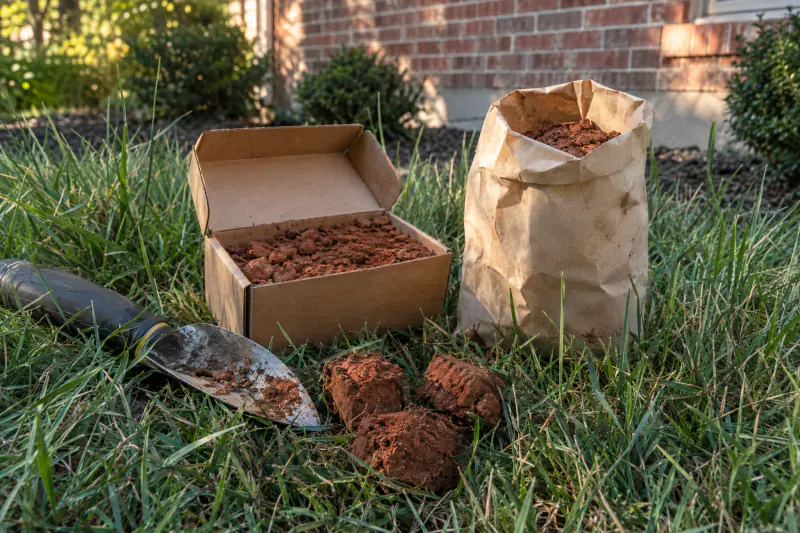
The soil test. A routine test through Virginia Cooperative Extension, processed by the Virginia Tech soil testing laboratory, costs a modest fee and reports pH, phosphorus, potassium and other nutrients with a recommendation for lawns. It takes about two weeks. Most Northern Virginia clay is acidic, and tall fescue prefers a pH in the low to mid 6s, so the test usually calls for lime, often a substantial amount applied in split applications. It also decides fertilizer. Virginia restricts phosphorus on established lawns, but a starter fertilizer containing phosphorus is permitted when seeding, and the test is what justifies it. Take a dozen cores from across the lawn, mix them, and send the box in the first or second week of August.
Weed control. Broadleaf weeds such as clover, plantain and wild violet can be treated in mid-August, because most selective broadleaf herbicide labels require a wait of two to four weeks before seeding, and that lines up with a seeding in early September. Read the label of whatever product is used; the waiting period is on it. Crabgrass is different. It is an annual that dies with the first frost, the dense new lawn shades out next year's seedlings, and the pre-emergent products that prevent it also prevent fescue seed from germinating. No crabgrass preventer goes down in fall on a lawn that is being seeded, and the spring application is discussed later. Nutsedge and other perennial grassy weeds are a separate problem and are better treated earlier in summer.
Irrigation. New seed needs light watering two or three times a day for two to three weeks, which is impractical by hand on a large lawn and easy with a controller. August is when to run every zone, straighten heads, replace nozzles and fix the dry wedge that showed in July, and when to have a smart controller programmed for a seeding schedule. We describe both in the irrigation upgrades service and in our summer article, keeping tall fescue alive through a Northern Virginia summer. A lawn with no system can be seeded and watered with hoses and timers; it is simply more work and more missed strips.
How is the renovation itself done?
Renovation day in six steps. Done in this order on moist soil, the whole job on a typical lawn takes a few hours.
Mow low and bag
The lawn is mowed down to about 2 to 2.5 inches, lower than the summer height, and the clippings are bagged. Short grass lets seed reach the soil and lets light reach the seedlings. Sprinkler heads, valve boxes and invisible dog fence wire are flagged before any machine runs.
Core aerate in two directions
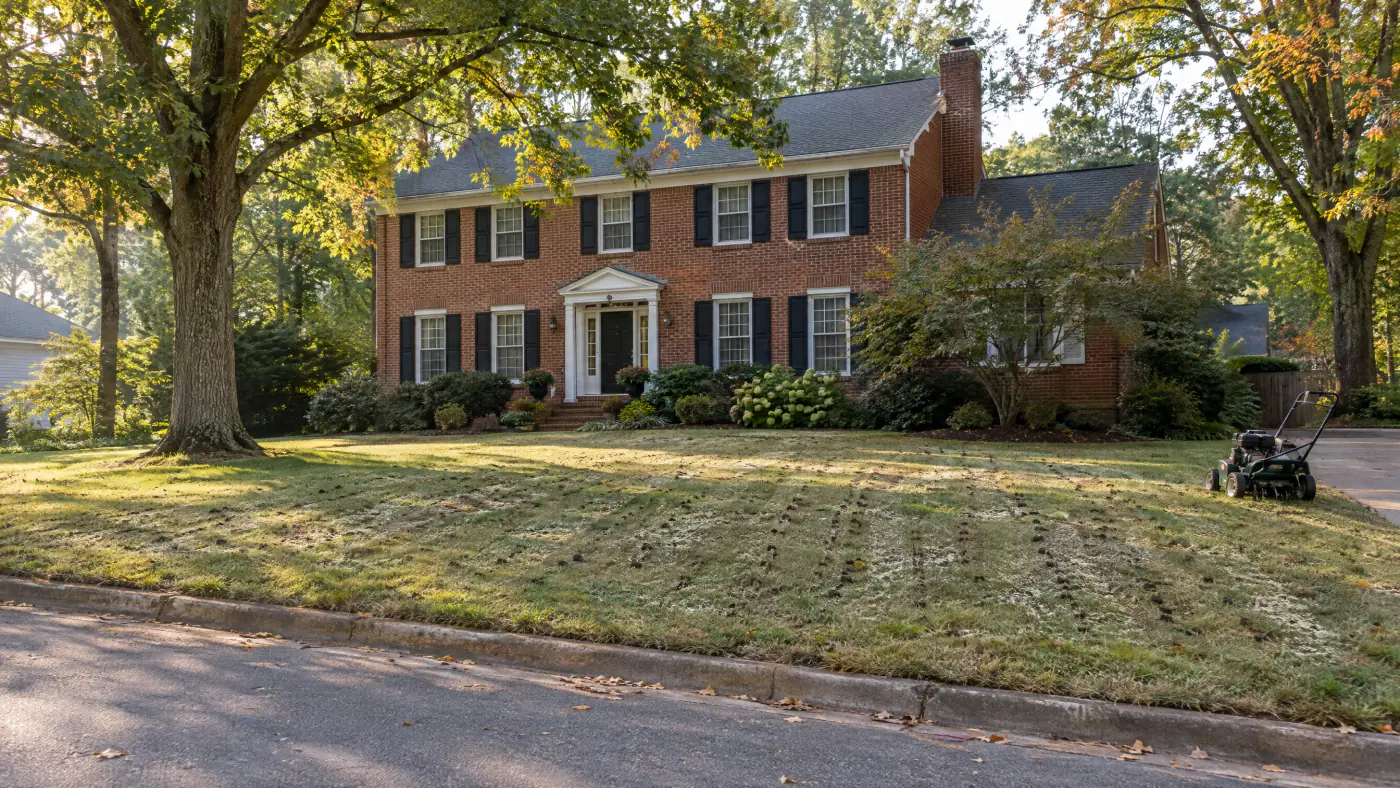
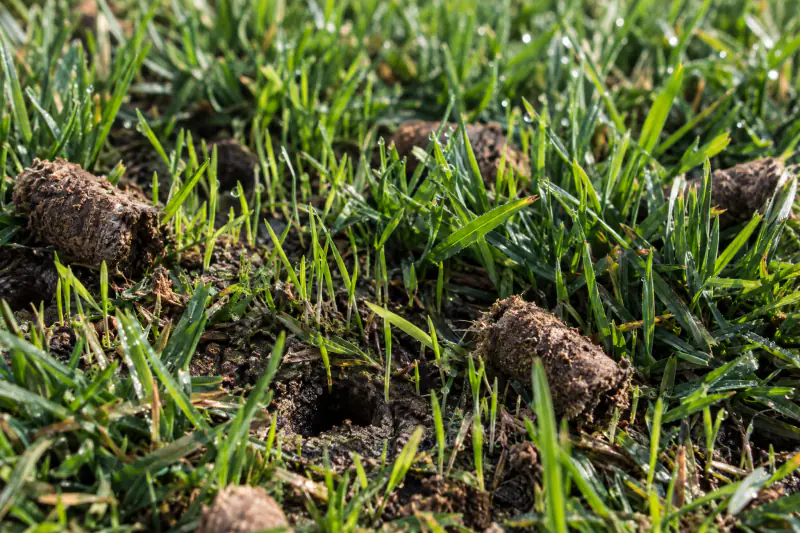
A hollow-tine aerator pulls plugs 2 to 3 inches deep and leaves them on the surface. On compacted clay two passes at right angles roughly doubles the holes. The soil should be moist from rain or watering the day before so the tines reach full depth; dry clay bounces the machine and leaves shallow dents.
Seed with a calibrated spreader
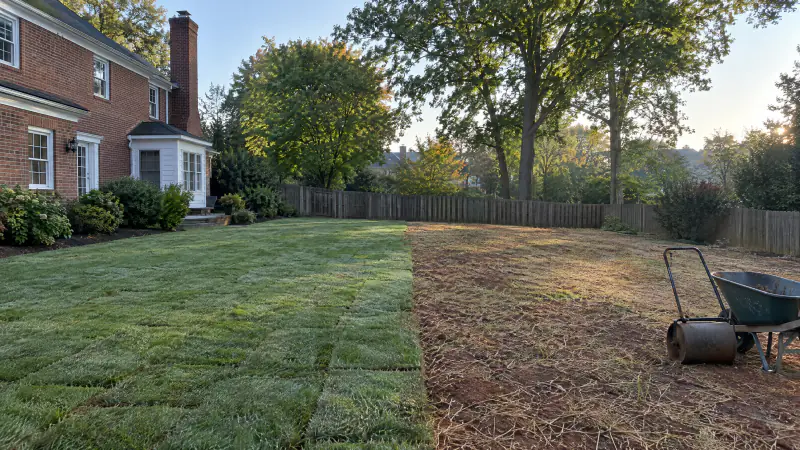
A turf-type tall fescue blend goes down in two passes in a crosshatch at half the rate each pass, so coverage is even. Overseeding into existing turf runs about 4 to 6 pounds per 1,000 square feet; bare or very thin areas get the higher end. Much of the seed settles into the aeration holes, where it stays moist and touches soil.
Starter fertilizer or compost
Starter fertilizer is applied where the soil test supports it, at the label rate. Where the budget allows, a quarter to half inch of screened compost is spread and raked across the lawn, which fills the holes, covers seed and improves the clay. Lime is applied at the test rate, now or a few weeks later.
Rake, roll lightly or drag
Bare areas are raked so seed is in contact with soil rather than sitting on thatch. A light drag mat or a lightly loaded roller presses seed in across the lawn. The plugs are left to crumble; raking them up pulls seed out of the holes.
Water the same day
The lawn is watered immediately so the top half inch of soil is moist, then kept that way. From here the result depends on the next three weeks of watering more than on anything done today, which is why we hand over a written schedule at the walkthrough.
Which tall fescue seed should you use, and at what rate?
Use a blend of three or more improved turf-type tall fescue varieties, chosen from cultivars that perform well in Virginia and Maryland university trials, and sow it at about 4 to 6 pounds per 1,000 square feet for overseeding or 6 to 8 pounds for bare ground. A blend matters because no single variety is best at everything; one holds color in drought, another resists brown patch, a third tolerates shade, and a blend of them means one weakness does not take out the whole lawn. Virginia Cooperative Extension and the Virginia-Maryland turfgrass programs publish lists of recommended varieties, and a bag whose label names varieties from those lists is the simplest sign of quality.
Read the label the way you would read a food label. It lists each variety and its percentage, the germination rate, the purity, the percentage of weed seed and other crop seed, and the test date. Look for named varieties rather than the phrase variety not stated, germination above about 85 percent, weed seed near zero and no noxious weeds. Avoid bags that pad the blend with annual ryegrass or a large share of perennial rye, which sprout fast and then die or thin out, leaving gaps the fescue was supposed to fill. Avoid Kentucky 31, the old pasture fescue, which is coarse and light green and does not match a modern lawn. A small percentage of Kentucky bluegrass in the blend is fine and helps the lawn knit.
Coated seed is sold widely and is not a problem, but the coating is a share of the bag weight, often a large share, so the seeding rate on the bag is the number to follow, not the generic rate for uncoated seed. Buy seed in August. By mid-September the better blends are sold out at garden centers in Fairfax and Loudoun, and what is left is whatever did not sell. Store it dry and cool, and use it within the season; germination falls every year it sits in the garage.
How do you water new seed, and when is the first mow?
Water new seed lightly two or three times a day for the first two to three weeks, keeping the top half inch of soil moist but never puddled, then shift to deeper and less frequent watering once the seedlings are up and have been mowed. The seed and the first roots live in the top half inch, and if that layer dries for an afternoon in early September the germinating seed dies. Five to ten minutes per zone in the early morning, at midday and in the late afternoon is typical with sprinklers; a smart controller's seeding program does this and then tapers on its own. Rain counts, and a wet week can mean no watering at all. Evening watering is avoided where possible because wet seedlings overnight invite disease.
Germination takes seven to fourteen days depending on soil temperature, and you will see a green haze before you see grass. Once most of the lawn has come up, usually by the end of week two, cut back to once a day and lengthen each session. After the first mow, water every two to three days, deeply, so the roots follow the moisture down. By mid-October the lawn is on a normal schedule of about an inch a week including rain, and by the time the sprinkler system is winterized in late October or November it needs little or nothing.
The first mow comes when the new grass reaches about four inches, typically three to four weeks after seeding, and it is cut to 3.5 to 4 inches with a sharp blade on a dry day. The old grass will reach that height first, and mowing it on schedule is fine as long as the mower is light on turns and the ground is not soft. Mowing is good for new grass; it encourages tillering, which is how a bunch grass thickens. Mow every five to seven days through October, never removing more than a third of the blade. Keep the height at 3.5 inches through the fall and drop to about 3 for the last cut before winter so matted grass does not invite snow mold. Foot traffic follows the mower: stay off the seeded areas for the first three weeks, then light use, with children and dogs back on the lawn after about a month.
What about falling leaves, and the crabgrass preventer next spring?
Leaves are the fall hazard nobody plans for. A September seeding is three to four weeks old when the oaks and maples start dropping in early October, and a layer of wet leaves left on seedlings for a few days shades and smothers them. The rule is to keep leaves off the new lawn, gently. A blower on a low setting every few days moves leaves without tearing out seedlings; a rake drags them out. Once the new grass has been mowed twice or three times, light leaf fall can be mulch-mowed into the lawn, which returns organic matter to the clay. Heavy drops under a large oak in Vienna or Burke still need blowing. Leaves also clog gutters and buried downspout lines at the same time, which we cover in leaf season: gutters, downspouts and buried drain lines.
Weed control resumes slowly. Most selective broadleaf herbicides injure seedlings, and the common rule is to wait until the new grass has been mowed three times before applying one, which lands in mid to late October for a September seeding. Read the label; some products specify a longer wait. Winter annual weeds such as henbit and chickweed that appear in a thin new lawn are usually better left until spring, when the lawn is denser and the weeds are easier to treat.
Next spring's crabgrass preventer is the conflict people ask about most. A pre-emergent applied in March or April stops crabgrass seed from germinating; it also stops grass seed, so a lawn seeded in spring cannot have both. A lawn seeded the previous September can. By March the fall seedlings have been mowed many times, their roots are several inches deep, and the pre-emergent does not affect them, so the normal spring application goes ahead. The timing is before soil temperatures reach the mid 50s for several days, usually when forsythia blooms, in late March or early April. What a fall-seeded lawn should not get is a spring reseeding on top of the preventer; that is the one combination that fails, and it is another argument for doing the seeding right in the fall so there is nothing to repair in April.
What results should you expect, and when?
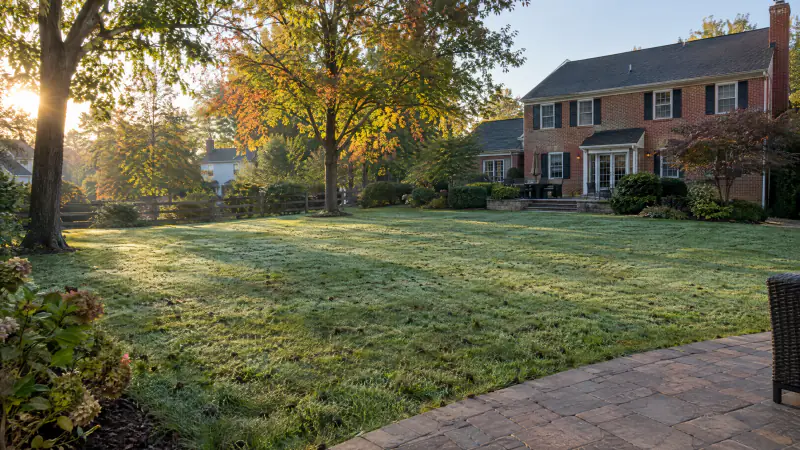
Expect a green haze at one to two weeks, a thin new lawn by the end of October, a lawn that looks finished by mid-May, and the real payoff in July, when the renovated lawn holds up through the heat that thinned the old one. That timeline surprises people in two directions. The lawn looks better faster than they expected in the fall, because fescue seedlings grow quickly in warm soil, and then it looks the same for months, because growth all but stops from December through February. The thickening that makes the lawn dense happens in April and May, when each seedling tillers into a clump. Judge the renovation on Memorial Day, not Thanksgiving.
Overseeding into an existing lawn does not produce a lawn that is new everywhere. It fills the thin areas, adds improved varieties to the mix and relieves compaction. A lawn that was sixty percent grass in August is typically eighty-five or ninety percent grass by spring. Bare clay areas that were raked and seeded at the high rate fill in; bare areas that were not prepared do not. Shade under mature trees improves a little in fall and thins again by the following summer, because the seeding did not change the hours of sun, and that is the honest limit of the method.
Because tall fescue is a bunch grass and loses plants every summer, most lawns in Northern Virginia benefit from aeration and overseeding every fall, or at least every other fall on a dense lawn with good soil. That is not a maintenance plan; it is a seasonal project that the homeowner decides on each August, which is how we offer it. Between renovations the lawn's condition is set by mowing height, watering and the fall feeding, which the maintenance guide lays out for the homeowner or a lawn service to follow.
What does a professional renovation include versus doing it yourself?
A professional renovation includes the assessment, the machine, the seed, the rates and the timing, done in one visit on the right day; a do-it-yourself renovation includes a rented aerator, a trip for seed and a long Saturday. Both can work. The difference shows in three places. The first is the aerator. Rental units are usually lighter than commercial machines and pull shallower plugs on hard clay, and they are rented by the day, which means the job happens on the day you booked, whether or not the soil is moist. A crew with its own machine waits for the ground to be right and pulls deeper cores. The second is the seed. A professional job uses a named blend at a measured rate with a calibrated spreader; a DIY job often uses whatever bag was on the shelf at a guessed rate, and the result is streaky. The third is the extras: compost topdressing is heavy, bulky and hard to spread evenly by hand over a large lawn, and it is the single addition that improves clay the most.
On a small, flat lawn with good access, a capable homeowner who tests the soil, buys a good blend, rents the heaviest aerator available, waters the day before and follows the watering schedule can get a result close to a professional one at a lower cost. On a large, sloped or heavily compacted lawn, or one that needs topdressing, lime at a high rate and a full day of machine time, the professional job is usually better and often not much more expensive once rentals, seed, fertilizer and compost are added up. Either way, the parts that decide the result, the timing, the moisture on renovation day and the three weeks of watering, are the same.
What a professional renovation from us includes is on the service page, and the process from estimate to walkthrough is on our how it works page. What it does not include is mowing, a fertilizer program or a contract; after the walkthrough and the written schedule, the lawn is yours. A full renovation, with the old lawn stripped and the soil rebuilt before seeding, is a different project with its own scope, which we describe under sod installation and lawn renovation.
How much does a fall lawn renovation cost in Northern Virginia in 2026?
As of 2026, typical Northern Virginia market planning ranges for core aeration with overseeding run about $300 to $800 for a suburban lawn of 5,000 to 10,000 square feet, including two passes of aeration, a quality tall fescue blend at an overseeding rate and starter fertilizer where the soil test supports it. Adding compost topdressing commonly brings the project to $1,000 to $2,500 or more, because compost is bulky to deliver and spread; lime at a high soil-test rate and slit seeding of large bare areas add to that. A full renovation by seed, with the old lawn stripped, the clay loosened and amended and the surface graded before seeding, commonly runs $0.50 to $1.50 per square foot, and new sod with the same preparation about $2 to $4 per square foot. These are general market ranges, not myYardPros prices.
For comparison, a do-it-yourself version typically costs a day's aerator rental, commonly in the range of a hundred dollars or so, plus a 50-pound bag of a quality blend in the low hundreds, which covers roughly 8,000 to 12,000 square feet at overseeding rates, plus starter fertilizer and lime. Compost by the cubic yard delivered and spread is often $80 to $150 per yard, and a quarter inch over 6,000 square feet is about five yards.
What moves the number: lawn area measured as actual turf rather than lot size; how thin the lawn is, since a very thin lawn needs more seed and more raking; seed quality, with named trial-rated varieties costing more than generic blends; slopes, gates and obstacles that slow the machine; and the extras, meaning lime, topdressing and slit seeding. Irrigation repairs and drainage work are priced separately. The cost guide sets lawn ranges alongside every other project. For a figure that fits your lawn, the only reliable number is a written estimate after a site visit, and in August there is still time to get one before the window opens.
Is your lawn ready for renovation day?
Ten checks for the week before the aerator arrives. If any is a no, the day is better moved than wasted.
- Soil test results are back, with the lime rate and fertilizer recommendation in hand.
- Any broadleaf herbicide was applied at least two to four weeks ago, per its label.
- No crabgrass preventer or weed-and-feed has gone down since early summer.
- Every irrigation zone has been run and the dry spots fixed, or hoses and timers are ready.
- Sprinkler heads, valve boxes, dog fence wire and lighting cable are flagged or mapped.
- The lawn has been mowed down to about 2 to 2.5 inches and the clippings bagged.
- The soil is moist a few inches down from rain or watering the day before.
- Seed is a named turf-type tall fescue blend, bought in August, with the rate read from the bag.
- Thin and bare areas are marked so they get the higher seeding rate and a rake.
- Someone is home, or the controller is programmed, for three weeks of light watering.
How does the fall window shift across Fairfax, Loudoun, Prince William, Arlington and Alexandria?
The window shifts by about a week across Northern Virginia, and the soil shifts the plan more than the weather does. Western Loudoun around Leesburg and Purcellville cools earliest, so seeding there is best done in the first half of September and finished by early October. Arlington County, Alexandria, Falls Church and the inner parts of Fairfax County such as McLean and Annandale stay warm longest, with pavement and buildings holding heat, and can seed comfortably into the second week of October. Ashburn, Sterling, Herndon, Reston and Chantilly sit in between, as do Gainesville, Haymarket and Woodbridge in Prince William County. In every case, the earlier end of the window is safer than the later one, because the risk of a seeding that goes into winter too small is worse than the risk of a warm first week.
Soil decides the extras. The newer communities of eastern Loudoun and western Prince William, including Ashburn, South Riding, Brambleton, Bristow and Gainesville, sit on compacted builder subsoil, and those lawns respond most to two passes of aeration and to compost topdressing, which is the only practical way to get organic matter into that clay without stripping the lawn. Older neighborhoods in Vienna, Burke, Springfield and Oakton have better native soil and far more shade, so the plan there is about seeding rates in the thin shaded strips and about being honest when a strip under an oak will never hold grass. Lots that stay wet after rain in Lorton, Dumfries or along the creeks in Clifton need drainage work before a renovation, because seed in a wet spot rots.
Watering is the last local variable. On public water from Fairfax Water, Loudoun Water or the Prince William County Service Authority, three weeks of seeding irrigation is a line on the bill and nothing more. On a well in western Loudoun or around Clifton and Great Falls, the well's recovery rate can limit how much lawn can be seeded at once, and a larger property is often renovated in sections over two falls. A sprinkler system with a controller that runs a seeding program is the difference between a renovation that is a project and one that is a three-week job. We do fall renovations across all of these counties and cities and nowhere else; our service areas page lists each one, the lawn and landscape pillar shows how renovation fits with sod, planting and turf, and the 2026 Northern Virginia yard calendar places the fall window in the full year. For the sod-versus-seed decision in the same window, our sod vs. seed guide is the place to start.
Frequently asked questions
What is the last date to overseed in Northern Virginia?
About mid-October for most of the area, a week earlier in western Loudoun and a week later inside the Beltway. Seed sown after that germinates slowly in cooling soil and goes into winter as seedlings too small to be sure of surviving a hard freeze. If the window is missed, the choices are a dormant seeding in late November that sprouts in spring with mixed results, a spring repair that will need redoing, or waiting for next September. Earlier is always safer.
Should I aerate before or after seeding?
Before, immediately before. Core aeration opens thousands of holes that the seed falls into, where it stays moist and in contact with soil, and it relieves the compaction that keeps roots shallow on clay. Seeding first and aerating afterward pulls seed out of the ground and buries some of it too deep. On the same day, the order is mow low, aerate, seed, fertilize, topdress if included, and water.
Do I need to remove the plugs after aeration?
No. The plugs break down within two to three weeks of watering and mowing, returning soil to the surface and helping to cover the seed. Raking them up drags seed out of the holes and removes the soil that was just loosened. They look untidy for a short time, and the first mow chops what is left. If compost topdressing is included, it is raked over the plugs and they disappear faster.
Can I put down fertilizer when I overseed?
Yes, a starter fertilizer at the label rate, where the soil test supports it. Starter products contain phosphorus, which seedlings need for root development and which Virginia restricts on established lawns but permits when establishing new grass. Regular lawn fertilizer with no phosphorus can be used instead on soils that test high. A second, nitrogen-only feeding around Thanksgiving builds roots for spring and is the most important feeding of the year for tall fescue.
How long should I stay off the lawn after overseeding?
Keep foot traffic off seeded areas for about three weeks, apart from moving sprinklers and blowing leaves. Seedlings in their first two weeks have roots a fraction of an inch long and pull out underfoot. After the first mow, light use is fine. Children and dogs can return after about a month, which for a September seeding means early October. Dog urine on a new lawn burns spots that will need reseeding, so a dog's usual corner is worth fencing off briefly.
Can I overseed without aerating?
You can, and on a lawn with loose soil and only slight thinning it works reasonably well with the lawn mowed low and the seed raked in. On the compacted clay most Northern Virginia lawns sit on, seed broadcast over the surface without aeration mostly dries out or washes into the gutter, and the result is streaky. Aeration is what gives seed soil contact, which is why aeration and overseeding are done together nearly everywhere here. Slit seeding is the other way to get seed into the soil on bare areas.
Is it better to overseed every year or every other year?
Most tall fescue lawns in Northern Virginia do best with aeration and overseeding every fall, because the grass thins each summer and does not spread to fill its own gaps. A dense lawn on decent soil with light use can sometimes skip a year. The lawn tells you in August: if you can see soil between plants when you look straight down, or crabgrass has filled thin spots, it needs the fall project. It is a seasonal decision each year, not a program.
What if leaves fall on my new grass before it is established?
Blow them off with a blower on a low setting every few days, directing the air across the lawn rather than straight down. Do not rake until the new grass has been mowed two or three times, and do not let leaves sit for more than a few days, because a wet mat shades and smothers seedlings quickly. Once the lawn is established, light leaf fall can be mulch-mowed into the lawn, and only heavy drops under large oaks and maples still need removing.
Book the work
Put the plan in writing with a crew that builds this every week.
One visit to measure and talk through options, then a written scope and price. No pressure, no vague numbers. Ask about the Heroes Discount if you serve.
Sources and further reading
Published August 6, 2026. Reviewed and updated October 9, 2026.